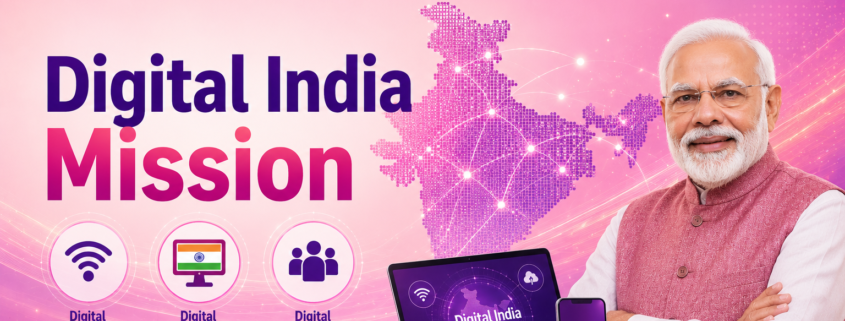
Introduction to Digital India

The digital revolution has transformed economies and societies across the globe by making information, communication, financial services, education, and governance more accessible than ever before. In today’s interconnected world, digital technologies play a crucial role in improving public services, creating employment opportunities, promoting entrepreneurship, and driving economic growth.

India, with one of the world’s largest populations and rapidly expanding internet user base, has witnessed remarkable digital transformation over the past decade. However, before this transformation, many citizens—especially those living in rural and remote areas—faced challenges in accessing government services, banking facilities, quality education, healthcare, and reliable internet connectivity.

To bridge this digital divide and create a digitally empowered society, the Government of India launched the Digital India initiative. The programme aims to transform India into a digitally connected nation by improving digital infrastructure, promoting digital literacy, expanding online government services, and encouraging the adoption of digital technologies across every sector of the economy.

Digital India is not just a technology initiative—it is a nationwide mission that seeks to make governance more transparent, services more accessible, businesses more competitive, and citizens more digitally empowered.

In this article, we will explore everything about Digital India, including its objectives, pillars, flagship initiatives, benefits, implementation, impact, and its contribution to India’s journey toward becoming a digitally empowered knowledge economy.


What is Digital India?

Digital India is a flagship initiative of the Government of India, launched on 1 July 2015, with the vision of transforming the country into a digitally empowered society and knowledge economy.

The initiative is coordinated by the Ministry of Electronics and Information Technology (MeitY) and involves collaboration among multiple ministries, state governments, public sector organizations, educational institutions, and private enterprises.

Digital India focuses on improving digital infrastructure, expanding internet connectivity, promoting digital literacy, strengthening e-governance, and making government services available online.

The programme also supports innovation, entrepreneurship, digital payments, cybersecurity, cloud computing, artificial intelligence, and emerging technologies that contribute to India’s long-term economic development.


Why Was Digital India Introduced?

Before the launch of Digital India, millions of citizens faced barriers in accessing essential services due to limited digital infrastructure and low internet penetration.

Some major challenges included:

  • Limited access to online government services
  • Low digital literacy
  • Poor internet connectivity in rural areas
  • Dependence on paper-based processes
  • Limited access to digital banking
  • Delays in service delivery
  • Lack of transparency in governance

The Government introduced Digital India to address these issues by creating a robust digital ecosystem that benefits citizens, businesses, educational institutions, and government departments alike.

The initiative also supports national priorities such as:

  • Good Governance
  • Financial Inclusion
  • Ease of Doing Business
  • Startup Ecosystem
  • Innovation
  • Rural Development
  • Employment Generation
  • Inclusive Growth

Vision of Digital India

Digital India is built around three core vision areas:

1. Digital Infrastructure as a Core Utility to Every Citizen

The initiative aims to ensure that every citizen has access to reliable digital infrastructure, including internet connectivity, digital identity, and online services.


2. Governance and Services on Demand

Government services are delivered electronically, making them more efficient, transparent, and accessible.


3. Digital Empowerment of Citizens

Citizens are encouraged to develop digital skills and use technology for education, employment, business, and everyday life.


Objectives of Digital India

The programme has several important objectives.

1. Improve Digital Infrastructure

Expand broadband connectivity, mobile access, and public internet facilities across the country.

2. Promote Digital Literacy

Equip citizens with the knowledge and skills required to use digital technologies confidently.

3. Strengthen E-Governance

Simplify government processes through technology-driven solutions.

4. Expand Online Government Services

Provide faster, more transparent, and citizen-friendly public services.

5. Encourage Digital Payments

Promote secure and convenient cashless transactions.

6. Support Innovation and Entrepreneurship

Create an ecosystem that encourages startups, technology companies, and digital businesses.


The Nine Pillars of Digital India

The Digital India programme is built around nine key pillars.

1. Broadband Highways

Expanding high-speed internet connectivity across urban and rural India through initiatives such as BharatNet.


2. Universal Access to Mobile Connectivity

Improving mobile network coverage in underserved and remote areas.


3. Public Internet Access Programme

Strengthening Common Service Centres (CSCs) and digital service delivery points to provide online services at the grassroots level.


4. E-Governance

Using technology to simplify administrative processes, reduce paperwork, and improve efficiency.


5. E-Kranti

Delivering government services electronically in sectors such as education, healthcare, agriculture, banking, and justice.


6. Information for All

Promoting transparency by making government information easily accessible through digital platforms.


7. Electronics Manufacturing

Encouraging domestic manufacturing of electronic products to reduce imports and create employment.


8. IT for Jobs

Providing skill development programmes that prepare youth for careers in the information technology sector.


9. Early Harvest Programmes

Implementing projects that demonstrate the immediate benefits of digital transformation, such as biometric attendance systems and Wi-Fi in public institutions.


Major Initiatives Under Digital India

Several flagship programmes operate under the Digital India umbrella.

DigiLocker

A secure cloud-based platform that allows citizens to store and access important digital documents.


UMANG (Unified Mobile Application for New-age Governance)

A mobile application providing access to numerous government services through a single platform.


BharatNet

A project focused on providing broadband connectivity to Gram Panchayats across India.


Common Service Centres (CSCs)

CSCs enable citizens, especially in rural areas, to access government services, banking, insurance, telemedicine, and educational resources.


Digital Payments

The initiative has promoted digital payment systems such as:

  • Unified Payments Interface (UPI)
  • Aadhaar Enabled Payment System (AePS)
  • Bharat Bill Payment System (BBPS)
  • RuPay cards

These systems have made digital transactions faster, more secure, and widely accessible.


Digital Education

Digital India supports online learning platforms, virtual classrooms, and digital educational resources, expanding access to quality education.


Benefits of Digital India

1. Better Access to Government Services

Citizens can apply for certificates, licenses, subsidies, pensions, and other services online, reducing travel and paperwork.


2. Financial Inclusion

Digital banking and payment systems have made financial services more accessible to millions of people.


3. Increased Transparency

Digital processes reduce manual intervention and improve accountability in governance.


4. Employment Opportunities

The growth of the digital economy has created jobs in information technology, e-commerce, digital marketing, cybersecurity, and related sectors.


5. Support for Entrepreneurs

Startups and small businesses benefit from digital platforms, online marketplaces, and simplified regulatory processes.


6. Improved Education and Healthcare

Digital platforms enable remote learning, telemedicine, online consultations, and access to educational content.


7. Women’s Empowerment

Digital literacy and online services enable women to access government schemes, financial services, education, and entrepreneurial opportunities more easily.


Eligibility

Digital India is not a beneficiary-based scheme with fixed eligibility criteria. Instead, it is a nationwide initiative that benefits:

  • Indian citizens
  • Students
  • Entrepreneurs
  • Women
  • Farmers
  • Senior citizens
  • Government employees
  • Businesses
  • Educational institutions
  • Healthcare providers

Various programmes under Digital India may have their own eligibility requirements.


How Citizens Can Benefit from Digital India

Individuals can participate in Digital India by:

Step 1: Obtaining a Digital Identity

Use Aadhaar and other digital identity services where applicable.


Step 2: Accessing Online Government Services

Utilize official digital platforms for certificates, subsidies, pensions, education, and other services.


Step 3: Adopting Digital Payments

Use secure digital payment platforms for everyday transactions.


Step 4: Enhancing Digital Skills

Participate in digital literacy and skill development programmes.


Step 5: Leveraging Digital Opportunities

Use online platforms for education, business, employment, entrepreneurship, and professional development.


Impact of Digital India

Since its launch, Digital India has transformed multiple aspects of governance and public service delivery.

Some major achievements include:

  • Significant expansion of internet connectivity.
  • Rapid growth in digital payment adoption.
  • Increased use of online government services.
  • Improved digital infrastructure in rural areas.
  • Growth of India’s startup ecosystem.
  • Expansion of e-commerce and digital businesses.
  • Enhanced digital literacy among citizens.
  • Greater transparency in governance.

Digital India has also played a key role in supporting remote work, online education, and digital healthcare services.


Challenges and Future Opportunities

While Digital India has achieved remarkable progress, certain challenges remain.

Digital Divide

Ensuring equal access to digital infrastructure in remote areas remains a priority.


Cybersecurity

Strengthening cybersecurity measures is essential as digital adoption continues to grow.


Digital Literacy

Continuous training is needed to help citizens confidently use digital technologies.


Infrastructure Development

Further investment in broadband networks and public digital infrastructure will support future growth.

Addressing these challenges will help India fully realize the benefits of digital transformation.


How Digital India Supports India’s Vision of a Developed Nation

Digital India complements several national initiatives, including:

  • Startup India
  • Skill India
  • Make in India
  • Atmanirbhar Bharat
  • Smart Cities Mission
  • PM Gati Shakti
  • Financial Inclusion Programmes

By leveraging technology to improve governance, services, education, healthcare, and business, Digital India is laying the foundation for a more inclusive, innovative, and competitive economy.


How Raiseonic Helps You Stay Updated on Government Digital Initiatives

Government digital initiatives continue to evolve with new platforms, services, policies, and technological innovations.

At Raiseonic, we simplify complex government programmes through easy-to-understand guides, practical insights, and expert information on digital initiatives, entrepreneurship schemes, startup funding, skill development, women empowerment, MSME support, financial assistance, and technology-driven government services.

Whether you are a student, entrepreneur, professional, or business owner, Raiseonic helps you stay informed and make the most of India’s growing digital ecosystem.


Conclusion

The Digital India initiative has transformed the way citizens interact with government, businesses, educational institutions, and financial services. By strengthening digital infrastructure, expanding internet access, promoting digital literacy, and making public services available online, the programme has improved transparency, efficiency, and accessibility across the country.

As India continues to embrace emerging technologies such as artificial intelligence, cloud computing, digital payments, and e-governance, Digital India will remain a key driver of economic growth, innovation, and inclusive development. Its emphasis on technology-enabled governance and citizen empowerment is helping build a stronger, more connected, and digitally capable nation.

For the latest updates on government schemes, digital initiatives, entrepreneurship programmes, startup opportunities, skill development, financial assistance, and technology-driven public services, stay connected with Raiseonic—your trusted source for simplified government scheme information and guidance.
The Ayushman Bharat Pradhan Mantri Jan Arogya Yojana (AB PM-JAY) provides cashless health insurance coverage of up to ₹5 lakh per family per year for eligible beneficiaries at empanelled government and private hospitals.


Step 1: Check Your Eligibility

Before applying, verify whether your family is eligible for the scheme.

How to Check

  1. Visit the Ayushman Bharat Beneficiary Portal.
  2. Click “Am I Eligible” or log in using your mobile number.
  3. Search using any one of the following:
    • Aadhaar Number
    • Mobile Number
    • Family ID (where applicable)
    • Ration Card (in some states)

Step 2: Keep the Required Documents Ready

Prepare the following documents before starting the application:

  • Aadhaar Card
  • Mobile number linked with Aadhaar
  • Ration Card (if applicable)
  • Family ID/State ID (where applicable)
  • Passport-size photograph (if requested)

Step 3: Log In to the Beneficiary Portal

  1. Open the official Ayushman Bharat Beneficiary Portal.
  2. Enter your mobile number.
  3. Verify your identity using the OTP sent to your phone.
  4. Search for your family’s record.

Step 4: Verify Family Details

If your family’s name appears in the records:

  1. Review all family member details carefully.
  2. Select the member whose Ayushman Card you want to generate.
  3. Proceed with e-KYC.

Step 5: Complete e-KYC

Complete identity verification through Aadhaar authentication.

The portal may require:

  • Aadhaar OTP verification
  • Biometric authentication (where applicable)
  • Live photograph (if required)
  • Identity verification

Step 6: Submit the Application

After successful verification:

  1. Review the entered details.
  2. Submit the application.
  3. Your request will be sent for approval.

Step 7: Download the Ayushman Card

Once your application is approved:

  1. Log in to the Beneficiary Portal again.
  2. Click Download Ayushman Card.
  3. Save the PDF or print a copy for future use.

Offline Process

If you are unable to apply online, visit any of the following with your Aadhaar Card:

  • Common Service Centre (CSC)
  • Empanelled Government Hospital
  • Ayushman Mitra Help Desk

The operator will:

  • Check your eligibility.
  • Complete Aadhaar verification.
  • Capture your photograph (if required).
  • Generate and print your Ayushman Card (where available).

Processing Time

Process Estimated Time
Online verification Usually within 24 hours to a few days
Card download Available after approval

Important Points

  • There is no registration fee for eligible beneficiaries.
  • PM-JAY is an eligibility-based scheme. Only families covered under PM-JAY or an eligible state scheme can generate an Ayushman Card.
  • Cashless treatment is available only at empanelled hospitals.
  • The Ayushman Card is different from an ABHA Health ID and serves a different purpose.

Summary

  1. Check eligibility.
  2. Gather required documents.
  3. Log in to the Beneficiary Portal.
  4. Verify family details.
  5. Complete Aadhaar-based e-KYC.
  6. Submit the application.
  7. Download or print the Ayushman Card after approval.

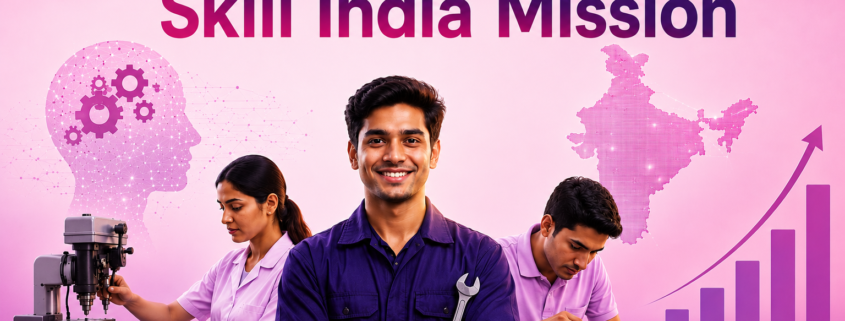
Introduction to Skill India Mission

India is home to one of the world’s largest youth populations, presenting a tremendous opportunity for economic growth and innovation. However, to harness this demographic advantage, it is essential that young people possess the skills required by modern industries. While academic education plays an important role, practical and industry-relevant skills are equally critical for improving employability, fostering entrepreneurship, and driving sustainable economic development.

For many years, a significant gap existed between the skills acquired through formal education and the competencies demanded by employers. As a result, many young people faced difficulties in securing quality employment despite holding educational qualifications. Similarly, industries struggled to find a workforce equipped with the necessary technical and vocational skills.

To address this challenge, the Government of India launched the Skill India Mission, a nationwide initiative aimed at equipping millions of Indians with industry-relevant skills, enhancing employability, and promoting entrepreneurship. The mission seeks to create a skilled workforce capable of meeting the demands of a rapidly evolving economy while encouraging innovation, self-employment, and lifelong learning.

Since its launch, Skill India has become one of the country’s largest skill development initiatives, benefiting students, job seekers, women, entrepreneurs, and professionals across diverse sectors.

In this article, we will explore everything about the Skill India Mission, including its objectives, key components, flagship programs, benefits, eligibility, application process, and its role in shaping India’s future workforce.


What is the Skill India  Mission?

The Skill India Mission is a flagship initiative of the Government of India launched on 15 July 2015 to create a skilled and future-ready workforce. The mission is led by the Ministry of Skill Development and Entrepreneurship (MSDE) and works in collaboration with state governments, industry partners, training institutions, and Sector Skill Councils.

The primary objective of the mission is to provide quality vocational training, improve employability, bridge the skill gap, and promote entrepreneurship among youth.

Skill India focuses on developing practical skills that align with industry requirements, ensuring that individuals are better prepared for employment or self-employment.

The mission supports several national priorities, including:

  • Employment generation
  • Entrepreneurship development
  • Digital transformation
  • Women empowerment
  • Rural development
  • Manufacturing growth
  • Inclusive economic development

Why Was Skill India Mission Introduced?

India’s growing economy requires a workforce that is trained in modern technologies, manufacturing processes, digital services, healthcare, construction, logistics, retail, hospitality, and other emerging industries.

Before the launch of Skill India, several challenges affected workforce development:

  • Mismatch between education and industry needs
  • Limited vocational training opportunities
  • High youth unemployment
  • Shortage of skilled workers
  • Low productivity in several sectors
  • Limited entrepreneurship training
  • Lack of recognition for informal skills

The Skill India Mission was introduced to bridge these gaps by creating an ecosystem where individuals can gain relevant skills, obtain certifications, and access employment opportunities.


Objectives of Skill India Mission

The mission has several important objectives.

1. Develop a Skilled Workforce

The primary objective is to equip individuals with industry-relevant technical and vocational skills.

2. Improve Employability

Skill India helps job seekers become more competitive in the labor market by providing practical training aligned with industry standards.

3. Promote Entrepreneurship

The mission encourages individuals to start their own businesses through entrepreneurship training and skill development.

4. Bridge the Skill Gap

Training programs are designed to meet current and future workforce requirements across multiple industries.

5. Encourage Lifelong Learning

Skill India promotes continuous learning and upskilling to help individuals adapt to technological advancements.

6. Support Inclusive Growth

The mission aims to provide equal opportunities for women, rural youth, economically weaker sections, and marginalized communities.


Key Components of Skill India Mission

Skill India is an umbrella initiative that includes several flagship programs and institutions.

Pradhan Mantri Kaushal Vikas Yojana (PMKVY)

PMKVY is one of the most recognized components of Skill India. It provides short-term skill training, Recognition of Prior Learning (RPL), and placement assistance across multiple sectors.


National Skill Development Corporation (NSDC)

NSDC works with private training partners, industries, and educational institutions to expand skill development infrastructure across India.


Jan Shikshan Sansthan (JSS)

JSS provides vocational training to non-literate, neo-literate, school dropouts, women, and marginalized communities, particularly in rural areas.


Industrial Training Institutes (ITIs)

ITIs offer technical and vocational education in trades such as electrician, fitter, welder, mechanic, computer operator, and electronics.


Apprenticeship Promotion

The mission encourages industries to provide practical workplace training through apprenticeship programs, enabling candidates to gain real-world experience.


Skill Hubs and Digital Learning

The mission increasingly promotes blended learning through digital platforms, skill hubs, and technology-enabled training centers.


Major Sectors Covered Under Skill India

Training programs are available across a wide range of industries, including:

  • Information Technology
  • Healthcare
  • Retail
  • Banking and Financial Services
  • Construction
  • Hospitality and Tourism
  • Agriculture
  • Logistics
  • Electronics
  • Renewable Energy
  • Manufacturing
  • Automotive
  • Beauty and Wellness
  • Textile and Apparel
  • Food Processing
  • Media and Entertainment
  • Telecom
  • Handicrafts and Traditional Crafts

This broad sector coverage ensures that learners can choose training based on their interests and local employment opportunities.


Benefits of Skill India Mission

1. Better Employment Opportunities

Industry-oriented training increases the chances of securing jobs in both the public and private sectors.


2. Entrepreneurship Development

The mission supports aspiring entrepreneurs by providing business-related skills, financial literacy, and enterprise development training.


3. Industry-Recognized Certification

Many training programs provide nationally recognized certifications that enhance employability.


4. Higher Income Potential

Skilled workers generally have better earning opportunities compared to unskilled workers.


5. Digital Literacy

Many courses include digital skills that are essential in today’s technology-driven economy.


6. Women’s Empowerment

Skill India encourages women’s participation in technical, vocational, and entrepreneurial training, helping them achieve financial independence.


7. Rural Development

Training programs in agriculture, food processing, handicrafts, and rural enterprises help create livelihood opportunities in villages.


Eligibility Criteria

Eligibility depends on the specific training programme, but generally, Skill India is open to:

  • Indian citizens
  • Students
  • School and college graduates
  • School dropouts
  • Job seekers
  • Women
  • Rural youth
  • Self-employed individuals
  • Entrepreneurs
  • Working professionals seeking upskilling or reskilling

The age and educational qualifications vary depending on the course and implementing agency.


Documents Required

Applicants may generally require:

  • Aadhaar Card
  • Identity proof
  • Address proof
  • Passport-size photographs
  • Educational qualification certificates
  • Mobile number
  • Email ID (where applicable)
  • Bank account details (for eligible programmes)

Additional documents may be required depending on the training provider.


How to Apply for Skill India Mission

The application process may vary based on the programme, but it generally involves the following steps:

Step 1: Explore Available Courses

Candidates should identify a training programme that matches their interests and career goals.


Step 2: Choose an Authorized Training Centre

Select an approved Skill India training provider or institution.


Step 3: Register

Complete the registration process by submitting the required personal and educational information.


Step 4: Document Verification

Training providers verify the applicant’s eligibility and supporting documents.


Step 5: Attend Training

Participants undergo classroom learning, practical sessions, and assessments.


Step 6: Certification and Placement Support

Upon successful completion, candidates receive certification and may receive placement or entrepreneurship guidance, depending on the programme.


Impact of Skill India Mission

Since its launch, Skill India has significantly contributed to workforce development in India.

Some major achievements include:

  • Expansion of vocational training infrastructure
  • Increased industry participation in skill development
  • Improved employability of youth
  • Enhanced digital skills across multiple sectors
  • Greater participation of women in vocational education
  • Promotion of entrepreneurship and self-employment
  • Strengthened apprenticeship ecosystem

The mission continues to support India’s transition toward a knowledge-based and innovation-driven economy.


Challenges and Future Opportunities

Despite substantial progress, some challenges remain.

Industry Alignment

Training programmes must continuously evolve to match changing industry requirements and emerging technologies.


Placement Opportunities

Strengthening employer partnerships can further improve post-training employment outcomes.


Awareness

Many eligible individuals, especially in rural areas, are still unaware of available training programmes.


Continuous Upskilling

Rapid technological change requires continuous learning and reskilling throughout one’s career.

Addressing these challenges will help maximize the impact of Skill India in the coming years.


How Skill India Mission Supports India’s Vision of a Developed Nation

Skill India plays a vital role in achieving several national priorities, including:

  • Atmanirbhar Bharat
  • Make in India
  • Digital India
  • Startup India
  • Women-Led Development
  • Manufacturing Growth
  • Employment Generation
  • Sustainable Economic Development

By building a skilled workforce, the mission strengthens India’s global competitiveness and supports long-term economic growth.


How Raiseonic Helps You Stay Updated on Skill Development and Government Opportunities

Government skill development programmes are regularly updated with new courses, certifications, industry partnerships, and eligibility guidelines.

At Raiseonic, we simplify government initiatives by providing easy-to-understand guides, practical insights, and expert information on skill development programmes, entrepreneurship schemes, startup funding, women empowerment initiatives, financial assistance, MSME support, and employment opportunities.

Whether you are a student, job seeker, entrepreneur, or professional looking to upgrade your skills, Raiseonic helps you stay informed and make confident career decisions.


Conclusion

The Skill India Mission is a transformative initiative that is shaping India’s future by creating a skilled, employable, and entrepreneurial workforce. Through vocational training, industry collaboration, certification, and entrepreneurship support, the mission empowers individuals to build successful careers and contribute to the nation’s economic growth.

As industries continue to evolve and new technologies create emerging job opportunities, skill development has become more important than ever. By investing in practical skills and lifelong learning, Skill India is helping millions of Indians unlock their potential and prepare for the future of work.

For the latest updates on government schemes, skill development programmes, entrepreneurship initiatives, startup opportunities, employment support, and financial assistance schemes, stay connected with Raiseonic—your trusted source for simplified government scheme information and guidance.
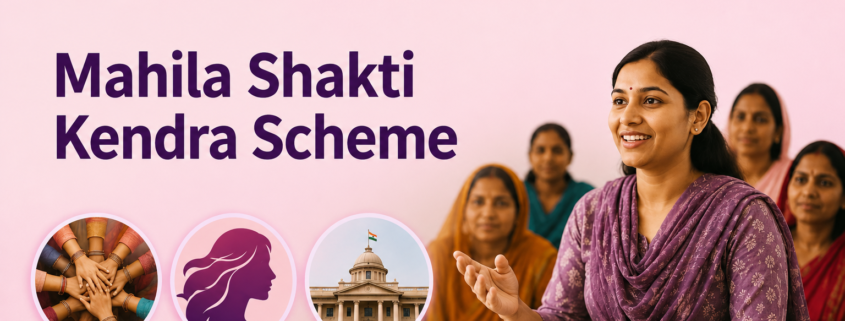
Introduction to Mahila Shakti Kendra Scheme

Women are at the heart of India’s social and economic development. Their active participation in education, entrepreneurship, employment, healthcare, and decision-making is essential for building an inclusive and progressive nation. Over the years, the Government of India has introduced numerous initiatives to improve the status of women by promoting education, financial inclusion, skill development, health, safety, and employment opportunities.

Despite these efforts, many women—especially those living in rural and remote areas—continue to face challenges such as limited access to government schemes, lack of awareness about their legal rights, inadequate employment opportunities, financial dependence, and insufficient access to skill development programs. These barriers often prevent women from becoming economically and socially empowered.

To bridge this gap, the Government of India introduced the Mahila Shakti Kendra (MSK) Scheme, an initiative aimed at empowering women at the grassroots level through community participation, awareness generation, capacity building, and convergence of various government welfare schemes.

The scheme focuses on helping women access government services, develop new skills, improve financial literacy, and become active participants in local development. Through dedicated support centers at different administrative levels, Mahila Shakti Kendras act as a link between women and various government programs designed for their welfare.

In this article, we will explore everything about the Mahila Shakti Kendra Scheme, including its objectives, features, benefits, eligibility criteria, implementation, and its role in promoting women-led development in India.


What is the Mahila Shakti Kendra Scheme?

The Mahila Shakti Kendra (MSK) Scheme was launched by the Ministry of Women and Child Development, Government of India to empower women through community engagement, awareness, skill development, and improved access to government welfare services.

Introduced in 2017, the scheme aimed to strengthen support systems for women at the village, block, district, and state levels by creating dedicated centers that provide information, guidance, and assistance related to various government schemes and services.

The scheme primarily focused on rural women and sought to improve their participation in education, employment, entrepreneurship, digital literacy, financial inclusion, and social development.

Mahila Shakti Kendras worked closely with local administration, educational institutions, community organizations, and volunteers to promote women empowerment at the grassroots level.


Why Was the Mahila Shakti Kendra Scheme Introduced?

Although several welfare schemes were already available for women, many eligible beneficiaries were unable to access them because of:

  • Lack of awareness
  • Limited information about government programs
  • Poor access to public services
  • Low financial literacy
  • Limited employment opportunities
  • Social and economic barriers
  • Lack of skill development facilities

The Mahila Shakti Kendra Scheme was introduced to bridge these gaps by creating a community-based support system that would connect women with government services and help them improve their social and economic status.

The initiative also aligned with India’s vision of:

  • Women-led development
  • Financial inclusion
  • Skill India
  • Digital India
  • Rural development
  • Inclusive growth

Objectives of the Mahila Shakti Kendra Scheme

The scheme was designed with several important objectives.

1. Empower Women at the Grassroots Level

The primary objective was to improve the socio-economic status of women through awareness and community participation.

2. Increase Awareness of Government Schemes

The scheme helped women understand and access various welfare programmes related to health, education, entrepreneurship, nutrition, and financial assistance.

3. Promote Skill Development

Mahila Shakti Kendras encouraged women to participate in vocational training and livelihood programmes.

4. Encourage Financial Inclusion

Women were guided on banking services, savings, insurance, pensions, and government financial schemes.

5. Strengthen Community Participation

The initiative promoted leadership, participation in local governance, and community engagement.

6. Improve Access to Public Services

Women received guidance regarding education, healthcare, legal aid, employment, and entrepreneurship opportunities.


Key Features of Mahila Shakti Kendra Scheme

Community-Based Support System

The scheme established support centres at multiple administrative levels to assist women with information and access to government services.


Awareness Generation

Regular awareness programmes were conducted on topics such as:

  • Women’s rights
  • Health and nutrition
  • Education
  • Financial literacy
  • Government welfare schemes
  • Digital literacy
  • Legal awareness

Skill Development Support

Women were encouraged to participate in various skill development programmes to improve employability and entrepreneurship opportunities.

Training areas included:

  • Tailoring
  • Handicrafts
  • Computer literacy
  • Entrepreneurship
  • Food processing
  • Beauty and wellness
  • Retail skills
  • Financial management

Digital Literacy

The scheme promoted digital awareness and encouraged women to use online government services, digital payments, and internet-based opportunities.


Convergence of Government Schemes

One of the major strengths of Mahila Shakti Kendras was helping women benefit from multiple government schemes through a single support platform.

Women received information regarding:

  • Health schemes
  • Financial assistance programmes
  • Skill development initiatives
  • Entrepreneurship support
  • Education schemes
  • Social security programmes

Benefits of Mahila Shakti Kendra Scheme

1. Better Access to Government Services

Women gained easier access to welfare programmes and public services.


2. Improved Awareness

The scheme increased awareness about rights, legal protections, and government initiatives.


3. Enhanced Employability

Skill development programmes improved employment opportunities for women.


4. Promotion of Entrepreneurship

Women received guidance on self-employment and small business opportunities.


5. Financial Independence

Improved financial literacy encouraged women to access banking services and government financial assistance.


6. Social Empowerment

Women became more confident in participating in family, community, and local governance activities.


Major Activities Under Mahila Shakti Kendra

The scheme supported several community-level activities.

Awareness Campaigns

Information sessions on:

  • Women’s rights
  • Nutrition
  • Education
  • Health
  • Hygiene
  • Digital literacy
  • Financial inclusion

Skill Development Workshops

Vocational training programs aimed at improving livelihood opportunities.


Counselling Services

Women received guidance regarding:

  • Government schemes
  • Career opportunities
  • Entrepreneurship
  • Education
  • Social welfare programmes

Community Mobilization

Volunteers and local organizations encouraged women to participate in community development activities.


Eligibility Criteria

The scheme primarily focused on:

  • Rural women
  • Women from economically weaker sections
  • Students
  • Women entrepreneurs
  • Self-Help Group members
  • Widows
  • Single women
  • Women seeking skill development and government support

Since Mahila Shakti Kendra served as a facilitation initiative, women seeking information or support for eligible government programmes could approach the centres.


Documents Required

Depending on the service being accessed, women may generally require:

  • Aadhaar Card
  • Identity proof
  • Address proof
  • Passport-size photographs
  • Mobile number
  • Bank account details (for applicable schemes)
  • Income certificate (where required)
  • Educational certificates (for training programmes)

The documentation varied according to the specific service or welfare scheme.


How to Access Benefits Under the Mahila Shakti Kendra Scheme

Women could access support through the following process.

Step 1: Visit the Nearest Mahila Shakti Kendra

Eligible women could approach their district or block-level Mahila Shakti Kendra for assistance.


Step 2: Discuss Requirements

Officials or trained volunteers helped identify suitable government schemes, training programmes, or services.


Step 3: Submit Required Information

Applicants provided necessary documents depending on the assistance required.


Step 4: Receive Guidance

Women received counselling, awareness support, referrals, and assistance with application procedures.


Step 5: Participate in Programmes

Beneficiaries could join training programmes, awareness sessions, or entrepreneurship initiatives recommended by the centre.


Impact of the Mahila Shakti Kendra Scheme

The scheme contributed to women’s empowerment in several ways.

Some major achievements included:

  • Increased awareness about government schemes.
  • Improved participation of women in skill development programmes.
  • Better financial literacy.
  • Enhanced access to public services.
  • Promotion of entrepreneurship.
  • Strengthened community participation.
  • Increased digital awareness among rural women.

The initiative also supported the Government’s larger goal of creating informed, skilled, and economically independent women.


Challenges in Implementation

Like many community-based programmes, the scheme faced certain challenges.

Awareness Gap

Many women in remote areas remained unaware of the services available through Mahila Shakti Kendras.


Digital Divide

Limited internet access and digital literacy affected the adoption of online services in some regions.


Coordination

Effective implementation required strong coordination among multiple departments and local institutions.


Infrastructure

Some areas required better facilities and trained personnel to improve service delivery.

Continued investment in awareness, digital infrastructure, and community engagement can further strengthen similar women empowerment initiatives.


How Mahila Shakti Kendra Supports India’s Vision of Women-Led Development

The Government of India has consistently emphasized women-led development as a key driver of inclusive growth.

The Mahila Shakti Kendra Scheme supported this vision by:

  • Improving awareness of government schemes.
  • Encouraging financial inclusion.
  • Promoting entrepreneurship.
  • Enhancing digital literacy.
  • Supporting skill development.
  • Strengthening community participation.
  • Encouraging leadership among women.

By connecting women with opportunities and public services, the scheme contributed to long-term social and economic empowerment.


How Raiseonic Helps Women Stay Updated on Government Schemes

Government welfare programmes frequently evolve with new guidelines, eligibility criteria, and implementation strategies, making it difficult for beneficiaries to stay informed.

At Raiseonic, we simplify government initiatives through easy-to-understand guides, expert insights, and practical information on women empowerment schemes, entrepreneurship programmes, startup funding, financial assistance, healthcare initiatives, skill development programmes, and social welfare schemes.

Whether you are looking for employment opportunities, business support, or government benefits, Raiseonic helps you understand schemes clearly and make informed decisions.


Conclusion

The Mahila Shakti Kendra Scheme represented an important step toward empowering women by improving awareness, promoting skill development, strengthening financial inclusion, and connecting women with government welfare programmes. Through community participation and grassroots support, the initiative helped women become more informed, confident, and economically active.

Although the scheme has since been subsumed into broader women empowerment initiatives under the Mission Shakti framework, its focus on community-based support and convergence of government services continues to influence women’s welfare programmes across India.

As India advances toward inclusive and women-led development, access to information, skills, financial resources, and government support remains essential for empowering every woman. Initiatives inspired by the Mahila Shakti Kendra model continue to contribute to stronger communities and greater opportunities for women nationwide.

For the latest updates on government schemes, women empowerment initiatives, entrepreneurship opportunities, financial assistance programmes, and skill development schemes, stay connected with Raiseonic—your trusted source for simplified government scheme information and guidance.
Introduction to Pradhan Mantri Ujjwala Yojana

Access to clean cooking fuel is essential for maintaining good health, protecting the environment, and improving the quality of life. For many years, millions of households in rural and economically weaker sections of India relied on traditional cooking fuels such as firewood, coal, cow dung cakes, crop residue, and kerosene. While these fuels were easily available, they produced harmful smoke that posed serious health risks, particularly for women and children who spent significant time in kitchens.

Indoor air pollution caused by traditional cooking methods has been linked to respiratory diseases, eye infections, cardiovascular problems, and other health complications. Moreover, collecting firewood requires considerable time and effort, limiting opportunities for women to pursue education, employment, or entrepreneurship.

Recognizing these challenges, the Government of India launched the Pradhan Mantri Ujjwala Yojana (PMUY) to provide free LPG (Liquefied Petroleum Gas) connections to eligible women from poor households. The scheme aims to replace traditional cooking methods with clean, safe, and environmentally friendly cooking fuel, thereby improving women’s health, reducing indoor air pollution, and promoting women empowerment.

Since its launch, PMUY has become one of India’s largest social welfare initiatives, benefiting millions of families across the country and contributing to cleaner energy adoption.

In this article, we will explore everything about the Pradhan Mantri Ujjwala Yojana, including its objectives, features, benefits, eligibility criteria, application process, documents required, and its impact on women’s lives and rural development.


What is Pradhan Mantri Ujjwala Yojana (PMUY)?

Pradhan Mantri Ujjwala Yojana (PMUY) is a flagship welfare scheme launched by the Ministry of Petroleum and Natural Gas, Government of India to provide LPG connections to eligible women belonging to economically weaker households.

The scheme was launched on 1 May 2016 with the objective of ensuring access to clean cooking fuel while improving health, hygiene, and environmental sustainability.

Under PMUY, eligible women receive financial assistance for obtaining a new LPG connection, helping them shift from traditional cooking fuels to cleaner and safer LPG.

The scheme primarily aims to:

  • Improve women’s health
  • Reduce indoor air pollution
  • Promote clean energy
  • Empower women
  • Protect the environment
  • Improve the quality of life for rural households

Why Was PMUY Introduced?

Before the launch of PMUY, millions of Indian households depended on biomass fuels for cooking. These traditional fuels generated harmful smoke that exposed women and children to dangerous indoor air pollution.

Some major challenges included:

  • Respiratory diseases caused by smoke
  • Eye irritation and long-term health problems
  • Time spent collecting firewood
  • Environmental degradation due to deforestation
  • Reduced productivity of women
  • Unsafe cooking conditions

To overcome these issues, the Government introduced PMUY to ensure that every eligible household could access clean cooking fuel.

The scheme supports national initiatives such as:

  • Clean India (Swachh Bharat)
  • Women Empowerment
  • Energy Access
  • Health Improvement
  • Environmental Protection
  • Sustainable Development Goals (SDGs)

Objectives of Pradhan Mantri Ujjwala Yojana

The scheme has several important objectives.

1. Promote Clean Cooking Fuel

The primary objective is to replace traditional cooking fuels with LPG.

2. Improve Women’s Health

Reducing indoor smoke exposure helps lower the risk of respiratory and other health-related illnesses.

3. Empower Women

LPG connections are issued in the name of the adult woman of the household, strengthening her role in the family.

4. Reduce Indoor Air Pollution

The scheme contributes to cleaner kitchens and healthier living conditions.

5. Protect the Environment

Reduced dependence on firewood helps decrease deforestation and environmental degradation.

6. Improve Quality of Life

Women save time and effort previously spent collecting fuel, allowing them to pursue education, employment, or income-generating activities.


Key Features of PMUY

Free LPG Connection

Eligible women receive financial assistance for a new LPG connection under the scheme.

The support generally covers:

  • LPG connection charges
  • Security deposit for the cylinder
  • Pressure regulator

The Government has also introduced support measures from time to time to make LPG adoption easier for beneficiaries.


Women-Centric Scheme

The LPG connection is provided in the name of the eligible adult woman of the household, encouraging financial and social empowerment.


Nationwide Coverage

The scheme is implemented across all States and Union Territories, benefiting eligible rural and urban households.


Direct Benefit Transfer (DBT)

Eligible LPG subsidies, where applicable, are transferred directly to beneficiaries’ bank accounts through the DBT system, ensuring transparency and reducing leakages.


Benefits of Pradhan Mantri Ujjwala Yojana

1. Better Health

Using LPG significantly reduces exposure to harmful smoke, improving respiratory health and overall well-being.


2. Time Savings

Women no longer need to spend hours collecting firewood or preparing traditional fuels.


3. Women’s Empowerment

Ownership of the LPG connection enhances women’s participation in household decision-making and promotes dignity.


4. Environmental Protection

Reduced use of firewood contributes to forest conservation and lower carbon emissions.


5. Improved Hygiene

Cleaner kitchens result in a healthier home environment.


6. Economic Benefits

Time saved from fuel collection can be utilized for education, skill development, self-employment, or other productive activities.


Eligibility Criteria for PMUY

Eligibility is determined according to the latest Government guidelines.

Generally, applicants should:

  • Be an adult woman (18 years or above).
  • Belong to an eligible household identified under the scheme guidelines.
  • Not already have an LPG connection in the same household.
  • Fulfil the eligibility conditions prescribed by the Government.

The Government has expanded beneficiary categories over time to include various eligible groups under revised PMUY guidelines.

Applicants should refer to the latest official guidelines for complete eligibility details.


Documents Required

Applicants generally require:

  • Aadhaar Card
  • Identity proof
  • Address proof
  • Ration Card or other eligible household document (where applicable)
  • Bank account details
  • Passport-size photograph
  • Mobile number

Additional documents may be required based on the applicant’s eligibility category.


How to Apply for Pradhan Mantri Ujjwala Yojana

The application process is straightforward.

Step 1: Visit the Nearest LPG Distributor

Eligible applicants can approach an authorized LPG distributor of an Oil Marketing Company.


Step 2: Obtain the Application Form

Collect the PMUY application form or apply through the official online platform, where available.


Step 3: Submit Documents

Attach all required identity, address, eligibility, and banking documents.


Step 4: Verification

The submitted application is verified by the concerned authorities.


Step 5: Approval and LPG Connection

After successful verification, the LPG connection is issued in the name of the eligible woman beneficiary.


Implementation of PMUY

The scheme is implemented by:

  • Ministry of Petroleum and Natural Gas
  • Public Sector Oil Marketing Companies (OMCs)
  • Authorized LPG distributors
  • State and district authorities

The implementing agencies ensure beneficiary identification, connection issuance, awareness campaigns, and efficient service delivery.


Impact of PMUY

Since its launch, Pradhan Mantri Ujjwala Yojana has had a transformative impact on millions of households.

Some major achievements include:

  • Crores of LPG connections released to eligible women.
  • Significant reduction in dependence on traditional cooking fuels.
  • Improved maternal and child health due to reduced indoor air pollution.
  • Increased awareness about clean energy.
  • Enhanced dignity and convenience for women.
  • Greater adoption of LPG in rural areas.
  • Contribution to environmental sustainability.

The scheme has become one of India’s largest clean energy and women empowerment initiatives.


Challenges in Implementation

Despite its success, some challenges remain.

Refill Affordability

For some low-income families, the recurring cost of LPG refills can be a concern. The Government has periodically announced support measures and subsidy provisions to improve affordability.


Awareness

Continuous awareness campaigns are required to encourage sustained use of LPG over traditional fuels.


Accessibility in Remote Areas

Ensuring timely LPG supply in remote and geographically difficult regions remains an ongoing priority.


Behavioural Change

Some households continue to use traditional fuels alongside LPG. Awareness and education can encourage exclusive adoption of clean cooking fuel.


How PMUY Supports India’s Vision of Sustainable Development

Pradhan Mantri Ujjwala Yojana contributes to several national development goals, including:

  • Women Empowerment
  • Clean Energy
  • Healthy India
  • Swachh Bharat
  • Environmental Conservation
  • Financial Inclusion
  • Sustainable Development Goals (SDGs)

The scheme improves health outcomes while supporting cleaner energy and inclusive development.


How Raiseonic Helps You Stay Updated on Government Welfare Schemes

Government welfare schemes frequently undergo updates related to eligibility, subsidy provisions, documentation requirements, and implementation guidelines.

At Raiseonic, we simplify government initiatives through easy-to-understand guides, practical insights, and expert information on women welfare schemes, social security programmes, entrepreneurship initiatives, startup support, financial assistance, healthcare schemes, and clean energy programmes.

Whether you are exploring welfare benefits, business opportunities, or government support programmes, Raiseonic helps you stay informed with reliable and simplified information.


Conclusion

The Pradhan Mantri Ujjwala Yojana (PMUY) is one of India’s most impactful social welfare initiatives, improving the lives of millions of women by providing access to clean cooking fuel. By replacing traditional cooking methods with LPG, the scheme has significantly reduced indoor air pollution, improved maternal and family health, strengthened women’s empowerment, and promoted environmental sustainability.

Beyond providing LPG connections, PMUY represents the Government’s commitment to ensuring dignity, better health, and improved living conditions for economically weaker households. As India continues its journey toward inclusive development and clean energy adoption, the Pradhan Mantri Ujjwala Yojana remains a cornerstone of social welfare and women-centric development.

For the latest updates on government schemes, women empowerment initiatives, healthcare programmes, clean energy schemes, financial assistance, and entrepreneurship opportunities, stay connected with Raiseonic—your trusted source for simplified government scheme information and guidance.
Introduction to Pradhan Mantri Matru Vandana Yojana

Motherhood is one of the most significant phases in a woman’s life, requiring proper healthcare, nutrition, and financial support. A healthy mother is essential for giving birth to a healthy child, and ensuring maternal well-being is a critical step toward building a healthier nation. However, many pregnant women in India, particularly those from economically weaker sections, face financial challenges that prevent them from accessing adequate nutrition, medical care, and rest during pregnancy.

In many households, women continue working throughout pregnancy due to financial constraints, increasing the risk of maternal complications and poor birth outcomes. Lack of awareness about prenatal care and insufficient income further affect the health of both mothers and newborns.

To address these challenges, the Government of India launched the Pradhan Mantri Matru Vandana Yojana (PMMVY), a flagship maternity benefit scheme that provides financial assistance to eligible pregnant and lactating women. The scheme aims to improve maternal health, encourage institutional healthcare, promote proper nutrition, and partially compensate for wage loss during pregnancy.

By reducing financial burdens and encouraging timely healthcare services, PMMVY contributes significantly to reducing maternal and infant mortality while promoting the overall well-being of mothers and children.

In this article, we will explore everything about the Pradhan Mantri Matru Vandana Yojana, including its objectives, benefits, eligibility criteria, financial assistance, application process, documents required, and its role in strengthening maternal and child healthcare in India.


What is Pradhan Mantri Matru Vandana Yojana (PMMVY)?

Pradhan Mantri Matru Vandana Yojana (PMMVY) is a centrally sponsored maternity benefit scheme implemented by the Ministry of Women and Child Development, Government of India.

The scheme was launched on 1 January 2017 under the provisions of the National Food Security Act (NFSA), 2013 to provide conditional cash assistance to eligible pregnant and lactating women.

PMMVY aims to:

  • Improve maternal health
  • Promote institutional healthcare
  • Encourage early registration of pregnancy
  • Support adequate nutrition during pregnancy
  • Reduce maternal and infant mortality
  • Provide financial support to compensate for wage loss

The financial assistance is transferred directly to the beneficiary’s bank account through the Direct Benefit Transfer (DBT) system, ensuring transparency and timely payments.


Why Was PMMVY Introduced?

Pregnancy often results in temporary income loss for women, especially those engaged in informal employment or daily wage work. Financial difficulties may lead to inadequate nutrition, delayed medical check-ups, and insufficient rest during pregnancy.

Some common challenges include:

  • Poor maternal nutrition
  • Limited access to antenatal care
  • Financial hardship during pregnancy
  • Low institutional delivery rates in some regions
  • Lack of awareness about maternal healthcare
  • High maternal and infant mortality risks

The Government introduced PMMVY to encourage women to access healthcare services during pregnancy and provide financial support for improved nutrition and medical care.

The scheme aligns with India’s goals of:

  • Improving maternal health
  • Reducing infant mortality
  • Strengthening women’s health
  • Promoting financial inclusion
  • Achieving Sustainable Development Goals (SDGs)

Objectives of Pradhan Mantri Matru Vandana Yojana

The scheme has several important objectives.

1. Improve Maternal Health

The primary objective is to ensure better healthcare and nutrition for pregnant women.

2. Promote Institutional Healthcare

The scheme encourages women to register pregnancies early and receive regular antenatal check-ups.

3. Reduce Financial Burden

Financial assistance helps compensate for partial wage loss during pregnancy and childbirth.

4. Improve Child Health

Healthy mothers are more likely to give birth to healthy babies, reducing neonatal complications.

5. Encourage Proper Nutrition

The scheme supports improved dietary intake during pregnancy and lactation.

6. Promote Safe Motherhood

PMMVY encourages timely medical care and institutional support throughout pregnancy.


Key Features of PMMVY

Direct Financial Assistance

Eligible beneficiaries receive financial assistance directly into their bank accounts through the DBT system.


Conditional Cash Transfer

Financial assistance is linked to fulfilling certain maternal healthcare conditions such as:

  • Early pregnancy registration
  • Antenatal care
  • Childbirth registration
  • Immunization milestones (as applicable under current guidelines)

Focus on Maternal Nutrition

The assistance can be used for:

  • Nutritious food
  • Medical expenses
  • Essential healthcare
  • Pregnancy-related needs

Nationwide Implementation

The scheme is implemented across all States and Union Territories through the Integrated Child Development Services (ICDS) network and health institutions.


Financial Benefits Under PMMVY

Under the current PMMVY guidelines, eligible beneficiaries receive cash assistance of up to ₹5,000 for the first living child, subject to fulfilling prescribed conditions and milestones. In addition, eligible mothers may receive benefits under other maternity-related government programmes, depending on applicable rules.

For a second child, financial assistance under PMMVY is available if the second child is a girl, as per the revised PMMVY 2.0 guidelines. The benefit amount and eligibility are governed by the latest government provisions.

The amount is credited directly to the beneficiary’s bank account through the Direct Benefit Transfer (DBT) mechanism.


Benefits of Pradhan Mantri Matru Vandana Yojana

1. Financial Support During Pregnancy

The scheme provides much-needed financial assistance to pregnant women from economically vulnerable households.


2. Better Maternal Nutrition

The cash benefit enables women to purchase nutritious food and supplements.


3. Improved Healthcare Access

Women are encouraged to undergo regular health check-ups and seek institutional medical care.


4. Reduced Maternal and Infant Mortality

Timely healthcare and improved nutrition contribute to safer pregnancies and healthier newborns.


5. Financial Inclusion

Direct transfer of benefits promotes banking access and transparency.


6. Women’s Empowerment

The scheme recognizes women as direct beneficiaries and strengthens their role in household healthcare decisions.


Eligibility Criteria for PMMVY

Women must satisfy the prescribed eligibility conditions to receive benefits under the scheme.

Generally, beneficiaries include:

  • Pregnant women
  • Lactating mothers
  • Women belonging to eligible households
  • Applicants meeting the conditions under PMMVY guidelines

Certain categories, such as women employed in regular government service or those already receiving similar maternity benefits under other laws, may not be eligible. Eligibility is determined according to the latest government guidelines.


Documents Required

Applicants generally need:

  • Aadhaar Card
  • Identity proof
  • Address proof
  • Pregnancy registration documents
  • Mother and Child Protection (MCP) Card
  • Bank account details
  • Mobile number
  • Child birth certificate (where applicable)
  • Passport-size photograph

Additional documents may be required by the implementing authority.


How to Apply for Pradhan Mantri Matru Vandana Yojana

The application process is simple and accessible.

Step 1: Register Pregnancy

Pregnant women should register their pregnancy at the nearest:

  • Anganwadi Centre
  • Government Health Centre
  • Primary Health Centre (PHC)
  • Community Health Centre (CHC)

Step 2: Obtain the Application Form

Eligible women can obtain the prescribed PMMVY application forms from the concerned authorities or through the designated online portal, where available.


Step 3: Submit Required Documents

Attach all necessary identity, medical, and banking documents.


Step 4: Verification

The concerned authority verifies the submitted information and eligibility.


Step 5: Benefit Transfer

After successful verification and completion of eligible milestones, the financial assistance is transferred directly to the beneficiary’s bank account.


Implementation of PMMVY

The scheme is implemented through coordinated efforts of:

  • Ministry of Women and Child Development
  • State Governments
  • Anganwadi Centres
  • Health Departments
  • Accredited Social Health Activists (ASHAs)
  • Auxiliary Nurse Midwives (ANMs)

These frontline workers help identify eligible beneficiaries, assist with registration, and ensure awareness about maternal healthcare services.


Impact of PMMVY

Since its launch, PMMVY has contributed significantly to maternal and child welfare.

Some key achievements include:

  • Increased pregnancy registration
  • Improved antenatal care coverage
  • Better institutional healthcare utilization
  • Enhanced awareness about maternal nutrition
  • Financial assistance to millions of eligible women
  • Strengthened Direct Benefit Transfer system

The scheme continues to support the Government’s mission of improving maternal and child health outcomes across India.


Challenges in Implementation

Despite its success, certain challenges remain.

Awareness Gap

Many eligible women are still unaware of the scheme and its benefits.


Documentation Issues

Incomplete documentation may delay application processing.


Banking Access

Women in remote areas may face difficulties accessing banking services.


Digital Literacy

Improved awareness about online registration and digital services can enhance scheme utilization.

Continued awareness campaigns and community outreach can help address these challenges.


How PMMVY Supports India’s Vision of Women and Child Development

PMMVY contributes to several national priorities, including:

  • Healthy India
  • Women empowerment
  • Financial inclusion
  • Maternal healthcare
  • Child welfare
  • Nutrition improvement
  • Sustainable Development Goals (SDGs)

By investing in maternal health, the scheme helps create healthier families and stronger communities.


How Raiseonic Helps You Stay Updated on Government Welfare Schemes

Government welfare schemes often involve changing eligibility criteria, revised benefit amounts, documentation requirements, and application procedures that can be difficult to understand.

At Raiseonic, we simplify government initiatives through easy-to-understand guides, practical insights, and expert information on women empowerment, healthcare schemes, financial assistance programmes, entrepreneurship initiatives, startup support, and social welfare programmes.

Whether you are looking for information on maternity benefits, women welfare schemes, financial assistance programmes, or other government initiatives, Raiseonic helps you stay informed and make confident decisions.


Conclusion

The Pradhan Mantri Matru Vandana Yojana (PMMVY) is one of India’s most important maternal welfare programmes, providing financial assistance and healthcare support to eligible pregnant and lactating women. By encouraging early pregnancy registration, regular antenatal care, institutional healthcare, and proper nutrition, the scheme plays a crucial role in improving maternal and child health across the country.

Beyond financial assistance, PMMVY reflects the Government’s commitment to ensuring that every mother receives the care, dignity, and support she deserves during pregnancy and after childbirth. As India continues to strengthen its healthcare system and promote women’s well-being, PMMVY remains a vital initiative for building healthier families and a healthier nation.

For the latest updates on government schemes, women welfare initiatives, healthcare programmes, financial assistance schemes, and entrepreneurship opportunities, stay connected with Raiseonic—your trusted source for simplified government scheme information and guidance.
Introduction to Mahila E-Haat

The rapid growth of digital technology has transformed the way businesses operate across the world. Today, entrepreneurs can showcase their products, connect with customers, and sell online without the need for a physical store. For women entrepreneurs, especially those from rural and semi-urban areas, digital platforms have opened new opportunities to become financially independent and reach wider markets.

However, despite possessing exceptional skills in handicrafts, textiles, food processing, handmade products, and other traditional crafts, many women struggle to market their products due to limited access to technology, marketing channels, and digital infrastructure. As a result, they often remain dependent on local markets, where growth opportunities are limited.

To bridge this gap and promote women entrepreneurship in the digital economy, the Government of India launched Mahila E-Haat, an online marketing platform dedicated to women entrepreneurs and women Self-Help Groups (SHGs). The platform enables women to showcase and sell their products and services directly to buyers across the country, helping them expand their businesses and improve their incomes.

Mahila E-Haat is more than just an online marketplace—it is a digital empowerment initiative that encourages women to become financially independent while embracing technology and e-commerce.

In this article, we will explore everything about Mahila E-Haat, including its objectives, features, benefits, eligibility criteria, registration process, and its contribution to women-led entrepreneurship in India.


What is Mahila E-Haat?

Mahila E-Haat is an online marketing platform launched by the Ministry of Women and Child Development, Government of India to support women entrepreneurs by providing them with a digital platform to market and sell their products and services.

The platform was launched in March 2016 as part of the Government’s broader efforts to promote Digital India, women empowerment, and financial inclusion.

Mahila E-Haat enables women entrepreneurs to display information about their products and services online, allowing potential buyers to contact them directly. Unlike conventional e-commerce platforms that often involve intermediaries, Mahila E-Haat encourages direct interaction between buyers and sellers.

The initiative supports:

  • Individual women entrepreneurs
  • Women Self-Help Groups (SHGs)
  • Women-led startups
  • NGOs working with women artisans
  • Women cooperatives
  • Producer groups

Why Was Mahila E-Haat Introduced?

Women entrepreneurs, particularly in rural India, often face several marketing challenges.

Some common issues include:

  • Limited access to large markets
  • Lack of digital marketing knowledge
  • Dependence on intermediaries
  • Low product visibility
  • Limited access to e-commerce platforms
  • Difficulty in reaching urban customers
  • Inadequate branding and promotion

Mahila E-Haat was introduced to address these challenges by providing women with a simple and accessible online platform to promote their businesses.

The initiative also supports the Government’s vision of:

  • Digital India
  • Women-led development
  • Financial inclusion
  • Entrepreneurship promotion
  • Vocal for Local
  • Inclusive economic growth

Objectives of Mahila E-Haat

The platform has several important objectives.

1. Promote Women Entrepreneurship

The primary objective is to encourage women to become entrepreneurs and business owners.

2. Provide an Online Marketing Platform

Mahila E-Haat enables women to market their products and services through digital technology.

3. Improve Market Access

The initiative connects women entrepreneurs with buyers across India.

4. Encourage Financial Independence

By increasing sales opportunities, the platform helps women generate sustainable income.

5. Support Digital Inclusion

The scheme encourages women to adopt digital tools and online business practices.

6. Strengthen Women-Owned Enterprises

The platform helps women expand their businesses and reach new customers.


Key Features of Mahila E-Haat

Online Marketplace

Mahila E-Haat serves as a digital platform where women entrepreneurs can display their products and services.

Products are categorized to make it easier for buyers to browse and contact sellers.


Direct Buyer-Seller Interaction

Unlike many commercial marketplaces, Mahila E-Haat allows buyers to communicate directly with sellers.

This reduces dependency on intermediaries and improves profit margins for women entrepreneurs.


Free Registration

Eligible women entrepreneurs can register on the platform without paying any registration fee, making it accessible even for first-time business owners.


Nationwide Reach

The digital platform enables women to showcase their products to customers across India, significantly expanding their market beyond local communities.


User-Friendly Interface

Mahila E-Haat is designed to be simple and accessible, allowing women with basic digital skills to manage their product listings.


Products and Services That Can Be Sold

Mahila E-Haat supports a wide variety of products and services, including:

Handicrafts

  • Handmade decorative items
  • Wooden crafts
  • Bamboo products
  • Metal crafts

Handloom and Textiles

  • Sarees
  • Shawls
  • Traditional garments
  • Embroidered fabrics
  • Home furnishings

Food Products

  • Pickles
  • Spices
  • Snacks
  • Organic food products
  • Homemade food items

Jewellery and Accessories

  • Handmade jewellery
  • Fashion accessories
  • Traditional ornaments

Home Décor Products

  • Decorative items
  • Wall hangings
  • Handmade furniture
  • Eco-friendly products

Services

Women can also promote professional services such as:

  • Tailoring
  • Beauty services
  • Tuition
  • Catering
  • Training programs
  • Consultancy

Benefits of Mahila E-Haat

1. Increased Market Access

Women entrepreneurs can reach customers from different states without opening physical stores.


2. Higher Income Opportunities

Wider market exposure increases sales potential and improves business income.


3. Digital Empowerment

The platform encourages women to adopt digital technologies and online business practices.


4. Financial Independence

Women become financially self-reliant through entrepreneurship and direct sales.


5. Reduced Marketing Costs

Online marketing significantly reduces promotional and distribution expenses.


6. Promotion of Traditional Products

The platform helps preserve and promote India’s traditional crafts and handmade products.


Eligibility Criteria for Mahila E-Haat

The platform is generally open to:

  • Individual women entrepreneurs
  • Women Self-Help Groups (SHGs)
  • Women-owned enterprises
  • Women artisans
  • NGOs supporting women entrepreneurs
  • Women cooperatives
  • Producer organizations led by women

Applicants should be engaged in genuine business or livelihood activities.


Documents Required for Registration

The registration process generally requires:

  • Aadhaar Card
  • Identity proof
  • Address proof
  • Passport-size photograph
  • Mobile number
  • Email ID (if available)
  • Bank account details
  • Product details and photographs
  • Business information

Additional documents may be required depending on the category of the applicant.


How to Register on Mahila E-Haat

The registration process is straightforward.

Step 1: Visit the Official Mahila E-Haat Portal

Applicants can access the platform through the official government website.


Step 2: Complete Registration

Provide personal details, business information, and contact details.


Step 3: Upload Product Information

Add product descriptions, pricing, and photographs.


Step 4: Verification

The submitted information is verified by the concerned authority.


Step 5: Product Listing

Once approved, products become visible on the platform, allowing buyers to contact the seller directly.


Challenges Faced by Women Entrepreneurs

Despite digital opportunities, women entrepreneurs continue to face certain challenges.

Digital Literacy

Many women require additional training to effectively use online platforms.


Product Branding

Creating attractive product listings and branding remains a challenge for many small businesses.


Logistics and Delivery

Managing shipping and delivery efficiently is important for business growth.


Online Marketing Skills

Knowledge of digital marketing, social media promotion, and customer engagement can significantly improve sales.

Government initiatives and training programs continue to help women overcome these barriers.


Impact of Mahila E-Haat on Women Empowerment

Since its launch, Mahila E-Haat has encouraged women to embrace digital entrepreneurship and improve their economic participation.

The platform has contributed to:

  • Increased online visibility for women-owned businesses
  • Promotion of traditional crafts
  • Financial inclusion
  • Entrepreneurship development
  • Rural livelihood enhancement
  • Digital literacy
  • Women-led economic growth

It has also encouraged many women to transition from informal businesses to organized enterprises.


How Mahila E-Haat Supports India’s Digital Economy

Mahila E-Haat complements several national initiatives, including:

  • Digital India
  • Startup India
  • Skill India
  • Vocal for Local
  • Atmanirbhar Bharat
  • Women-led Development

By integrating women entrepreneurs into the digital marketplace, the platform strengthens India’s growing digital economy while creating sustainable livelihood opportunities.


How Raiseonic Helps Women Entrepreneurs Explore Government Opportunities

Many women entrepreneurs remain unaware of digital platforms, government schemes, financial assistance, and entrepreneurship programs available to support their businesses.

At Raiseonic, we simplify government initiatives through easy-to-understand guides, practical insights, and expert information on women entrepreneurship, digital business opportunities, MSME support, startup funding, skill development, and financial assistance programs.

Whether you are starting your first online business or expanding an existing enterprise, Raiseonic helps you stay informed and make confident business decisions.


Conclusion

The Mahila E-Haat initiative is an important step toward empowering women entrepreneurs through digital technology and online market access. By providing a dedicated platform to showcase products and connect directly with buyers, the initiative helps women expand their businesses, improve their incomes, and achieve financial independence.

As India continues to embrace digital transformation and women-led development, platforms like Mahila E-Haat play a crucial role in promoting entrepreneurship, preserving traditional crafts, and strengthening the country’s digital economy.

For the latest updates on government schemes, women entrepreneurship initiatives, startup opportunities, digital business platforms, and financial assistance programs, stay connected with Raiseonic—your trusted source for simplified government scheme information and guidance.
Introduction to Deendayal Antyodaya Yojana – National Rural Livelihoods Mission

Rural India is home to nearly two-thirds of the country’s population, and a significant portion of rural households depend on agriculture, small businesses, and informal employment for their livelihood. Despite India’s rapid economic growth, many rural families continue to face challenges such as poverty, unemployment, limited access to financial services, inadequate skills, and lack of sustainable income opportunities.

Women, in particular, often experience financial dependence and limited access to resources that could help them improve their livelihoods. Recognizing these challenges, the Government of India launched the Deendayal Antyodaya Yojana – National Rural Livelihoods Mission (DAY-NRLM) to empower rural poor households by promoting self-employment, financial inclusion, skill development, and entrepreneurship.

The mission focuses on organizing rural women into Self-Help Groups (SHGs) and providing them with financial assistance, capacity building, livelihood opportunities, and access to institutional credit. Through collective action and community participation, DAY-NRLM has become one of India’s largest poverty alleviation and women empowerment programs.

In this article, we will explore everything about the Deendayal Antyodaya Yojana – National Rural Livelihoods Mission, including its objectives, features, benefits, eligibility criteria, implementation strategy, and its contribution to building a self-reliant rural India.


What is Deendayal Antyodaya Yojana – National Rural Livelihoods Mission (DAY-NRLM)?

Deendayal Antyodaya Yojana – National Rural Livelihoods Mission (DAY-NRLM) is a flagship poverty alleviation programme of the Government of India implemented by the Ministry of Rural Development.

Originally launched as the National Rural Livelihoods Mission (NRLM) in 2011, it was later renamed Deendayal Antyodaya Yojana – National Rural Livelihoods Mission in 2015 to strengthen its focus on sustainable livelihoods and financial inclusion.

The mission aims to reduce rural poverty by organizing poor households—especially women—into Self-Help Groups (SHGs), improving their access to financial services, skill development, entrepreneurship opportunities, and sustainable livelihood options.

Today, DAY-NRLM covers almost every rural district in India and has mobilized millions of women into community-based organizations that support economic and social development.


Why Was DAY-NRLM Introduced?

Although several poverty reduction initiatives had been implemented over the years, many rural households continued to face barriers such as:

  • Limited employment opportunities
  • Low household income
  • Lack of access to institutional credit
  • Dependence on informal money lenders
  • Limited entrepreneurial opportunities
  • Poor financial literacy
  • Social exclusion of women
  • Lack of market access

The Government introduced DAY-NRLM to address these issues by creating strong community institutions and enabling rural families to become financially independent through sustainable livelihood activities.

The mission also supports India’s vision of:

  • Poverty reduction
  • Women-led development
  • Financial inclusion
  • Rural entrepreneurship
  • Self-reliant villages
  • Inclusive economic growth

Objectives of DAY-NRLM

The mission has several important objectives.

1. Reduce Rural Poverty

The primary objective is to improve the income and living standards of poor rural households.

2. Promote Women Empowerment

The mission encourages women to participate actively in financial and economic activities through Self-Help Groups.

3. Strengthen Financial Inclusion

The programme improves access to banking services, savings, insurance, pensions, and institutional credit.

4. Promote Sustainable Livelihoods

The mission supports agriculture, livestock, micro-enterprises, handicrafts, and other income-generating activities.

5. Encourage Entrepreneurship

DAY-NRLM helps rural entrepreneurs establish and expand small businesses.

6. Build Community Institutions

The mission strengthens Self-Help Groups, Village Organizations, and Cluster Level Federations to ensure long-term sustainability.


Key Features of DAY-NRLM

Formation of Self-Help Groups (SHGs)

One of the most significant features of the mission is the organization of rural women into Self-Help Groups.

Each SHG generally consists of 10–20 women who:

  • Save money regularly
  • Access bank credit
  • Support each other financially
  • Participate in livelihood activities
  • Build leadership and decision-making skills

Financial Inclusion

The mission promotes access to formal financial services by helping SHGs establish relationships with banks.

Women are encouraged to:

  • Open bank accounts
  • Save regularly
  • Access collateral-free loans
  • Avail insurance and pension schemes
  • Improve financial literacy

Skill Development

DAY-NRLM provides training in various sectors to improve employability and entrepreneurship.

Training areas include:

  • Agriculture
  • Dairy farming
  • Poultry farming
  • Handicrafts
  • Food processing
  • Digital literacy
  • Retail management
  • Business management
  • Financial literacy

Livelihood Promotion

The mission supports sustainable livelihood activities by providing technical guidance, training, and financial support.

Major livelihood sectors include:

  • Agriculture
  • Animal husbandry
  • Fisheries
  • Non-farm enterprises
  • Rural crafts
  • Service-based businesses

Community Institution Building

The programme develops strong grassroots institutions that continue supporting members long after the initial intervention.


Benefits of DAY-NRLM

1. Improved Household Income

Livelihood activities help rural families generate stable and sustainable income.


2. Women Empowerment

Women gain financial independence, leadership skills, and greater participation in family and community decision-making.


3. Easy Access to Credit

SHGs receive access to collateral-free loans and other financial services through banks.


4. Promotion of Rural Entrepreneurship

The mission encourages rural women to establish small businesses and micro-enterprises.


5. Employment Generation

Income-generating activities create employment opportunities within rural communities.


6. Social Development

Community participation improves education, health awareness, sanitation, nutrition, and social inclusion.


Major Components of DAY-NRLM

Social Mobilization

The mission organizes poor households into Self-Help Groups and community institutions.


Financial Inclusion

Members receive access to savings, bank credit, insurance, pensions, and financial literacy.


Livelihood Diversification

The programme encourages households to diversify income sources beyond agriculture.


Skill Development and Placement

Eligible youth receive skill training and employment support under various livelihood initiatives.


Enterprise Promotion

Entrepreneurs receive business development support for establishing micro-enterprises.


Eligibility Criteria

Generally, the programme focuses on:

  • Rural poor households
  • Women from economically weaker sections
  • Members of Self-Help Groups
  • Small and marginal farmers
  • Landless labourers
  • Rural artisans
  • Vulnerable communities including SC, ST, minorities, and differently-abled persons

Selection is based on the identification of poor households under the mission guidelines implemented by State Rural Livelihood Missions.


Documents Required

The required documents may vary depending on the activity or financial assistance being sought.

Generally required documents include:

  • Aadhaar Card
  • Identity proof
  • Address proof
  • Passport-size photographs
  • Bank account details
  • Income certificate (if applicable)
  • SHG membership details
  • Business proposal or project report (for enterprise support)

How to Apply for DAY-NRLM

Step 1: Contact the Local Mission Office

Interested beneficiaries can approach:

  • Gram Panchayat
  • Block Mission Management Unit (BMMU)
  • District Rural Development Agency (DRDA)
  • State Rural Livelihood Mission (SRLM)

Step 2: Join a Self-Help Group

Women who are not already members are encouraged to join or form a Self-Help Group.


Step 3: Participate in Capacity Building

Members receive orientation, training, and financial literacy programmes.


Step 4: Access Financial Services

Eligible SHGs can open bank accounts and become eligible for revolving funds, Community Investment Funds, and bank linkage.


Step 5: Start Livelihood Activities

Members receive support for agriculture, livestock, enterprises, skill development, or other approved livelihood activities.


Impact of DAY-NRLM

Since its implementation, DAY-NRLM has significantly contributed to rural development across India.

Some notable achievements include:

  • Mobilization of millions of women into Self-Help Groups
  • Increased access to institutional credit
  • Enhanced household incomes
  • Greater financial inclusion
  • Promotion of women entrepreneurship
  • Improved rural livelihoods
  • Stronger community institutions
  • Increased social participation of women

The mission has become one of the world’s largest women-led poverty alleviation programmes.


Challenges Faced in Implementation

Despite its success, certain challenges remain.

Market Linkages

Many rural enterprises require stronger access to national and digital markets.


Digital Awareness

Improving digital literacy can help rural entrepreneurs leverage online opportunities.


Capacity Building

Continuous skill upgradation and mentoring remain essential for long-term sustainability.


Financial Literacy

Greater awareness about financial planning and responsible borrowing will further strengthen rural enterprises.


How DAY-NRLM Supports India’s Vision of Women-Led Development

The Government of India has emphasized women-led development as a key pillar of inclusive growth.

DAY-NRLM supports this vision by:

  • Strengthening women-owned Self-Help Groups
  • Encouraging entrepreneurship
  • Improving financial inclusion
  • Promoting sustainable livelihoods
  • Supporting rural economic development
  • Reducing poverty
  • Creating employment opportunities

By empowering rural women economically, the mission contributes to stronger families, resilient communities, and a more inclusive economy.


How Raiseonic Helps You Stay Updated on Government Schemes

Government livelihood programmes often involve multiple guidelines, eligibility conditions, financial assistance options, and application procedures that can be difficult to understand.

At Raiseonic, we simplify government schemes through easy-to-understand guides, practical insights, and expert information on entrepreneurship, MSME support, women empowerment initiatives, rural development programmes, startup funding, and financial assistance schemes.

Whether you are a rural entrepreneur, a member of a Self-Help Group, or someone looking to benefit from government initiatives, Raiseonic helps you stay informed and make confident decisions.


Conclusion

The Deendayal Antyodaya Yojana – National Rural Livelihoods Mission (DAY-NRLM) is one of India’s most impactful rural development initiatives. By organizing rural women into Self-Help Groups, promoting financial inclusion, encouraging entrepreneurship, and supporting sustainable livelihoods, the mission has transformed millions of lives across the country.

As India continues to focus on inclusive growth and women-led development, DAY-NRLM remains a powerful instrument for reducing poverty, strengthening rural economies, and empowering communities through collective action and financial independence.

For the latest updates on government schemes, women empowerment initiatives, MSME support programmes, entrepreneurship opportunities, and financial assistance schemes, stay connected with Raiseonic—your trusted source for simplified government scheme information and guidance.
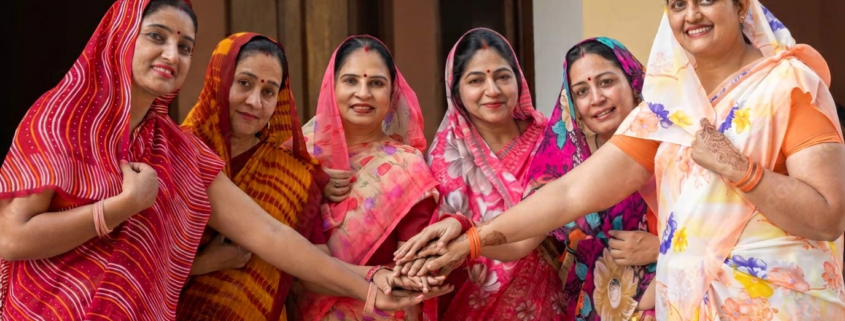
Introduction to the STEP Scheme

Women play a vital role in India’s economic and social development. Over the years, the Government of India has introduced several initiatives to improve women’s participation in education, entrepreneurship, employment, and financial inclusion. However, despite significant progress, many women—especially those in rural and economically weaker communities—continue to face challenges such as limited access to skill development, employment opportunities, and income-generating activities.

A lack of vocational training and industry-relevant skills often prevents women from securing stable employment or starting their own businesses. Recognizing this gap, the Government of India introduced the Support to Training and Employment Programme for Women (STEP) Scheme to equip women with market-oriented skills and improve their employability.

The STEP Scheme focuses on enhancing the capabilities of women through structured training programs, enabling them to become financially independent and actively participate in the workforce. By combining skill development with employment opportunities, the scheme contributes to women empowerment, poverty reduction, and inclusive economic growth.

In this article, we will explore everything you need to know about the STEP Scheme, including its objectives, features, benefits, eligibility criteria, training sectors, application process, and its role in empowering women across India.


What is the STEP Scheme?

The Support to Training and Employment Programme for Women (STEP) is a flagship initiative of the Government of India aimed at providing skill development and employment-oriented training to women above the age of 16 years.

The scheme is implemented by the Ministry of Women and Child Development and focuses on improving women’s employability by providing high-quality vocational training, capacity building, and livelihood support.

Unlike financial assistance schemes that primarily offer loans or subsidies, STEP emphasizes developing practical skills that help women secure employment or establish self-employment ventures.

The scheme supports women from both rural and urban areas, with special attention to those from economically and socially disadvantaged backgrounds.


Why Was the STEP Scheme Introduced?

Although women possess enormous talent and potential, many are unable to participate in the formal economy because they lack professional skills and employment opportunities.

Some common challenges include:

  • Limited vocational education
  • Lack of technical skills
  • Low workforce participation
  • Financial dependency
  • Limited awareness about employment opportunities
  • Lack of entrepreneurship training
  • Social and economic barriers

The STEP Scheme was introduced to bridge these gaps by providing women with industry-relevant skills and improving their access to sustainable livelihood opportunities.

The initiative also supports the Government’s vision of:

  • Women empowerment
  • Skill India
  • Employment generation
  • Financial inclusion
  • Inclusive development
  • Women-led economic growth

Objectives of the STEP Scheme

The scheme has several important objectives.

1. Enhance Women’s Employability

The primary objective is to improve women’s employment prospects through quality skill development programs.

2. Promote Self-Employment

The scheme encourages women to start income-generating activities and small businesses after completing training.

3. Develop Market-Oriented Skills

Training programs are designed according to industry requirements and local employment opportunities.

4. Reduce Poverty

By improving earning capacity, the scheme helps women achieve financial stability and better living standards.

5. Strengthen Women’s Participation in the Economy

The initiative encourages more women to become active participants in India’s workforce.

6. Promote Inclusive Development

Special focus is given to women from economically weaker sections, rural areas, and marginalized communities.


Key Features of the STEP Scheme

Skill Development Training

The scheme provides structured vocational training that equips women with practical and employable skills.

Training includes:

  • Technical skills
  • Business management
  • Entrepreneurship development
  • Financial literacy
  • Digital literacy
  • Soft skills and communication

Employment-Oriented Approach

Unlike conventional training programs, STEP focuses on helping women secure employment or become self-employed after completing the training.


Capacity Building

Women receive training that improves their confidence, leadership abilities, and professional competencies.


Focus on Sustainable Livelihoods

The scheme aims to create long-term income opportunities rather than short-term employment.


Industry-Relevant Curriculum

Training modules are designed to meet the changing demands of industries and local markets.


Sectors Covered Under the STEP Scheme

The STEP Scheme provides training in a variety of sectors depending on local demand and implementing agencies.

Some major sectors include:

Agriculture and Allied Activities

  • Dairy farming
  • Poultry farming
  • Horticulture
  • Food processing
  • Organic farming

Handicrafts and Traditional Industries

  • Handloom weaving
  • Embroidery
  • Tailoring
  • Handicrafts
  • Textile production

Hospitality and Tourism

  • Housekeeping
  • Food services
  • Hospitality management
  • Tourism-related services

Information Technology

  • Computer operations
  • Data entry
  • Digital marketing
  • Basic IT skills
  • Office applications

Retail and Service Sector

  • Retail management
  • Beauty and wellness
  • Customer service
  • Sales and marketing

Entrepreneurship Development

Women interested in starting businesses receive training in:

  • Business planning
  • Financial management
  • Marketing
  • Customer relations
  • Business registration
  • Digital business tools

Benefits of the STEP Scheme

1. Improved Employment Opportunities

Women acquire practical skills that increase their chances of securing employment.


2. Financial Independence

Skill development enables women to earn a stable income and become financially self-reliant.


3. Entrepreneurship Promotion

The scheme encourages women to establish small businesses and self-employment ventures.


4. Better Standard of Living

Higher income improves access to education, healthcare, nutrition, and housing.


5. Increased Confidence

Training enhances leadership skills, communication abilities, and professional confidence.


6. Social Empowerment

Financial independence enables women to participate more actively in family and community decision-making.


Eligibility Criteria for STEP Scheme

The eligibility conditions generally include:

Gender Requirement

Only women are eligible under the scheme.


Age Requirement

Applicants should generally be 16 years or above.


Priority Beneficiaries

Preference is often given to:

  • Rural women
  • Women from economically weaker families
  • SC/ST women
  • Minority women
  • Widows
  • Differently-abled women
  • Women with limited educational opportunities

Training Interest

Applicants should be willing to participate in skill development and employment-oriented training programs.


Documents Required for STEP Scheme

Applicants generally require:

  • Aadhaar Card
  • Identity proof
  • Address proof
  • Passport-size photographs
  • Age proof
  • Income certificate (if applicable)
  • Caste certificate (if applicable)
  • Educational qualification certificates (where required)

The exact documentation may vary depending on the implementing agency.


How to Apply for the STEP Scheme

The application process generally involves the following steps.

Step 1: Identify an Approved Training Provider

Eligible women should contact authorized implementing agencies or organizations conducting STEP training programs.


Step 2: Verify Eligibility

Applicants should ensure they satisfy the eligibility criteria for the selected training program.


Step 3: Submit the Application

Provide personal details and submit the required documents.


Step 4: Participate in the Selection Process

Some training providers may conduct counselling sessions or interviews before admission.


Step 5: Attend Skill Development Training

Participants undergo structured vocational and entrepreneurship training.


Step 6: Employment or Self-Employment Support

After successful completion of training, women may receive placement assistance, entrepreneurship guidance, or livelihood support depending on the training program.


Challenges Addressed by the STEP Scheme

The scheme plays an important role in overcoming several barriers faced by women.

Skill Gap

The program equips women with practical and industry-relevant skills.


Limited Employment Opportunities

Training improves employability across multiple sectors.


Financial Dependency

Income-generating skills enable women to achieve financial independence.


Lack of Entrepreneurial Knowledge

The scheme introduces women to business management and entrepreneurship concepts.


Social Barriers

Skill development and economic participation improve women’s confidence and social standing.


Impact of the STEP Scheme on Women Empowerment

The STEP Scheme has contributed significantly to:

  • Increasing women’s workforce participation
  • Promoting self-employment
  • Enhancing financial inclusion
  • Supporting rural development
  • Strengthening women’s entrepreneurship
  • Improving family income
  • Encouraging lifelong learning

By providing practical skills and employment opportunities, the scheme empowers women to build sustainable livelihoods and improve their quality of life.


How Raiseonic Helps Women Stay Updated on Government Skill Development Schemes

Government schemes related to skill development, entrepreneurship, and employment often involve different eligibility conditions, training providers, and application procedures that can be difficult to understand.

At Raiseonic, we simplify government initiatives through easy-to-understand guides, expert insights, and regular updates on women empowerment schemes, entrepreneurship programs, skill development initiatives, startup opportunities, and financial assistance programs.

Whether you are looking to build new skills, start your own business, or explore government support programs, Raiseonic helps you stay informed and make confident career and business decisions.


Conclusion

The Support to Training and Employment Programme for Women (STEP) Scheme is a transformative initiative that equips women with the skills, knowledge, and confidence needed to achieve financial independence and long-term career success.

By focusing on market-oriented training, employment opportunities, and entrepreneurship development, the scheme enables women to become active contributors to India’s economic growth while improving their own quality of life.

As India continues to prioritize women-led development and inclusive growth, initiatives like the STEP Scheme play a crucial role in building a skilled, confident, and economically empowered female workforce.

For the latest updates on government schemes, women empowerment initiatives, entrepreneurship programs, skill development opportunities, and financial assistance schemes, stay connected with Raiseonic—your trusted source for simplified government scheme information and guidance.

Introduction To Mahila Udyam Nidhi Scheme

Women entrepreneurship has emerged as a major force behind India’s economic growth and social transformation. Across the country, women are successfully establishing businesses in sectors such as manufacturing, retail, services, handicrafts, food processing, technology, and agriculture. Their growing participation in entrepreneurship is not only creating employment opportunities but also contributing significantly to inclusive development.

Despite their capabilities and determination, many aspiring women entrepreneurs still face difficulties in obtaining adequate financial support. Access to credit remains one of the biggest challenges for women who wish to start or expand their businesses. Limited collateral, lack of awareness about financing options, and insufficient access to institutional credit often prevent women from turning their business ideas into successful enterprises.

To address these challenges and promote women-led entrepreneurship, several financial institutions have introduced dedicated schemes for women entrepreneurs. One such important initiative is the Mahila Udyam Nidhi Scheme, which provides financial assistance to women entrepreneurs for setting up new projects, modernization, expansion, and diversification of existing businesses.

The scheme aims to strengthen women’s participation in entrepreneurship by making business financing more accessible and encouraging self-employment and enterprise development.

In this article, we will explore everything about the Mahila Udyam Nidhi Scheme, including its objectives, features, benefits, eligibility criteria, loan facilities, application process, and its role in promoting women entrepreneurship in India.


What is the Mahila Udyam Nidhi Scheme?

The Mahila Udyam Nidhi Scheme (MUNS) is a financial assistance scheme designed to support women entrepreneurs by providing soft loans and credit facilities for establishing and developing small-scale enterprises.

The scheme was introduced by the Small Industries Development Bank of India with the objective of encouraging women-owned businesses and promoting entrepreneurship among women across the country.

The scheme primarily supports:

  • Establishment of new enterprises
  • Expansion of existing businesses
  • Modernization of production facilities
  • Diversification into new products or services
  • Technology upgrades and infrastructure development

The initiative helps reduce financial barriers and enables women to become successful entrepreneurs and job creators.


Why Was the Mahila Udyam Nidhi Scheme Introduced?

Although women are increasingly participating in business activities, they continue to face several obstacles while accessing business finance.

Some common challenges include:

  • Limited access to institutional credit
  • Lack of collateral security
  • Financial dependency
  • Insufficient awareness about business financing
  • Difficulty in obtaining startup capital
  • Limited access to business networks and mentorship

The Mahila Udyam Nidhi Scheme was introduced to bridge these gaps and provide women entrepreneurs with the financial support required to establish and grow their enterprises.

The scheme also aligns with the broader objectives of:

  • Women empowerment
  • Financial inclusion
  • Employment generation
  • MSME development
  • Entrepreneurship promotion
  • Inclusive economic growth

Objectives of the Mahila Udyam Nidhi Scheme

The scheme has several important objectives.

1. Promoting Women Entrepreneurship

The primary objective is to encourage women to establish and manage successful business enterprises.

2. Providing Financial Assistance

The scheme aims to improve access to affordable financing for women entrepreneurs.

3. Supporting Business Expansion

Women-owned enterprises can obtain financial support for modernization, diversification, and expansion activities.

4. Generating Employment Opportunities

Successful women-led enterprises contribute to job creation and local economic development.

5. Promoting Financial Inclusion

The scheme encourages women entrepreneurs to become part of the formal financial ecosystem.

6. Encouraging Self-Reliance

The initiative helps women achieve financial independence and become active contributors to the economy.


Key Features of Mahila Udyam Nidhi Scheme

Financial Assistance for Women Entrepreneurs

The scheme provides soft loans to women entrepreneurs to support:

  • Setting up new projects
  • Expansion of existing businesses
  • Modernization of production units
  • Technology upgrades
  • Diversification into new products and services

Loan Assistance

Under the scheme, eligible women entrepreneurs can avail financial assistance of up to ₹10 lakh, subject to the applicable guidelines and project requirements.

The exact loan amount depends on:

  • Nature of the business
  • Project cost
  • Financial requirements
  • Repayment capacity
  • Lending institution’s policies

Flexible Repayment Period

The scheme generally provides a flexible repayment period, allowing entrepreneurs to repay the loan over several years according to the terms approved by the lending institution.


Support for Small-Scale Industries

The scheme primarily focuses on supporting women involved in:

  • Micro enterprises
  • Small-scale industries
  • Manufacturing units
  • Service enterprises
  • Small business ventures

Encouragement for First-Time Entrepreneurs

The initiative also encourages women who are starting their entrepreneurial journey and require financial support to turn their ideas into successful businesses.


Benefits of Mahila Udyam Nidhi Scheme

1. Easy Access to Finance

Women entrepreneurs can obtain business financing without relying solely on personal savings or informal sources of credit.


2. Financial Independence

The scheme empowers women to establish and manage their own businesses and generate sustainable income.


3. Business Growth Opportunities

Existing businesses can utilize the funds for expansion, modernization, and diversification.


4. Employment Generation

Women-owned enterprises often create employment opportunities for other individuals, particularly in local communities.


5. Increased Confidence and Leadership

Financial support and entrepreneurial success improve confidence and encourage women to become business leaders.


6. Contribution to Economic Development

The growth of women-owned businesses contributes significantly to the country’s economic progress and MSME development.


Who Can Apply for Mahila Udyam Nidhi Scheme?

The scheme primarily targets:

  • Individual women entrepreneurs
  • Women-owned small-scale enterprises
  • Existing women entrepreneurs seeking expansion
  • First-time women business owners
  • Women engaged in manufacturing and service activities

Generally, women should have majority ownership and management control over the enterprise.


Sectors Covered Under the Scheme

The Mahila Udyam Nidhi Scheme supports a broad range of business activities.

Manufacturing Sector

  • Food processing
  • Garment manufacturing
  • Handicrafts
  • Small production units
  • Packaging industries

Service Sector

  • Beauty and wellness businesses
  • Educational services
  • Consultancy services
  • Information technology services
  • Hospitality businesses

Small Business Enterprises

  • Retail businesses
  • Home-based enterprises
  • Professional services
  • Trading activities

Eligibility Criteria for Mahila Udyam Nidhi Scheme

The exact eligibility conditions may vary according to the implementing institution, but generally include:

Gender Requirement

The applicant must be a woman entrepreneur.


Business Ownership

The enterprise should be owned and managed by a woman.


Nature of Enterprise

The applicant should be engaged in or planning to establish an eligible business activity.


Financial Viability

The proposed business project should be financially viable and capable of generating income.


Compliance with Lending Guidelines

Applicants should fulfill all documentation and credit assessment requirements prescribed by the financial institution.


Documents Required for Mahila Udyam Nidhi Scheme

Applicants generally need the following documents:

  • Aadhaar Card
  • PAN Card
  • Identity proof
  • Address proof
  • Passport-size photographs
  • Business plan or project report
  • Business registration documents (if applicable)
  • Income proof
  • Bank account details
  • Quotations for machinery and equipment (if required)

Additional documents may be requested depending on the project and loan amount.


How to Apply for Mahila Udyam Nidhi Scheme

The application process is straightforward and involves the following steps.

Step 1: Prepare a Business Plan

The applicant should prepare a detailed project report explaining:

  • Nature of the business
  • Financial requirements
  • Revenue projections
  • Expansion plans

Step 2: Approach the Lending Institution

Women entrepreneurs can approach participating financial institutions and banks offering the scheme.


Step 3: Submit the Application Form

Provide personal information, business details, and project information.


Step 4: Submit Necessary Documents

Attach all required documents related to identity, business, and financial information.


Step 5: Loan Evaluation

The institution evaluates:

  • Project feasibility
  • Financial viability
  • Creditworthiness
  • Repayment capability

Step 6: Loan Approval and Disbursement

Upon approval, the financial assistance is sanctioned and disbursed according to the terms and conditions.


Challenges Faced by Women Entrepreneurs

Despite various support initiatives, women entrepreneurs still face several challenges.

Lack of Awareness

Many women remain unaware of financing schemes and business support programs.


Limited Financial Literacy

Understanding loan procedures and financial management can be difficult for first-time entrepreneurs.


Market Access Challenges

Small enterprises often struggle to reach larger markets and customers.


Social and Cultural Barriers

Traditional social norms and responsibilities may sometimes limit entrepreneurial participation.

Continuous awareness programs, mentorship, and financial education can help address these challenges.


How Mahila Udyam Nidhi Scheme Supports India’s Vision of Women-Led Development

The Government of India has increasingly emphasized the concept of women-led development, where women become active contributors to economic growth.

The Mahila Udyam Nidhi Scheme contributes to this vision by:

  • Promoting women entrepreneurship
  • Encouraging financial inclusion
  • Supporting MSME development
  • Creating employment opportunities
  • Encouraging self-employment
  • Strengthening local economies

Empowering women entrepreneurs creates a positive impact on families, communities, and the national economy.


How Raiseonic Helps Women Entrepreneurs Understand Government Opportunities

Many women entrepreneurs are unaware of the various government schemes, financial assistance programs, and business funding opportunities available to support their entrepreneurial journey.

At Raiseonic, we simplify government initiatives by providing easy-to-understand guides, practical insights, and expert information on women entrepreneurship schemes, startup funding, MSME support programs, and business financing opportunities.

Whether you are planning to start your first business, expand an existing enterprise, or explore financial assistance options, Raiseonic helps you stay informed and make better business decisions.


Conclusion

The Mahila Udyam Nidhi Scheme is an important initiative that provides financial support and growth opportunities for women entrepreneurs in India. By improving access to business financing and encouraging women-led enterprises, the scheme contributes to financial independence, employment generation, and inclusive economic growth.

As India continues to strengthen its entrepreneurial ecosystem, initiatives like the Mahila Udyam Nidhi Scheme play a crucial role in empowering women to become successful business owners and active contributors to the nation’s economic development.

For the latest updates on government schemes, women entrepreneurship initiatives, business loans, subsidies, and financial assistance programs, stay connected with Raiseonic—your trusted source for simplified government scheme information and guidance.