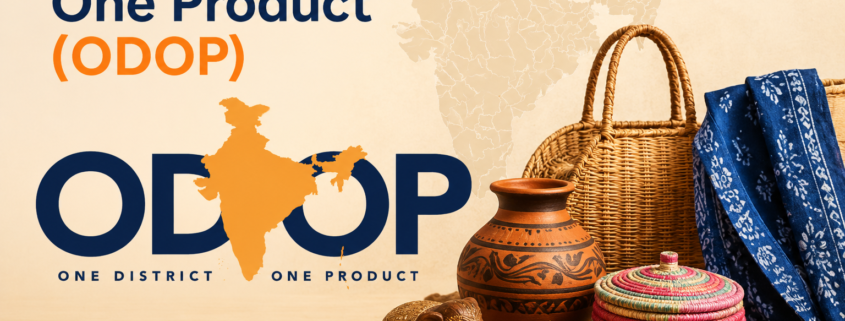
Introduction to One District One Product (ODOP)

India is known for its rich cultural heritage, traditional craftsmanship, agricultural diversity, and unique local products. Every district in the country has its own specialty—whether it is handicrafts, handloom products, food processing items, agricultural produce, spices, textiles, or indigenous art forms. However, many of these traditional products and local industries face challenges such as limited market access, inadequate infrastructure, lack of branding, outdated production techniques, and insufficient financial support. These issues often prevent local producers and artisans from realizing the full economic potential of their products.

To unlock the potential of district-specific products and promote balanced regional development, the Government of India introduced the One District One Product (ODOP) initiative. The programme focuses on identifying a unique product from each district and providing comprehensive support through skill development, financial assistance, infrastructure, branding, marketing, quality improvement, and export promotion.

The ODOP initiative encourages local entrepreneurship, strengthens Micro, Small and Medium Enterprises (MSMEs), promotes value addition, supports farmers and artisans, and generates employment opportunities across rural and urban India. It also complements several flagship government programmes, including PM Formalisation of Micro Food Processing Enterprises (PMFME), Startup India, Make in India, Atmanirbhar Bharat, Skill India Mission, and Vocal for Local.

In this comprehensive guide, we will explore everything about the One District One Product (ODOP) initiative, including its objectives, features, benefits, eligibility, implementation process, financial support, and its role in strengthening India’s local economy.


What is One District One Product (ODOP)?

One District One Product (ODOP) is a Government of India initiative aimed at promoting the balanced development of districts by identifying and supporting products that have unique local importance and high economic potential.

The initiative focuses on developing complete value chains for district-specific products by improving production, processing, branding, packaging, quality standards, marketing, exports, and infrastructure.

Unlike a standalone financial assistance scheme, ODOP serves as a development framework that integrates multiple government programmes and support mechanisms to strengthen district-level industries.

Under the PM Formalisation of Micro Food Processing Enterprises (PMFME) Scheme, the ODOP approach plays a significant role in promoting food processing industries by identifying one major food product for each district and supporting enterprises engaged in its production and processing.

The initiative covers various sectors such as:

  • Agriculture
  • Food Processing
  • Handloom
  • Handicrafts
  • Textiles
  • Bamboo Products
  • Leather Goods
  • Fisheries
  • Dairy Products
  • Spices
  • Horticulture
  • Traditional Art and Craft

Why Was the ODOP Initiative Introduced?

Although India produces a wide variety of agricultural products and traditional goods, many local industries remain underdeveloped due to several challenges.

Some common issues include:

  • Limited branding and packaging
  • Low productivity
  • Poor market access
  • Lack of modern technology
  • Limited export opportunities
  • Inadequate infrastructure
  • Difficulty accessing finance
  • Weak value chains

The Government introduced the ODOP initiative to address these issues by developing district-level specialization and strengthening local economies.

The initiative also supports national priorities such as:

  • Atmanirbhar Bharat
  • Vocal for Local
  • Make in India
  • Startup India Initiative
  • PMFME Scheme
  • Doubling Farmers’ Income
  • Export Promotion

Objectives of One District One Product (ODOP)

The initiative has several important objectives.

1. Promote District-Level Specialization

The primary objective is to identify and promote products that represent the unique strengths of each district.

2. Strengthen Local Industries

ODOP supports artisans, farmers, entrepreneurs, and MSMEs engaged in district-specific products.

3. Improve Value Addition

The initiative encourages processing, packaging, branding, and quality improvement to increase product value.

4. Generate Employment

By strengthening local industries, ODOP creates employment opportunities in both rural and urban areas.

5. Increase Exports

The initiative helps local products meet national and international quality standards, improving export potential.

6. Encourage Entrepreneurship

ODOP promotes new business opportunities based on district-specific resources and traditional skills.


Key Features of One District One Product (ODOP)

Identification of District-Specific Products

Each district identifies one product based on factors such as:

  • Local availability
  • Traditional expertise
  • Market demand
  • Employment potential
  • Export opportunities

Cluster-Based Development

The initiative promotes cluster development by bringing together producers, processors, entrepreneurs, and supporting institutions.


Infrastructure Development

Support may include:

  • Common processing facilities
  • Storage infrastructure
  • Packaging units
  • Cold chain facilities
  • Quality testing laboratories

Branding and Marketing Support

ODOP encourages:

  • Product branding
  • Attractive packaging
  • Digital marketing
  • Trade fairs
  • E-commerce participation
  • Domestic and international exhibitions

Skill Development

Entrepreneurs, artisans, and workers receive training in:

  • Modern production techniques
  • Quality control
  • Packaging
  • Food safety (where applicable)
  • Business management
  • Marketing

Convergence with Government Schemes

ODOP works alongside several government initiatives, including:

  • PM Formalisation of Micro Food Processing Enterprises (PMFME)
  • Startup India Initiative
  • Pradhan Mantri Mudra Yojana
  • Stand-Up India Scheme
  • Skill India Mission
  • Digital India
  • National Rural Livelihood Mission (NRLM)

Benefits of One District One Product (ODOP)

1. Promotes Local Entrepreneurship

ODOP creates business opportunities based on local resources and traditional expertise.


2. Improves Product Quality

Training and modern technology help producers manufacture higher-quality products.


3. Enhances Market Access

Entrepreneurs receive support for branding, packaging, marketing, and participation in exhibitions.


4. Encourages Export Growth

District products gain better access to international markets through improved quality standards and promotion.


5. Generates Employment

Expansion of district industries creates jobs for local youth, women, artisans, and farmers.


6. Increases Farmers’ Income

Value addition and better market linkages improve returns for agricultural producers.


7. Preserves Traditional Skills

The initiative helps protect India’s cultural heritage by promoting traditional crafts and indigenous products.


Eligibility Criteria

Eligibility depends on the specific scheme or programme implemented under the ODOP framework. Generally, beneficiaries may include:

  • Individual entrepreneurs
  • Existing MSMEs
  • Micro food processing enterprises
  • Farmer Producer Organizations (FPOs)
  • Self Help Groups (SHGs)
  • Producer Cooperatives
  • Artisan groups
  • Startups
  • Farmers
  • Women’s enterprises

Applicants should satisfy the eligibility criteria prescribed under the relevant implementing scheme.


Documents Required

The required documents vary depending on the specific programme. Generally, applicants may need:

  • Aadhaar Card
  • PAN Card
  • Passport-size photographs
  • Address proof
  • Business registration documents (if applicable)
  • Udyam Registration (where applicable)
  • Bank account details
  • Project report
  • Quotations for machinery (where applicable)
  • Product-related documents
  • Any additional documents required under the respective scheme

How to Apply for One District One Product (ODOP)

Since ODOP is implemented through various government departments and schemes, the application process differs depending on the type of support being sought.

Generally, the process includes:

Step 1: Identify Your District Product

Check whether your business is associated with the notified ODOP product of your district.


Step 2: Select the Appropriate Government Scheme

Choose the relevant scheme offering financial or technical support, such as PMFME or other state-specific ODOP programmes.


Step 3: Prepare a Business Proposal

Develop a project report detailing production plans, investment requirements, marketing strategy, and expected outcomes.


Step 4: Submit the Application

Apply through the designated portal or implementing agency responsible for the selected scheme.


Step 5: Verification

Authorities evaluate the application and verify the submitted documents.


Step 6: Approval and Assistance

Eligible applicants receive financial assistance, training, infrastructure support, or other benefits according to the applicable programme guidelines.


Who Can Benefit from One District One Product (ODOP)?

The initiative benefits a wide range of stakeholders, including:

  • Farmers
  • Food processing entrepreneurs
  • MSMEs
  • Rural entrepreneurs
  • Women entrepreneurs
  • Self Help Groups (SHGs)
  • Farmer Producer Organizations (FPOs)
  • Artisan groups
  • Handloom workers
  • Handicraft manufacturers
  • Startup founders
  • Export-oriented businesses

Impact of One District One Product (ODOP)

The ODOP initiative has significantly strengthened district-level economic development by:

  • Promoting local products and traditional industries.
  • Improving branding and packaging.
  • Increasing market access.
  • Supporting value addition.
  • Encouraging entrepreneurship.
  • Creating employment opportunities.
  • Enhancing exports of district-specific products.
  • Strengthening rural economies.

The initiative continues to play an important role in promoting inclusive and sustainable economic growth across India.


Challenges and Future Opportunities

Although ODOP has achieved considerable success, several opportunities remain for further improvement.

Expanding Digital Marketing

Greater use of e-commerce platforms can increase product visibility and sales.


Strengthening Export Networks

Improved international branding and export facilitation can help local products reach global markets.


Technology Adoption

Modern machinery and digital technologies can improve productivity and product quality.


Better Infrastructure

Continued investment in logistics, storage, testing laboratories, and common facility centres will strengthen district value chains.

With sustained government support and industry participation, ODOP has the potential to transform district economies across the country.


How One District One Product (ODOP) Supports India’s Vision

The initiative contributes directly to several flagship government programmes, including:

  • PM Formalisation of Micro Food Processing Enterprises (PMFME)
  • Startup India Initiative
  • Pradhan Mantri Mudra Yojana
  • Stand-Up India Scheme
  • Skill India Mission
  • Make in India
  • Digital India
  • Atmanirbhar Bharat
  • Vocal for Local

Together, these initiatives promote entrepreneurship, innovation, local manufacturing, employment generation, and sustainable economic development.


How Raiseonic Helps Entrepreneurs Stay Updated

Government programmes supporting MSMEs, startups, agriculture, food processing, exports, and entrepreneurship continue to evolve with new policies, financial assistance, and business opportunities.

At Raiseonic, we simplify government schemes by providing easy-to-understand guides, practical insights, and expert information on startup funding, MSME initiatives, food processing programmes, business loans, women entrepreneurship schemes, agricultural development, and financial assistance programmes.

Whether you are a farmer, artisan, entrepreneur, startup founder, or MSME owner, Raiseonic helps you stay informed about government opportunities that can accelerate your business growth.


Conclusion

The One District One Product (ODOP) initiative is a transformative step towards strengthening India’s local economy by promoting district-specific products, supporting entrepreneurs, and preserving traditional industries. By focusing on value addition, branding, market access, infrastructure development, and skill enhancement, ODOP creates new opportunities for farmers, artisans, MSMEs, and startups while contributing to employment generation and export growth.

As India continues its journey toward becoming a self-reliant and globally competitive economy, the ODOP initiative will remain a key driver of inclusive regional development and sustainable entrepreneurship. Entrepreneurs associated with district-specific products should explore the various government schemes and support mechanisms available under the ODOP framework to maximize their growth potential.

For the latest updates on government schemes, MSME programmes, startup initiatives, agricultural policies, women entrepreneurship schemes, food processing support, and business financing opportunities, stay connected with Raiseonic—your trusted source for simplified government scheme information and guidance.
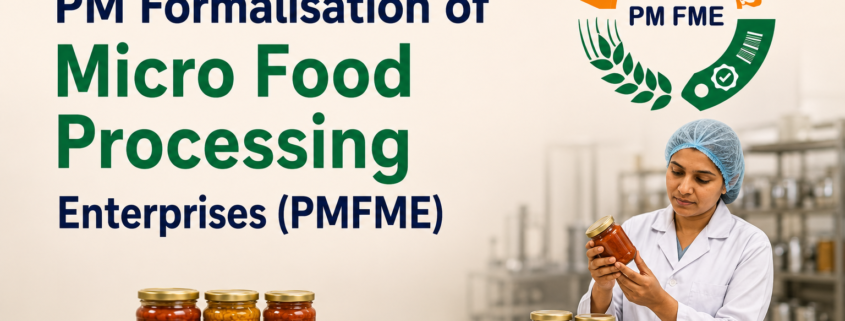
Introduction to PM Formalisation of Micro Food Processing Enterprises (PMFME)

India is one of the world’s largest producers of agricultural commodities, fruits, vegetables, cereals, dairy products, spices, and food grains. The country’s food processing sector plays a crucial role in adding value to agricultural produce, reducing post-harvest losses, generating employment, and increasing farmers’ income. Despite its enormous potential, a significant portion of India’s food processing industry consists of unorganized micro enterprises that often face challenges such as limited access to finance, outdated technology, inadequate infrastructure, poor branding, and restricted market access.

To address these challenges and strengthen the micro food processing sector, the Government of India launched the Pradhan Mantri Formalisation of Micro Food Processing Enterprises (PMFME) Scheme under the Ministry of Food Processing Industries (MoFPI). The scheme aims to support existing micro food processing units by providing financial assistance, capacity building, technical support, branding, marketing assistance, and access to modern technology.

The PMFME Scheme follows the “One District One Product (ODOP)” approach, encouraging districts to focus on food products with local competitive advantages while promoting cluster-based development and entrepreneurship.

The scheme complements flagship government initiatives such as Atmanirbhar Bharat, Startup India, Make in India, Digital India, Skill India Mission, and Pradhan Mantri Mudra Yojana, contributing to rural development, employment generation, and value addition in agriculture.

In this article, we will explore everything about the PM Formalisation of Micro Food Processing Enterprises (PMFME) Scheme, including its objectives, features, benefits, eligibility criteria, financial assistance, application process, and its contribution to India’s food processing ecosystem.


What is the PM Formalisation of Micro Food Processing Enterprises (PMFME) Scheme?

The PM Formalisation of Micro Food Processing Enterprises (PMFME) Scheme is a centrally sponsored scheme launched by the Ministry of Food Processing Industries (MoFPI), Government of India, under the Atmanirbhar Bharat Abhiyan.

Approved in 2020, the scheme aims to strengthen the unorganized food processing sector by helping existing micro food processing enterprises become more competitive through financial assistance, technology upgradation, skill development, branding support, quality improvement, and market access.

The scheme adopts the One District One Product (ODOP) approach to encourage specialization in locally significant food products and create stronger value chains.

The PMFME Scheme primarily focuses on upgrading existing micro food processing units rather than funding entirely new enterprises.


Why Was the PMFME Scheme Introduced?

India has lakhs of micro food processing enterprises that contribute significantly to rural employment and agricultural value addition. However, many of these enterprises operate in the informal sector and face several challenges.

Some common issues include:

  • Limited access to institutional finance
  • Outdated machinery and technology
  • Lack of food safety certification
  • Poor packaging and branding
  • Limited market reach
  • Inadequate business management skills
  • Difficulty complying with regulatory standards

The PMFME Scheme was introduced to formalize these enterprises, improve their competitiveness, and integrate them into organized value chains.

The scheme also supports national priorities such as:

  • Atmanirbhar Bharat
  • Make in India
  • Startup India Initiative
  • Digital India
  • Doubling Farmers’ Income
  • Vocal for Local

Objectives of the PMFME Scheme

The scheme has several important objectives.

1. Formalize Micro Food Processing Enterprises

The primary objective is to strengthen existing micro food processing businesses by helping them transition into the organized sector.

2. Improve Value Addition

The scheme promotes value addition to agricultural products through modern processing techniques.

3. Enhance Competitiveness

Financial and technical support enables enterprises to improve productivity and product quality.

4. Promote Entrepreneurship

The scheme encourages local entrepreneurs to expand and modernize their food processing businesses.

5. Generate Employment

Strengthening food processing enterprises creates new employment opportunities in rural and semi-urban areas.

6. Support Local Products

Through the ODOP approach, the scheme promotes region-specific food products with strong market potential.


Key Features of the PMFME Scheme

Credit-Linked Capital Subsidy

Eligible individual micro food processing enterprises can receive a 35% credit-linked capital subsidy on eligible project costs, subject to the limits prescribed under the scheme guidelines. The beneficiary is generally required to contribute a minimum share of the project cost, while the remaining amount may be financed through institutional credit, subject to bank approval.


One District One Product (ODOP) Approach

Each district identifies a product with high local potential, such as:

  • Mango processing
  • Spice processing
  • Dairy products
  • Honey
  • Millet products
  • Pickles
  • Fruit pulp
  • Bakery products
  • Fisheries products

The ODOP approach encourages cluster-based development and strengthens local value chains.


Support for FPOs, SHGs and Cooperatives

The scheme also provides support to:

  • Farmer Producer Organizations (FPOs)
  • Self Help Groups (SHGs)
  • Producer Cooperatives

for common infrastructure, branding, marketing, and value addition activities, subject to scheme guidelines.


Capacity Building

Entrepreneurs receive training in:

  • Food safety
  • Business management
  • Financial literacy
  • Packaging
  • Marketing
  • Quality standards
  • Technology adoption

Branding and Marketing Support

Eligible groups may receive assistance for:

  • Brand development
  • Packaging improvement
  • Product promotion
  • Marketing initiatives
  • Quality certification

Technical Support

The scheme encourages modernization through improved machinery, processing techniques, and quality control systems.


Benefits of the PMFME Scheme

1. Financial Assistance

The scheme helps entrepreneurs upgrade their businesses through capital subsidy support.


2. Business Modernization

Micro enterprises can adopt modern machinery and improved production techniques.


3. Better Product Quality

Support for quality improvement enhances consumer confidence and market acceptance.


4. Increased Market Access

Branding and marketing assistance enable businesses to reach larger domestic and export markets.


5. Employment Generation

Expansion of food processing enterprises creates additional employment opportunities.


6. Higher Farmer Income

Value addition increases demand for agricultural produce, benefiting farmers.


7. Rural Economic Development

The scheme promotes entrepreneurship and industrial development in rural and semi-urban areas.


Eligibility Criteria

Eligibility is governed by the PMFME Scheme Guidelines. Generally, applicants should:

  • Be an existing micro food processing enterprise or belong to an eligible beneficiary category under the scheme.
  • Be engaged in food processing or related activities.
  • Meet the eligibility conditions prescribed by the Ministry of Food Processing Industries and the implementing agencies.
  • Have a viable business proposal for upgradation or expansion.
  • Comply with applicable banking and regulatory requirements.

Specific eligibility conditions may differ for individual enterprises, SHGs, FPOs, and cooperatives.


Documents Required

Applicants generally need:

  • Aadhaar Card
  • PAN Card
  • Passport-size photographs
  • Address proof
  • Business registration documents (if applicable)
  • Udyam Registration (where applicable)
  • Bank account details
  • Project report
  • Quotations for machinery and equipment
  • Financial statements (if applicable)
  • Food business registration/licence (such as FSSAI registration/licence, where applicable)
  • Any additional documents required by the implementing agency or lending institution

How to Apply for the PMFME Scheme

Step 1: Check Eligibility

Review the latest PMFME guidelines and confirm that your enterprise or organization meets the eligibility requirements.


Step 2: Prepare a Project Report

Develop a detailed proposal covering business objectives, machinery requirements, investment estimates, projected income, and repayment plan.


Step 3: Submit the Application

Eligible applicants can apply through the designated PMFME application process as notified by the Ministry of Food Processing Industries or the respective State Nodal Agency.


Step 4: Verification and Appraisal

The application and project proposal are examined by the concerned authorities and, where applicable, the lending institution.


Step 5: Loan Sanction (Where Applicable)

If institutional finance is required, the bank assesses the proposal according to its lending policies.


Step 6: Approval and Subsidy Release

Upon approval and fulfillment of the scheme conditions, eligible financial assistance is released in accordance with PMFME guidelines.


Who Can Benefit from the PMFME Scheme?

The scheme is beneficial for:

  • Existing micro food processing enterprises
  • Individual entrepreneurs
  • Farmer Producer Organizations (FPOs)
  • Self Help Groups (SHGs)
  • Producer Cooperatives
  • Rural entrepreneurs
  • Women entrepreneurs
  • Agri-based enterprises
  • Food processing startups engaged in eligible activities
  • Small food manufacturers

Impact of the PMFME Scheme

Since its launch, the PMFME Scheme has contributed to strengthening India’s food processing ecosystem by:

  • Supporting modernization of micro enterprises.
  • Encouraging formalization of unorganized food businesses.
  • Promoting value addition to agricultural produce.
  • Enhancing branding and marketing capabilities.
  • Creating employment opportunities.
  • Strengthening rural entrepreneurship.
  • Supporting the One District One Product (ODOP) initiative.

The scheme continues to improve the competitiveness of India’s micro food processing sector.


Challenges and Future Opportunities

Although the PMFME Scheme has made significant progress, certain challenges remain.

Increasing Awareness

Greater awareness is needed among eligible entrepreneurs, especially in rural areas.


Expanding Market Access

Digital platforms, e-commerce, and export promotion can create new opportunities for food processing enterprises.


Technology Adoption

Continued investment in modern machinery and food processing technologies will improve productivity and product quality.


Strengthening Supply Chains

Improved logistics, cold storage, and processing infrastructure can further enhance the sector’s growth.

Continued collaboration between government, financial institutions, and industry stakeholders will strengthen the long-term impact of the scheme.


How the PMFME Scheme Supports India’s Vision

The PMFME Scheme complements several flagship government initiatives, including:

  • Startup India Initiative
  • One District One Product (ODOP)
  • Pradhan Mantri Mudra Yojana
  • Atal Innovation Mission (AIM)
  • Digital India
  • Skill India Mission
  • Make in India
  • Atmanirbhar Bharat

Together, these initiatives promote entrepreneurship, food processing, rural industrialization, employment generation, and agricultural value addition.


How Raiseonic Helps Entrepreneurs Stay Updated

Government schemes for MSMEs, food processing, agriculture, startups, and entrepreneurship continue to evolve with new financial assistance, subsidy programmes, and policy updates.

At Raiseonic, we simplify government schemes by providing easy-to-understand guides, practical insights, and expert information on MSME support, startup funding, food processing schemes, women entrepreneur programmes, business loans, agricultural initiatives, and financial assistance programmes.

Whether you are a food entrepreneur, farmer, startup founder, or small business owner, Raiseonic helps you stay informed about the latest government opportunities that can support your business growth.


Conclusion

The PM Formalisation of Micro Food Processing Enterprises (PMFME) Scheme is a transformative initiative that empowers existing micro food processing enterprises through financial assistance, technology upgradation, capacity building, branding, and market support. By encouraging the formalization of small food businesses and promoting the One District One Product (ODOP) approach, the scheme strengthens local economies, creates employment, and enhances value addition in agriculture.

As India continues to focus on self-reliance, rural entrepreneurship, and food processing, the PMFME Scheme plays a vital role in building a competitive and sustainable food processing ecosystem. Eligible entrepreneurs should explore the scheme’s benefits and stay updated with the latest guidelines issued by the Ministry of Food Processing Industries.

For the latest updates on government schemes, MSME initiatives, startup programmes, agricultural policies, women entrepreneurship schemes, business loans, and financial assistance opportunities, stay connected with Raiseonic—your trusted source for simplified government scheme information and guidance.
Introduction to Startup India Seed Fund Scheme (SISFS)

India has emerged as one of the world’s fastest-growing startup ecosystems, with thousands of innovative businesses developing solutions across sectors such as technology, healthcare, agriculture, education, fintech, clean energy, manufacturing, and artificial intelligence. Startups play a crucial role in driving innovation, generating employment, attracting investments, and strengthening the country’s economy.

However, one of the biggest challenges faced by early-stage startups is obtaining seed capital. While venture capital firms and angel investors often invest in startups with proven traction, many innovative businesses struggle to secure funding during the idea, prototype, or product validation stage. Without early financial support, several promising startup ideas fail before reaching the market.

To bridge this funding gap, the Government of India launched the Startup India Seed Fund Scheme (SISFS) under the Startup India Initiative. The scheme provides financial assistance to eligible startups through approved incubators to help them develop prototypes, conduct proof of concept, undertake product trials, enter the market, and scale their businesses.

The Startup India Seed Fund Scheme has become one of India’s most important startup funding initiatives, enabling innovative entrepreneurs to transform ideas into successful enterprises while promoting innovation, job creation, and economic growth.

In this article, we will explore everything about the Startup India Seed Fund Scheme (SISFS), including its objectives, features, funding support, eligibility, benefits, application process, required documents, and its role in strengthening India’s startup ecosystem.


What is the Startup India Seed Fund Scheme (SISFS)?

The Startup India Seed Fund Scheme (SISFS) is a flagship startup funding programme launched by the Department for Promotion of Industry and Internal Trade (DPIIT), Ministry of Commerce and Industry, Government of India.

The scheme was launched in 2021 to provide financial assistance to eligible startups during their early stages of development through a network of approved incubators across the country.

Unlike traditional bank loans, the scheme focuses on providing seed funding to innovative startups that require financial assistance for validating ideas, building prototypes, testing products, conducting market trials, and preparing for commercialization.

Funds are disbursed through approved incubators that evaluate startup proposals and provide mentoring, incubation, and business development support in addition to financial assistance.


Why Was the Startup India Seed Fund Scheme Introduced?

Many startups face difficulties during the early stages of business development because they lack access to institutional finance.

Common challenges include:

  • Difficulty raising seed capital
  • Limited access to investors
  • High cost of product development
  • Lack of prototype funding
  • Insufficient mentoring support
  • Limited market validation opportunities
  • Financial constraints before commercialization

Recognizing these challenges, the Government introduced SISFS to ensure that innovative startups receive timely financial support and incubation assistance.

The scheme supports national initiatives such as:

  • Startup India Initiative
  • Make in India
  • Digital India
  • Atmanirbhar Bharat
  • Skill India Mission
  • National Education Policy (NEP)

Objectives of the Startup India Seed Fund Scheme

The scheme has several important objectives.

1. Support Early-Stage Startups

Provide financial assistance during the critical early stages of business development.

2. Encourage Innovation

Promote innovative ideas capable of solving real-world problems.

3. Facilitate Prototype Development

Help startups convert ideas into functional prototypes.

4. Promote Commercialization

Support startups in launching market-ready products and services.

5. Generate Employment

Encourage entrepreneurship that creates sustainable employment opportunities.

6. Strengthen India’s Startup Ecosystem

Build a supportive environment for innovation, incubation, and technology-driven enterprises.


Key Features of SISFS

Financial Assistance Through Incubators

Funding is provided through incubators selected by the Government rather than directly to startups.


Seed Funding Support

Financial assistance may be used for:

  • Proof of Concept
  • Prototype Development
  • Product Trials
  • Market Entry
  • Commercialization
  • Business Scaling

Mentorship and Incubation

Approved incubators provide:

  • Business mentoring
  • Technical guidance
  • Investor networking
  • Legal support
  • Business strategy assistance
  • Market access support

Focus on Innovation

Priority is given to startups developing innovative products, services, or technology-based solutions with strong growth potential.


Transparent Selection Process

Applications are evaluated by expert committees based on innovation, feasibility, scalability, market potential, and business viability.


Funding Support Under SISFS

Eligible startups may receive financial assistance as per the prevailing scheme guidelines.

Support can generally include:

  • Grants for proof of concept, prototype development, or product trials.
  • Investments through approved financial instruments for market entry, commercialization, or scaling.

The exact funding limits, eligible expenditure, and disbursement conditions are determined by the latest Government guidelines and the incubator’s selection committee.


Benefits of the Startup India Seed Fund Scheme

1. Early-Stage Funding

Provides financial support when startups need it the most.


2. Reduced Funding Gap

Helps bridge the gap between idea development and investor readiness.


3. Faster Product Development

Enables startups to build and test prototypes efficiently.


4. Mentorship Support

Entrepreneurs receive expert guidance throughout their startup journey.


5. Increased Investment Readiness

Well-developed startups become more attractive to angel investors and venture capital firms.


6. Employment Generation

Successful startups create new jobs and contribute to economic growth.


7. Promotes Innovation

Encourages entrepreneurs to develop technology-driven and scalable business solutions.


Eligibility Criteria

Eligibility is governed by the official SISFS guidelines. Generally, a startup should:

  • Be recognized as a Startup by DPIIT.
  • Be incorporated within the period specified in the latest scheme guidelines.
  • Be working on an innovative product, service, or technology with commercial potential.
  • Have a business idea requiring seed support for validation, prototype development, or market entry.
  • Meet the ownership and shareholding conditions prescribed under the scheme.
  • Not have received seed support beyond the permissible limit under other specified Government schemes for the same purpose.

Applicants should always verify the latest eligibility criteria before applying.


Eligible Sectors

The scheme supports startups across multiple sectors, including:

  • Information Technology
  • Artificial Intelligence
  • Healthcare
  • Biotechnology
  • Agriculture
  • Education Technology
  • FinTech
  • Manufacturing
  • Clean Energy
  • Robotics
  • Deep Technology
  • Food Processing
  • Sustainability
  • Mobility
  • Space Technology

Innovative startups from other sectors may also be considered if they meet the scheme guidelines.


Documents Required

Applicants generally need:

  • DPIIT Startup Recognition Certificate
  • Certificate of Incorporation
  • PAN Card
  • Aadhaar Card of founders
  • Business plan
  • Pitch deck
  • Financial projections
  • Prototype details (if available)
  • Bank account details
  • Shareholding pattern
  • Any additional documents requested by the incubator

How to Apply for Startup India Seed Fund Scheme

Step 1: Prepare Your Startup Proposal

Develop a comprehensive business plan, pitch deck, and financial projections.


Step 2: Register on the Startup India Portal

Ensure your startup has valid DPIIT recognition.


Step 3: Apply Through the SISFS Portal

Submit the online application and select a suitable approved incubator based on your startup’s sector and location.


Step 4: Screening by the Incubator

The incubator evaluates applications based on innovation, feasibility, market potential, and scalability.


Step 5: Presentation Before the Selection Committee

Shortlisted startups may be invited to present their business idea before an expert committee.


Step 6: Funding Approval

Successful startups receive funding according to the approved proposal and applicable guidelines.


Role of Approved Incubators

Approved incubators play a central role by:

  • Evaluating startup applications
  • Providing mentoring
  • Releasing approved funds
  • Monitoring project progress
  • Connecting startups with investors
  • Supporting commercialization

Incubators help startups grow beyond the funding stage by providing strategic business support.


Impact of SISFS

Since its launch, the Startup India Seed Fund Scheme has strengthened India’s startup ecosystem by:

  • Supporting thousands of innovative startups.
  • Encouraging technology-based entrepreneurship.
  • Increasing prototype development.
  • Improving commercialization of innovative products.
  • Expanding incubation infrastructure.
  • Creating employment opportunities.
  • Promoting innovation-led economic growth.

The scheme continues to encourage first-generation entrepreneurs across India.


Challenges and Future Opportunities

Despite its success, some challenges remain.

Awareness

Many startups are still unaware of the funding opportunities available under SISFS.


Regional Accessibility

Expanding incubator networks in Tier-2 and Tier-3 cities can improve access for entrepreneurs across India.


Commercialization Support

Additional support for marketing, exports, and investor networking can further strengthen startup success.


Deep-Tech Innovation

Greater investment in AI, semiconductors, clean technology, and advanced manufacturing can boost India’s global competitiveness.

Continued policy support and incubation infrastructure will further strengthen India’s innovation ecosystem.


How SISFS Supports India’s Startup Vision

The Startup India Seed Fund Scheme complements several national initiatives, including:

  • Startup India Initiative
  • Atal Innovation Mission (AIM)
  • TIDE 2.0
  • MSME Innovative Scheme
  • Credit Guarantee Scheme for Startups (CGSS)
  • Digital India
  • Skill India Mission
  • PM Vishwakarma
  • Prime Minister Employment Generation Programme (PMEGP)

Together, these programmes create a strong ecosystem for innovation, entrepreneurship, and employment generation.


Internal Links for Raiseonic

To improve SEO and enhance user experience, link this article to related Raiseonic content:

  • Startup India Initiative
  • MSME Innovative Scheme
  • Prime Minister Employment Generation Programme (PMEGP)
  • Credit Guarantee Scheme for Startups (CGSS)
  • Atal Innovation Mission (AIM)
  • TIDE 2.0
  • Skill India Mission
  • Digital India
  • Stand-Up India Scheme
  • Pradhan Mantri Mudra Yojana (PMMY)

How Raiseonic Helps Startups Stay Updated

Government startup programmes are regularly updated with new funding opportunities, incubation initiatives, policy reforms, and business support services.

At Raiseonic, we simplify government schemes through easy-to-understand guides, practical insights, and expert information on startup funding, MSME schemes, innovation programmes, business loans, women entrepreneur initiatives, agricultural schemes, and financial assistance programmes.

Whether you are launching your first startup or scaling an innovative business, Raiseonic helps you stay informed about the latest government opportunities that can accelerate your entrepreneurial journey.


Conclusion

The Startup India Seed Fund Scheme (SISFS) is a transformative initiative that addresses one of the biggest challenges faced by early-stage startups—access to seed capital. By providing financial assistance through approved incubators, along with mentorship and business development support, the scheme empowers entrepreneurs to validate ideas, develop prototypes, launch products, and build scalable enterprises.

By encouraging innovation, strengthening incubation networks, and promoting technology-driven entrepreneurship, SISFS plays a significant role in advancing India’s vision of becoming a global startup hub. Entrepreneurs with innovative ideas should explore this scheme to leverage government-backed funding and expert guidance during the critical early stages of business development.

For the latest updates on startup schemes, MSME initiatives, government funding programmes, innovation support, business loans, women entrepreneur schemes, and financial assistance opportunities, stay connected with Raiseonic—your trusted source for simplified government scheme information and guidance.
Introduction to MSME Innovative Scheme

Micro, Small, and Medium Enterprises (MSMEs) are the backbone of India’s economy, contributing significantly to employment generation, exports, manufacturing, and innovation. As India moves toward becoming a global manufacturing and innovation hub, it is essential to help MSMEs adopt new technologies, develop innovative products, protect intellectual property, and transform ideas into commercially successful businesses.

However, many startups and MSMEs struggle with challenges such as limited access to research and development (R&D), inadequate design capabilities, lack of funding for innovation, and limited awareness about intellectual property rights. These barriers often prevent promising business ideas from reaching the market.

To address these challenges, the Ministry of Micro, Small and Medium Enterprises (MSME), Government of India, introduced the MSME Innovative Scheme. The scheme is designed to foster innovation, encourage entrepreneurship, strengthen product development, and enhance the competitiveness of MSMEs through structured support in incubation, design, and intellectual property protection.

The MSME Innovative Scheme integrates multiple initiatives under a single umbrella to create an innovation-driven ecosystem for startups, entrepreneurs, students, researchers, and MSMEs. By promoting new ideas and helping businesses commercialize innovative products, the scheme contributes to India’s vision of becoming an innovation-led economy.

In this article, we will explore everything about the MSME Innovative Scheme, including its objectives, components, benefits, eligibility, implementation process, required documents, application procedure, and its role in strengthening India’s startup and MSME ecosystem.


What is the MSME Innovative Scheme?

The MSME Innovative Scheme is a flagship initiative launched by the Ministry of MSME to promote innovation, design improvement, and intellectual property awareness among Micro, Small, and Medium Enterprises.

The scheme consolidates three major interventions into one integrated programme:

  • Incubation
  • Design
  • Intellectual Property Rights (IPR)

Together, these components help entrepreneurs transform innovative ideas into market-ready products while improving competitiveness and protecting intellectual assets.

The scheme encourages collaboration among startups, academic institutions, research organizations, incubators, industries, and government agencies to build a strong innovation ecosystem.


Why Was the MSME Innovative Scheme Introduced?

Innovation is essential for sustainable business growth, but many MSMEs face obstacles such as:

  • Limited research and development resources
  • Lack of product design expertise
  • Difficulty commercializing innovative ideas
  • Low awareness of patents and intellectual property rights
  • Limited access to incubation facilities
  • Financial constraints

The MSME Innovative Scheme was introduced to overcome these challenges by providing structured support throughout the innovation lifecycle—from idea generation to commercialization.

The scheme aligns with several national initiatives, including:

  • Startup India
  • Make in India
  • Digital India
  • Atmanirbhar Bharat
  • Skill India Mission
  • National Education Policy (NEP)

Objectives of the MSME Innovative Scheme

The scheme has several important objectives.

1. Promote Innovation

Encourage MSMEs and startups to develop innovative products, services, and technologies.

2. Support Product Development

Help entrepreneurs convert ideas into commercially viable products.

3. Strengthen Design Capabilities

Improve product quality, usability, and competitiveness through better design practices.

4. Promote Intellectual Property Protection

Create awareness about patents, trademarks, copyrights, geographical indications, and industrial designs.

5. Enhance MSME Competitiveness

Support MSMEs in adopting innovation-driven business strategies to compete in domestic and global markets.

6. Encourage Entrepreneurship

Create an ecosystem that nurtures innovators, startups, students, and aspiring entrepreneurs.


Components of the MSME Innovative Scheme

The scheme consists of three major components.

1. Incubation Component

The Incubation Component supports innovative ideas during their early stages.

Its objectives include:

  • Identifying innovative business ideas
  • Providing mentoring support
  • Assisting prototype development
  • Encouraging commercialization
  • Supporting technology-based startups

Approved Host Institutes and Business Incubators help entrepreneurs refine their ideas and prepare them for market entry.


2. Design Component

The Design Component aims to improve product quality and market competitiveness.

It supports MSMEs by:

  • Enhancing product design
  • Improving packaging
  • Increasing user experience
  • Promoting industrial design
  • Supporting product innovation
  • Encouraging value addition

Good product design helps businesses improve customer satisfaction and compete effectively in national and international markets.


3. Intellectual Property Rights (IPR) Component

Innovation must be protected to ensure long-term business success.

The IPR Component focuses on:

  • Patent awareness
  • Trademark registration
  • Copyright protection
  • Industrial design registration
  • Geographical Indications (GI)
  • Intellectual property management

The programme also promotes awareness through workshops, seminars, and capacity-building initiatives.


Key Features of the MSME Innovative Scheme

Integrated Innovation Support

The scheme combines incubation, design, and IPR support under a unified framework.


Focus on Startups and MSMEs

Special emphasis is placed on helping startups and MSMEs transform innovative ideas into successful businesses.


Collaboration with Institutions

The programme encourages partnerships with:

  • Educational institutions
  • Research organizations
  • Technology centres
  • Business incubators
  • Industry associations
  • Innovation hubs

Capacity Building

Training programmes, workshops, and mentoring sessions help entrepreneurs strengthen innovation capabilities.


Commercialization Support

The scheme helps innovators move beyond idea generation by facilitating prototype development and commercialization.


Benefits of the MSME Innovative Scheme

1. Encourages Innovation

The scheme motivates entrepreneurs to develop new products and technologies.


2. Supports Startup Growth

Innovative startups receive guidance, mentoring, and incubation support.


3. Improves Product Competitiveness

Design interventions help MSMEs enhance product quality and customer appeal.


4. Protects Intellectual Property

Businesses gain awareness of protecting their innovations through patents and trademarks.


5. Promotes Research and Development

The scheme encourages technology-driven innovation and R&D activities.


6. Strengthens MSMEs

Innovation improves productivity, efficiency, and long-term business growth.


7. Generates Employment

Innovative enterprises create new job opportunities and contribute to economic development.


Eligibility Criteria

Eligibility varies depending on the component of the scheme. Generally, beneficiaries may include:

  • Micro, Small, and Medium Enterprises (MSMEs)
  • Startups
  • Individual innovators
  • Students
  • Entrepreneurs
  • Research institutions
  • Academic institutions
  • Business incubators
  • Technology centres

Applicants must satisfy the eligibility conditions specified under the relevant component and government guidelines.


Documents Required

Applicants may generally need:

  • Aadhaar Card
  • PAN Card
  • Business registration documents
  • Udyam Registration Certificate (for MSMEs, where applicable)
  • Project proposal
  • Business plan
  • Innovation concept note
  • Prototype details (if available)
  • Bank account details
  • Educational or institutional documents (where applicable)

Additional documentation may be required based on the selected component.


How to Apply for the MSME Innovative Scheme

Step 1: Identify the Appropriate Component

Choose whether your requirement falls under Incubation, Design, or Intellectual Property support.


Step 2: Prepare the Proposal

Develop a detailed innovation proposal, project report, or business plan.


Step 3: Submit the Application

Apply through the designated portal or implementing agency as notified by the Ministry of MSME.


Step 4: Evaluation

Applications are evaluated based on innovation potential, feasibility, scalability, and commercial viability.


Step 5: Approval

Eligible proposals receive approval according to the applicable scheme guidelines.


Step 6: Implementation

Approved beneficiaries receive support such as mentoring, incubation, design assistance, or IPR facilitation, depending on the selected component.


Who Can Benefit from the MSME Innovative Scheme?

The scheme is suitable for:

  • Technology startups
  • Manufacturing MSMEs
  • Service-based enterprises
  • Student innovators
  • Women entrepreneurs
  • Rural innovators
  • Research organizations
  • Educational institutions
  • Product designers
  • Early-stage entrepreneurs
  • Innovation-driven businesses

Impact of the MSME Innovative Scheme

The scheme has strengthened India’s innovation ecosystem by:

  • Promoting startup culture.
  • Supporting commercialization of innovative ideas.
  • Improving MSME competitiveness.
  • Increasing awareness of intellectual property.
  • Encouraging collaboration between academia and industry.
  • Fostering research and product development.
  • Enhancing the quality of Indian products.

As India continues to emphasize innovation-led growth, the scheme plays an important role in developing globally competitive enterprises.


Challenges and Future Opportunities

Despite its potential, several challenges remain.

Innovation Awareness

Many MSMEs are still unaware of available innovation support programmes.


Industry Collaboration

Greater collaboration between industries, research institutions, and startups can improve commercialization outcomes.


Digital Innovation

Emerging technologies such as Artificial Intelligence, IoT, robotics, and advanced manufacturing offer new opportunities for MSMEs.


Intellectual Property Adoption

More businesses need support in filing patents, trademarks, and design registrations to protect their innovations.

Continued policy support and ecosystem development will strengthen India’s innovation capabilities.


How the MSME Innovative Scheme Supports India’s Vision of Innovation

The MSME Innovative Scheme complements several national initiatives, including:

  • Startup India Initiative
  • Atal Innovation Mission (AIM)
  • TIDE 2.0
  • Skill India Mission
  • Digital India
  • PM Vishwakarma
  • Credit Guarantee Scheme for Startups (CGSS)
  • MSME Champions Scheme

Together, these initiatives encourage entrepreneurship, research, technology adoption, and innovation-led economic growth.


Internal Links for Raiseonic

To improve SEO and help readers explore related topics, link this article to:

  • Startup India Initiative
  • Startup India Seed Fund Scheme (SISFS)
  • Credit Guarantee Scheme for Startups (CGSS)
  • MSME Champions Scheme
  • Atal Innovation Mission (AIM)
  • TIDE 2.0
  • Skill India Mission
  • Digital India
  • PM Vishwakarma Scheme
  • Prime Minister Employment Generation Programme (PMEGP)

How Raiseonic Helps Entrepreneurs Stay Updated

Government schemes for startups, MSMEs, innovation, and entrepreneurship are regularly updated with new guidelines, funding opportunities, incubation support, and policy initiatives.

At Raiseonic, we simplify government programmes by providing easy-to-understand guides, practical insights, and expert information on startup funding, MSME schemes, innovation programmes, business loans, women entrepreneur initiatives, agricultural support schemes, and financial assistance opportunities.

Whether you are a startup founder, MSME owner, innovator, or aspiring entrepreneur, Raiseonic helps you stay informed about the latest government opportunities that can accelerate your business growth.


Conclusion

The MSME Innovative Scheme is a transformative initiative that empowers startups, innovators, and MSMEs by supporting innovation, product design, and intellectual property protection under a single integrated framework. Through its Incubation, Design, and IPR components, the scheme enables businesses to convert ideas into commercially viable products while strengthening their competitiveness in domestic and international markets.

By fostering innovation, encouraging research and development, and promoting collaboration between academia, industry, and government, the scheme contributes significantly to India’s vision of becoming a global innovation hub. Entrepreneurs who leverage the opportunities available under the MSME Innovative Scheme can enhance product quality, safeguard intellectual assets, and build sustainable businesses.

For the latest updates on MSME schemes, startup initiatives, innovation programmes, business loans, government funding, women entrepreneur schemes, and financial assistance opportunities, stay connected with Raiseonic—your trusted source for simplified government scheme information and guidance.
Introduction to Prime Minister Employment Generation Programme (PMEGP)

Entrepreneurship plays a crucial role in India’s economic development by creating employment opportunities, encouraging innovation, and strengthening local industries. Micro-enterprises, small businesses, and self-employed individuals contribute significantly to the country’s GDP while supporting millions of livelihoods. However, aspiring entrepreneurs, especially those from rural and economically weaker backgrounds, often face challenges such as lack of capital, limited access to formal credit, and insufficient financial support to establish their businesses.

To address these challenges and promote self-employment, the Government of India launched the Prime Minister Employment Generation Programme (PMEGP). The scheme provides financial assistance in the form of credit-linked subsidies to eligible entrepreneurs for setting up new micro-enterprises in the manufacturing and service sectors.

Implemented by the Ministry of Micro, Small and Medium Enterprises (MSME) through the Khadi and Village Industries Commission (KVIC), PMEGP has become one of India’s flagship employment generation programmes. It encourages youth, women, artisans, traditional craftsmen, Self-Help Groups (SHGs), and aspiring entrepreneurs to establish sustainable businesses that contribute to local economic development.

Whether you want to start a manufacturing unit, a service-based enterprise, or a village industry, PMEGP offers an excellent opportunity to access financial support and turn your business idea into reality.

In this article, we will explore everything about the Prime Minister Employment Generation Programme (PMEGP), including its objectives, features, subsidy benefits, eligibility, loan amount, application process, required documents, and its role in promoting entrepreneurship in India.


What is the Prime Minister Employment Generation Programme (PMEGP)?

The Prime Minister Employment Generation Programme (PMEGP) is a credit-linked subsidy scheme launched by the Government of India to promote self-employment and establish new micro-enterprises in both rural and urban areas.

The scheme was launched in 2008 by merging two earlier programmes:

  • Prime Minister’s Rojgar Yojana (PMRY)
  • Rural Employment Generation Programme (REGP)

PMEGP is administered by the Ministry of MSME and implemented at the national level by the Khadi and Village Industries Commission (KVIC). At the state level, implementation is supported by:

  • State KVIC Directorates
  • State Khadi & Village Industries Boards (KVIBs)
  • District Industries Centres (DICs)
  • Participating Banks

The scheme provides financial assistance through bank loans combined with government subsidies, making it easier for entrepreneurs to establish new businesses.


Objectives of PMEGP

The Prime Minister Employment Generation Programme has several important objectives.

1. Promote Self-Employment

The primary objective is to encourage unemployed youth and aspiring entrepreneurs to establish their own enterprises.

2. Generate Sustainable Employment

The scheme creates direct and indirect employment opportunities across rural and urban India.

3. Support Micro Enterprises

PMEGP promotes the establishment of viable micro-enterprises in manufacturing and service sectors.

4. Encourage Rural Industrialization

The programme helps develop rural industries, reducing migration to urban areas.

5. Empower Women and Weaker Sections

Special benefits are available for women, SC/ST communities, minorities, ex-servicemen, differently-abled persons, and entrepreneurs from aspirational districts and border areas.

6. Strengthen MSME Growth

The scheme contributes to the expansion of India’s MSME ecosystem by supporting new business creation.


Key Features of PMEGP

Credit-Linked Subsidy

The Government provides a subsidy on eligible project costs, while the remaining amount is financed through bank loans and the beneficiary’s own contribution.


New Enterprises Only

PMEGP is available only for new micro-enterprises. Existing businesses are generally not eligible under the scheme.


Manufacturing and Service Sectors

Financial assistance is available for eligible projects in:

  • Manufacturing
  • Service industries
  • Village industries
  • Food processing
  • Repair services
  • Retail businesses (subject to eligible activities)
  • Agro-based industries
  • Handicrafts
  • Traditional industries

Certain activities, such as those involving tobacco, liquor, or environmentally restricted products, are not eligible.


Financial Assistance

The scheme supports project costs up to the limits prescribed under the latest PMEGP guidelines. Applicants should refer to the official PMEGP guidelines or consult the implementing agency for current project cost ceilings, as these may be revised periodically.


Entrepreneurship Development Programme (EDP)

Selected beneficiaries are generally required to undergo an Entrepreneurship Development Programme (EDP) before or after loan sanction, as prescribed under the scheme guidelines.


Subsidy Under PMEGP

One of the biggest advantages of PMEGP is the government subsidy provided on the project cost.

The subsidy percentage varies depending on:

  • Rural or urban location
  • Applicant category (General or Special Category)

Special Categories generally include:

  • Women
  • SC/ST
  • OBC (Non-Creamy Layer, where applicable)
  • Minorities
  • Ex-servicemen
  • Persons with Disabilities
  • Beneficiaries from North Eastern Region, Aspirational Districts, Hill and Border Areas, etc., as specified in the scheme guidelines.

The applicable subsidy rates are determined by the Government and may be revised from time to time.


Benefits of PMEGP

1. Financial Support for New Businesses

Entrepreneurs receive assistance to establish new enterprises with lower initial financial burden.


2. Employment Generation

Each approved enterprise creates job opportunities within the local community.


3. Encourages Rural Entrepreneurship

The scheme promotes industrial development in villages and semi-urban areas.


4. Women Empowerment

Women entrepreneurs receive special consideration under the scheme, encouraging financial independence.


5. Inclusive Economic Growth

The programme supports entrepreneurs from socially and economically disadvantaged backgrounds.


6. Strengthens Local Industries

PMEGP helps revive traditional industries, handicrafts, and village enterprises.


7. Access to Institutional Credit

Entrepreneurs can obtain formal bank loans backed by government support.


Eligibility Criteria

Applicants generally should:

  • Be an Indian citizen.
  • Be at least 18 years of age.
  • For projects above the prescribed cost threshold, possess at least a Class VIII pass qualification, as specified in the latest guidelines.
  • Intend to establish a new micro-enterprise.
  • Meet the eligibility conditions laid down by the implementing agency and lending bank.

Eligible entities may include:

  • Individuals
  • Self Help Groups (SHGs) that have not availed benefits under other similar schemes
  • Charitable Trusts
  • Registered Institutions
  • Production Co-operative Societies

Existing units and beneficiaries who have already received assistance under certain similar government subsidy schemes are generally not eligible.


Eligible Business Activities

PMEGP supports a wide variety of activities, including:

  • Food processing
  • Garment manufacturing
  • Engineering workshops
  • Furniture making
  • Mobile repair
  • Electrical services
  • Computer centres
  • Beauty salons
  • Printing units
  • Dairy farming (subject to eligible activities)
  • Handicrafts
  • Agro-processing
  • Packaging units
  • Repair workshops
  • Rural industries

Applicants should consult the latest negative list issued under PMEGP for activities that are not eligible.


Documents Required

Applicants generally need:

  • Aadhaar Card
  • PAN Card
  • Passport-size photographs
  • Address proof
  • Educational qualification certificate (where applicable)
  • Project report/business plan
  • Caste certificate (if applicable)
  • Special category certificate (if applicable)
  • Rural area proof (if applicable)
  • Bank account details
  • Business-related documents requested by the bank

Additional documentation may be required during appraisal.


How to Apply for PMEGP

Step 1: Prepare a Business Plan

Develop a detailed project report outlining the proposed business, investment, expected income, and employment potential.


Step 2: Apply Online

Eligible applicants can submit their application through the official PMEGP online portal managed by KVIC.


Step 3: Document Verification

The implementing agency verifies the application and supporting documents.


Step 4: Interview or Scrutiny (if applicable)

Applications may be evaluated by the District Task Force Committee or relevant authority, depending on the prevailing guidelines.


Step 5: Bank Appraisal

The selected bank assesses the project’s viability and the applicant’s creditworthiness.


Step 6: Loan Sanction and Subsidy

Upon approval, the bank sanctions the loan, and the eligible government subsidy is processed in accordance with PMEGP guidelines.


Role of KVIC in PMEGP

The Khadi and Village Industries Commission (KVIC) plays a central role in implementing PMEGP by:

  • Managing the online application system
  • Coordinating with banks
  • Monitoring implementation
  • Releasing subsidy as per scheme guidelines
  • Conducting awareness programmes
  • Facilitating Entrepreneurship Development Programmes (EDPs)

Impact of PMEGP

Since its launch, PMEGP has contributed significantly to employment generation and entrepreneurship development across India.

Major achievements include:

  • Establishment of lakhs of micro-enterprises.
  • Creation of employment opportunities in rural and urban areas.
  • Promotion of women entrepreneurship.
  • Support for traditional village industries.
  • Increased access to institutional finance.
  • Strengthening of the MSME ecosystem.

The scheme continues to play a vital role in promoting inclusive economic growth.


Challenges and Future Opportunities

Despite its success, some challenges remain.

Awareness

Many eligible entrepreneurs are still unaware of the scheme’s benefits.


Quality of Business Planning

Strong project reports and financial planning improve the chances of approval and long-term business sustainability.


Market Linkages

Providing better market access and digital marketing support can help PMEGP enterprises grow faster.


Digital Entrepreneurship

Integrating digital skills, e-commerce, and online business models can enhance the competitiveness of PMEGP-supported businesses.


How PMEGP Supports India’s Vision of Entrepreneurship

PMEGP complements several national initiatives, including:

  • Startup India Initiative
  • Stand-Up India Scheme
  • Pradhan Mantri Mudra Yojana (PMMY)
  • PM Vishwakarma
  • Credit Guarantee Scheme for Startups (CGSS)
  • Skill India Mission
  • Digital India
  • National Rural Livelihoods Mission (NRLM)

Together, these programmes encourage entrepreneurship, innovation, employment generation, and inclusive economic development.


How Raiseonic Helps Entrepreneurs Stay Updated

Government schemes for MSMEs, startups, women entrepreneurs, and rural enterprises are regularly updated with revised guidelines, financial assistance, and new business opportunities.

At Raiseonic, we simplify government schemes by providing easy-to-understand guides, practical insights, and expert information on startup funding, MSME schemes, business loans, women entrepreneur programmes, agricultural initiatives, skill development missions, and financial assistance programmes.

Whether you are planning to launch your first business or expand an existing enterprise, Raiseonic helps you stay informed about the latest government opportunities that can support your entrepreneurial journey.


Conclusion

The Prime Minister Employment Generation Programme (PMEGP) is one of India’s most impactful self-employment and entrepreneurship initiatives. By combining institutional bank finance with government-backed subsidies, the scheme empowers aspiring entrepreneurs to establish new micro-enterprises, generate employment, and contribute to local economic development.

With a focus on rural industrialization, women empowerment, inclusive growth, and MSME development, PMEGP has enabled thousands of entrepreneurs to transform their ideas into successful businesses. Although applicants must meet the prescribed eligibility criteria and complete the required application process, the scheme remains an excellent opportunity for individuals seeking financial support to start a new enterprise.

As India continues to strengthen its entrepreneurial ecosystem, PMEGP remains a cornerstone programme for promoting self-employment, job creation, and sustainable economic growth.

For the latest updates on government schemes, startup initiatives, MSME support, business loans, women entrepreneur programmes, agricultural schemes, and financial assistance opportunities, stay connected with Raiseonic—your trusted source for simplified government scheme information and guidance.
Introduction to TIDE 2.0 Scheme

India has emerged as one of the world’s fastest-growing startup ecosystems, with thousands of entrepreneurs developing innovative solutions in fields such as Artificial Intelligence (AI), Internet of Things (IoT), Blockchain, Robotics, Healthcare Technology, FinTech, Agritech, Clean Energy, and Smart Manufacturing. While innovative ideas are abundant, many early-stage startups struggle with limited access to funding, mentorship, incubation facilities, technical infrastructure, and market opportunities.

Recognizing these challenges, the Ministry of Electronics and Information Technology (MeitY), Government of India, launched the Technology Incubation and Development of Entrepreneurs (TIDE) 2.0 Scheme. The scheme aims to strengthen India’s technology startup ecosystem by supporting entrepreneurs through incubation, financial assistance, mentoring, networking, and commercialization support.

TIDE 2.0 focuses on nurturing technology-driven startups that have the potential to solve real-world challenges and contribute to India’s digital economy. Through a network of incubation centres across the country, the scheme provides aspiring entrepreneurs with the resources needed to transform innovative ideas into successful businesses.

The initiative complements flagship government programmes such as Startup India, Digital India, Atal Innovation Mission (AIM), Make in India, Skill India Mission, and Atmanirbhar Bharat by promoting innovation, job creation, and technology-based entrepreneurship.

In this article, we will explore everything about the TIDE 2.0 Scheme, including its objectives, key features, benefits, eligibility criteria, support provided, application process, implementation framework, and its contribution to strengthening India’s startup ecosystem.


What is TIDE 2.0 Scheme?

The Technology Incubation and Development of Entrepreneurs (TIDE) 2.0 Scheme is a flagship initiative of the Ministry of Electronics and Information Technology (MeitY) designed to promote technology entrepreneurship across India.

Launched in 2019, the scheme builds upon the success of the original TIDE programme by creating a stronger ecosystem for technology startups through incubation support, financial assistance, mentoring, and industry collaboration.

Instead of directly providing loans to entrepreneurs, TIDE 2.0 supports startups through a network of TIDE 2.0 Incubation Centres (TICs) and Centre of Entrepreneurship (CoEs) located at leading academic institutions and incubators. These centres help startups develop innovative products, validate business ideas, access expert mentoring, connect with investors, and scale their ventures.

The scheme particularly encourages innovation in emerging technology sectors such as Artificial Intelligence, Machine Learning, Internet of Things (IoT), Blockchain, Cybersecurity, Data Analytics, Robotics, Smart Mobility, Healthcare Technology, AgriTech, and other digital technologies.


Why Was the TIDE 2.0 Scheme Introduced?

Although India has witnessed significant startup growth, technology entrepreneurs often face several challenges during the early stages of their journey.

Some common challenges include:

  • Limited access to incubation facilities
  • Difficulty obtaining early-stage funding
  • Lack of mentoring and technical guidance
  • Limited commercialization support
  • Inadequate networking opportunities
  • Difficulty accessing investors
  • Limited research-to-market conversion

The Government introduced TIDE 2.0 to overcome these barriers and create a robust ecosystem where technology-based startups can grow successfully.

The scheme also supports national initiatives such as:

  • Startup India Initiative
  • Digital India
  • Atal Innovation Mission (AIM)
  • Make in India
  • Skill India Mission
  • Atmanirbhar Bharat
  • National Policy on Electronics

Objectives of the TIDE 2.0 Scheme

The scheme has several important objectives.

1. Promote Technology Entrepreneurship

The primary objective is to encourage innovative technology-based startups across India.

2. Strengthen Startup Incubation

The scheme develops world-class incubation infrastructure to support entrepreneurs.

3. Support Commercialization of Innovation

TIDE 2.0 helps innovators convert research and ideas into commercially viable products and services.

4. Encourage Digital Innovation

The programme promotes innovation in emerging digital technologies and electronics.

5. Generate Employment

Successful startups contribute to job creation and economic development.

6. Build a Sustainable Startup Ecosystem

The scheme encourages collaboration between academia, industry, investors, and government organizations.


Key Features of the TIDE 2.0 Scheme

Incubation Support

Startups receive structured incubation through recognized TIDE 2.0 centres, including workspace, technical guidance, mentoring, and business development support.


Financial Assistance

Eligible startups may receive financial assistance at different stages of incubation, subject to the scheme guidelines and evaluation by the respective incubation centre.


Mentorship

Entrepreneurs receive guidance from experienced mentors, industry experts, academicians, and successful business leaders.


Technology Development Support

The scheme encourages innovation in areas such as:

  • Artificial Intelligence (AI)
  • Internet of Things (IoT)
  • Blockchain
  • Robotics
  • Cybersecurity
  • Machine Learning
  • Data Analytics
  • Healthcare Technology
  • AgriTech
  • Smart Mobility
  • Electronics System Design
  • Clean Technology

Networking Opportunities

Incubation centres facilitate interactions with investors, industry leaders, research institutions, and government agencies.


Capacity Building

Entrepreneurs participate in workshops, training sessions, innovation programmes, and business development activities.


Benefits of the TIDE 2.0 Scheme

1. Early-Stage Startup Support

The scheme helps entrepreneurs transform innovative ideas into viable businesses.


2. Access to Expert Mentorship

Founders receive guidance from experienced professionals and industry experts.


3. Incubation Infrastructure

Startups benefit from office space, laboratories, technical facilities, and innovation ecosystems available at incubation centres.


4. Funding Opportunities

Eligible startups may receive financial support during different stages of product development and commercialization, as per programme guidelines.


5. Business Development Support

Entrepreneurs receive assistance in market validation, business planning, intellectual property awareness, and investor readiness.


6. Industry Collaboration

The scheme promotes partnerships with industries, research organizations, and technology experts.


7. Employment Generation

Successful startups create new employment opportunities and contribute to India’s digital economy.


Eligibility Criteria

Eligibility varies depending on the incubation centre and specific programme. Generally, applicants should:

  • Be an Indian citizen or an eligible startup entity.
  • Have an innovative technology-based business idea or startup.
  • Focus on products or services in electronics, IT, or other emerging technology sectors.
  • Meet the eligibility criteria prescribed by the selected TIDE 2.0 incubation centre.
  • Comply with MeitY and incubator guidelines.

Applicants should verify the latest eligibility requirements before applying.


Documents Required

Applicants may generally need:

  • Aadhaar Card
  • PAN Card
  • Passport-size photographs
  • Startup registration documents (if incorporated)
  • Certificate of Incorporation (if applicable)
  • DPIIT Startup Recognition Certificate (if available)
  • Business plan or pitch deck
  • Product concept note
  • Financial projections
  • Founder profiles
  • Bank account details
  • Any additional documents requested by the incubation centre

Document requirements may vary across incubation centres.


How to Apply for the TIDE 2.0 Scheme

Step 1: Identify a TIDE 2.0 Incubation Centre

Choose a recognized TIDE 2.0 incubation centre or Centre of Entrepreneurship that aligns with your startup’s domain.


Step 2: Review Programme Guidelines

Carefully check the eligibility criteria, application schedule, and support offered by the selected incubator.


Step 3: Prepare Your Startup Proposal

Develop a detailed business plan or pitch deck explaining the problem, solution, market opportunity, technology, business model, and funding requirements.


Step 4: Submit the Application

Apply through the designated application process of the respective incubation centre during the open application period.


Step 5: Evaluation and Selection

Applications are assessed based on innovation, scalability, technical feasibility, market potential, and overall impact.


Step 6: Incubation and Support

Selected startups receive incubation, mentoring, networking, and financial support according to the approved programme.


Who Can Benefit from the TIDE 2.0 Scheme?

The scheme is beneficial for:

  • Early-stage technology startups
  • Student entrepreneurs
  • Researchers
  • Innovators
  • Women entrepreneurs
  • MSMEs developing technology solutions
  • AI startups
  • IoT startups
  • FinTech startups
  • HealthTech startups
  • AgriTech startups
  • Electronics startups
  • Software product companies
  • Deep-tech innovators

Impact of the TIDE 2.0 Scheme

The TIDE 2.0 Scheme has strengthened India’s technology startup ecosystem by:

  • Promoting innovation-led entrepreneurship.
  • Expanding incubation infrastructure.
  • Supporting commercialization of research.
  • Encouraging collaboration between academia and industry.
  • Helping startups access mentorship and funding.
  • Creating employment opportunities in the technology sector.
  • Contributing to India’s digital transformation.

The scheme continues to play a significant role in developing globally competitive technology startups.


Challenges and Future Opportunities

While TIDE 2.0 has made notable progress, there are opportunities for further growth.

Expanding Regional Reach

Increasing the number of incubation centres in Tier-II and Tier-III cities can improve access for aspiring entrepreneurs.


Strengthening Industry Partnerships

Closer collaboration with industry can enhance commercialization and market access.


Promoting Deep-Tech Innovation

Greater focus on frontier technologies such as quantum computing, semiconductor design, advanced robotics, and sustainable technologies can strengthen India’s innovation ecosystem.


Increasing Investor Participation

Enhanced collaboration with angel investors, venture capital firms, and corporate partners can accelerate startup growth.


How TIDE 2.0 Supports India’s Vision

The TIDE 2.0 Scheme complements several national initiatives, including:

  • Startup India Initiative
  • Atal Innovation Mission (AIM)
  • Digital India
  • Skill India Mission
  • Make in India
  • Credit Guarantee Scheme for Startups (CGSS)
  • PM Vishwakarma Scheme

Together, these programmes promote innovation, technology entrepreneurship, employment generation, and economic growth while strengthening India’s global competitiveness.


How Raiseonic Helps Entrepreneurs Stay Updated

Government startup programmes, technology incubation initiatives, and entrepreneurship schemes are regularly updated with new funding opportunities, eligibility criteria, and policy changes.

At Raiseonic, we simplify government schemes by providing easy-to-understand guides, practical insights, and expert information on startup funding, MSME support, innovation programmes, business loans, women entrepreneurship schemes, skill development initiatives, and financial assistance programmes.

Whether you are a student, entrepreneur, startup founder, researcher, or innovator, Raiseonic helps you stay informed about the latest government opportunities that can support your entrepreneurial journey.


Conclusion

The Technology Incubation and Development of Entrepreneurs (TIDE) 2.0 Scheme is a significant initiative by the Ministry of Electronics and Information Technology that strengthens India’s technology startup ecosystem through incubation, mentoring, networking, and innovation support. By enabling entrepreneurs to transform promising ideas into scalable businesses, the scheme contributes to technological advancement, employment generation, and economic growth.

With its focus on emerging technologies, collaboration between academia and industry, and structured incubation support, TIDE 2.0 continues to empower innovators across the country. Aspiring entrepreneurs with technology-driven ideas should explore the opportunities available under the scheme through recognized TIDE 2.0 incubation centres.

For the latest updates on startup schemes, innovation programmes, MSME support, government funding initiatives, women entrepreneurship schemes, skill development programmes, and financial assistance opportunities, stay connected with Raiseonic—your trusted source for simplified government scheme information and guidance.
Introduction to Atal Innovation Mission (AIM)

Innovation has become one of the biggest drivers of economic growth, technological advancement, and employment generation worldwide. Countries that encourage innovation and entrepreneurship create stronger economies, develop globally competitive businesses, and generate new opportunities for their citizens. Recognizing the importance of fostering an innovation-driven ecosystem, the Government of India launched the Atal Innovation Mission (AIM) to nurture innovation among students, entrepreneurs, researchers, startups, and educational institutions.

The Atal Innovation Mission is India’s flagship initiative to promote innovation and entrepreneurship across schools, universities, research institutions, startups, industries, and communities. It aims to create an environment where innovative ideas can be transformed into practical solutions, successful businesses, and impactful technologies.

Since its launch, AIM has established thousands of Atal Tinkering Labs (ATLs) in schools, supported startups through Atal Incubation Centres (AICs), promoted innovation challenges, and strengthened India’s startup ecosystem. The mission complements major government initiatives such as Startup India, Digital India, Skill India, Make in India, and Atmanirbhar Bharat.

In this comprehensive guide, we will explore everything about the Atal Innovation Mission, including its objectives, key initiatives, benefits, eligibility, implementation process, achievements, and its role in transforming India into a global innovation hub.


What is Atal Innovation Mission (AIM)?

The Atal Innovation Mission (AIM) is the Government of India’s flagship innovation and entrepreneurship initiative established under the NITI Aayog.

Launched in 2016, AIM aims to promote a culture of innovation across the country by encouraging problem-solving, scientific thinking, entrepreneurship, startup incubation, and collaboration between academia, industry, and government.

The mission supports innovation at every stage—from school students learning design thinking to entrepreneurs building scalable startups through incubation and mentorship.

Unlike traditional financial assistance schemes, AIM primarily focuses on developing innovation infrastructure, mentoring innovators, strengthening startup incubation, and creating an ecosystem that enables innovative ideas to flourish.


Why Was Atal Innovation Mission Introduced?

India has a large youth population with immense talent and creativity. However, several challenges limited the country’s innovation potential.

Some major challenges included:

  • Limited innovation infrastructure
  • Lack of startup incubation facilities
  • Insufficient mentoring support
  • Low commercialization of research
  • Limited exposure to design thinking in schools
  • Gap between academia and industry
  • Limited access to innovation funding

To address these challenges, the Government introduced Atal Innovation Mission to build an innovation ecosystem that supports individuals from school education to startup development.

The mission contributes to national priorities including:

  • Startup India
  • Make in India
  • Digital India
  • Skill India Mission
  • Atmanirbhar Bharat
  • National Education Policy (NEP)

Objectives of Atal Innovation Mission

The mission has several important objectives.

1. Promote a Culture of Innovation

AIM encourages creative thinking, experimentation, and innovation among students, entrepreneurs, researchers, and professionals.

2. Develop Future Entrepreneurs

The mission nurtures entrepreneurial skills from an early age and supports startup creation.

3. Strengthen Startup Ecosystem

AIM helps establish incubation centres that provide infrastructure, mentoring, and business support.

4. Encourage Scientific Thinking

Students are encouraged to solve real-world problems using science, technology, engineering, and mathematics (STEM).

5. Support Technology Development

The mission promotes innovative technologies that address social and industrial challenges.

6. Foster Collaboration

AIM creates partnerships among educational institutions, industries, startups, investors, and government agencies.


Key Components of Atal Innovation Mission

1. Atal Tinkering Labs (ATLs)

One of AIM’s most successful initiatives is the establishment of Atal Tinkering Labs in schools.

These labs provide students with access to modern tools and technologies such as:

  • Robotics kits
  • 3D printers
  • Electronics equipment
  • Internet of Things (IoT) devices
  • Artificial Intelligence (AI) learning tools
  • Sensors and microcontrollers
  • Mechanical tools

Students use these resources to develop innovative projects and practical solutions.


2. Atal Incubation Centres (AICs)

AICs support startups by providing:

  • Office infrastructure
  • Technical guidance
  • Business mentoring
  • Networking opportunities
  • Investor connections
  • Market access support
  • Capacity-building programs

These incubation centres help entrepreneurs convert innovative ideas into successful businesses.


3. Atal Community Innovation Centres (ACICs)

ACICs focus on promoting innovation in underserved and rural regions by supporting local entrepreneurs and grassroots innovators.

The centres encourage solutions tailored to local challenges while expanding innovation opportunities beyond metropolitan cities.


4. Atal New India Challenges (ANIC)

The programme encourages startups, innovators, and MSMEs to develop technology-based solutions for national challenges in sectors such as healthcare, agriculture, education, transportation, clean energy, and manufacturing.


5. Mentor India Network

The Mentor India initiative connects experienced professionals, industry experts, academicians, and entrepreneurs with students and startups to provide guidance, knowledge sharing, and mentorship.


Key Features of Atal Innovation Mission

The mission offers several unique features.

Innovation-Focused Ecosystem

Rather than only providing financial assistance, AIM builds long-term innovation capacity.

School-Level Innovation

Students are introduced to innovation and entrepreneurship from an early stage.

Startup Incubation Support

Incubation centres provide infrastructure and expert guidance to emerging startups.

Public-Private Collaboration

The mission encourages collaboration between government, industries, educational institutions, and private organizations.

Technology Promotion

AIM supports innovation in emerging technologies including Artificial Intelligence, Robotics, IoT, Biotechnology, and Clean Energy.


Benefits of Atal Innovation Mission

1. Encourages Innovation

The mission inspires creative thinking and problem-solving across different age groups.


2. Promotes Entrepreneurship

Young innovators receive the support needed to establish startups.


3. Develops Practical Skills

Students gain hands-on experience with modern technologies and innovation tools.


4. Supports Startup Growth

Incubation centres provide mentorship, infrastructure, and networking opportunities.


5. Generates Employment

Successful startups contribute to job creation and economic development.


6. Strengthens India’s Startup Ecosystem

The mission improves collaboration between innovators, investors, industries, and institutions.


7. Encourages Rural Innovation

Community Innovation Centres expand innovation opportunities to underserved regions.


8. Enhances Global Competitiveness

Innovation-driven enterprises help strengthen India’s position in the global economy.


Who Can Benefit from AIM?

Different components of AIM serve different beneficiaries.

These include:

  • School students
  • College students
  • Researchers
  • Innovators
  • Startup founders
  • MSMEs
  • Educational institutions
  • Incubators
  • Universities
  • Technology entrepreneurs
  • Rural innovators
  • Women entrepreneurs
  • Social enterprises

Eligibility depends on the specific AIM programme or initiative.


How to Participate in AIM Programmes

Participation varies depending on the programme.

Generally, the process involves:

Step 1: Identify the Relevant Programme

Choose the initiative that best matches your profile, such as ATL, AIC, ACIC, or innovation challenges.

Step 2: Review Eligibility

Check the latest eligibility criteria announced by AIM or the implementing institution.

Step 3: Submit an Application

Eligible applicants can apply during notified application windows.

Step 4: Evaluation

Applications are assessed based on innovation potential, feasibility, impact, and programme-specific requirements.

Step 5: Selection and Support

Selected applicants receive the relevant support, mentoring, infrastructure, or incubation services.


Major Achievements of Atal Innovation Mission

Since its launch, AIM has made significant contributions to India’s innovation ecosystem.

Some key achievements include:

  • Establishment of thousands of Atal Tinkering Labs across schools.
  • Development of numerous Atal Incubation Centres.
  • Support for hundreds of startups through incubation.
  • Promotion of innovation competitions and challenges.
  • Expansion of mentoring networks across India.
  • Strengthening innovation in rural and underserved areas.
  • Increased awareness of entrepreneurship among students.

These achievements have helped cultivate a culture of innovation across the country.


Challenges and Future Opportunities

Although AIM has achieved remarkable success, continuous improvements can further enhance its impact.

Expanding Rural Reach

Increasing innovation infrastructure in rural and remote regions will promote inclusive growth.


Strengthening Industry Partnerships

Closer collaboration with industries can improve commercialization opportunities.


Supporting Deep-Tech Innovation

Emerging technologies such as AI, quantum computing, robotics, biotechnology, and clean energy offer significant future potential.


Improving Startup Access to Capital

Greater collaboration with investors and financial institutions can accelerate startup growth.


How Atal Innovation Mission Supports India’s Vision

The mission complements several flagship initiatives, including:

  • Startup India Initiative
  • Skill India Mission
  • Digital India
  • PM Vishwakarma Scheme
  • National Education Policy (NEP)
  • Make in India
  • Atmanirbhar Bharat

Together, these initiatives strengthen innovation, entrepreneurship, skill development, employment generation, and economic growth.


How Raiseonic Helps Entrepreneurs and Innovators Stay Updated

Government innovation programmes and startup initiatives continue to evolve with new funding opportunities, incubation support, mentorship programmes, and policy updates.

At Raiseonic, we simplify government schemes through easy-to-understand guides, practical insights, and expert information on startup funding, innovation programmes, MSME support, entrepreneurship development, women empowerment initiatives, business loans, and skill development schemes.

Whether you are a student, entrepreneur, startup founder, researcher, or innovator, Raiseonic helps you stay informed about government opportunities that can support your entrepreneurial journey.


Conclusion

The Atal Innovation Mission (AIM) has become one of India’s most transformative initiatives for building a culture of innovation and entrepreneurship. By supporting school students through Atal Tinkering Labs, nurturing startups through incubation centres, promoting grassroots innovation, and encouraging collaboration between academia, industry, and government, AIM is creating a strong foundation for India’s future as a global innovation leader.

The mission empowers individuals with the skills, infrastructure, mentorship, and ecosystem needed to transform ideas into impactful solutions and successful enterprises. As India continues to focus on technology, research, and entrepreneurship, AIM will remain a cornerstone of the country’s innovation strategy.

For the latest updates on government innovation programmes, startup schemes, MSME initiatives, skill development missions, women entrepreneurship programmes, financial assistance, and business opportunities, stay connected with Raiseonic—your trusted source for simplified government scheme information and guidance.
Introduction to Mission Indradhanush

Immunization is one of the most effective public health interventions for preventing life-threatening diseases among children and pregnant women. Vaccines protect individuals from several infectious diseases, reduce child mortality, improve maternal health, and contribute to healthier communities. Despite the availability of free vaccines through the Universal Immunization Programme (UIP), many children in India historically missed one or more essential vaccinations due to limited awareness, difficult geographical access, migration, and healthcare delivery challenges.

To bridge this gap and ensure that every eligible child and pregnant woman receives life-saving vaccines, the Government of India launched Mission Indradhanush. The initiative focuses on identifying children who are unvaccinated or partially vaccinated and providing them with complete immunization through special vaccination drives.

Mission Indradhanush has become one of India’s most significant public health initiatives by strengthening routine immunization services and expanding vaccine coverage across urban, rural, tribal, and hard-to-reach areas. Over the years, the programme has evolved through Intensified Mission Indradhanush (IMI) and subsequent phases to further improve vaccination coverage.

In this article, we will explore everything about Mission Indradhanush, including its objectives, features, benefits, eligibility, vaccination coverage, implementation process, achievements, and its role in protecting millions of children and mothers across India.


What is Mission Indradhanush?

Mission Indradhanush is a flagship immunization programme launched by the Ministry of Health and Family Welfare, Government of India, to strengthen routine immunization and ensure that every eligible child and pregnant woman receives all recommended vaccines under the Universal Immunization Programme (UIP).

The programme was launched on 25 December 2014 with the objective of reaching children who were either unvaccinated or partially vaccinated.

The name “Indradhanush” (Rainbow) symbolizes protection against multiple vaccine-preventable diseases through a comprehensive immunization programme.

Mission Indradhanush complements the Universal Immunization Programme by conducting focused vaccination campaigns in areas with low immunization coverage.


Why Was Mission Indradhanush Introduced?

Before the launch of Mission Indradhanush, several challenges prevented universal vaccination coverage.

Some major issues included:

  • Missed vaccination schedules
  • Low awareness among parents
  • Difficult access to remote and tribal areas
  • Migrant populations missing routine vaccinations
  • Urban slum populations with inadequate healthcare access
  • Uneven immunization coverage across states

To overcome these challenges, the Government introduced Mission Indradhanush to ensure that no eligible child or pregnant woman is left behind.

The programme supports national priorities such as:

  • Universal Immunization Programme (UIP)
  • National Health Mission (NHM)
  • Ayushman Bharat
  • Sustainable Development Goals (SDGs)
  • Child Survival and Development

Objectives of Mission Indradhanush

Mission Indradhanush has several important objectives.

1. Increase Immunization Coverage

The primary objective is to improve vaccination coverage among children and pregnant women across India.

2. Reach Unvaccinated Children

The programme identifies and vaccinates children who have missed one or more routine vaccines.

3. Reduce Child Mortality

Vaccination protects children from several life-threatening diseases, thereby reducing infant and child deaths.

4. Protect Pregnant Women

Pregnant women receive recommended vaccines that help protect both mother and newborn.

5. Strengthen Public Healthcare

The programme enhances routine immunization services through better planning, monitoring, and outreach.

6. Improve Disease Prevention

Comprehensive immunization helps reduce outbreaks of vaccine-preventable diseases.


Key Features of Mission Indradhanush

Targeted Vaccination Campaigns

Special vaccination drives are organized in districts and communities with low immunization coverage.


Focus on High-Risk Areas

The programme prioritizes:

  • Urban slums
  • Remote villages
  • Tribal regions
  • Forest areas
  • Migrant settlements
  • Nomadic communities
  • Difficult-to-reach locations

Free Vaccination Services

All vaccines covered under the programme are provided free of cost through government health facilities and outreach sessions.


Door-to-Door Mobilization

Healthcare workers and community volunteers identify eligible beneficiaries and encourage families to complete vaccination schedules.


Strengthened Monitoring

The programme uses regular monitoring and review mechanisms to improve immunization coverage and service quality.


Diseases Covered Under Mission Indradhanush

Mission Indradhanush supports vaccination against several vaccine-preventable diseases under the Universal Immunization Programme. Depending on the national immunization schedule and age group, these include diseases such as:

  • Tuberculosis (BCG)
  • Polio
  • Hepatitis B
  • Diphtheria
  • Pertussis (Whooping Cough)
  • Tetanus
  • Haemophilus influenzae type b (Hib)
  • Measles
  • Rubella
  • Rotavirus diarrhoea
  • Pneumococcal disease (in covered areas)
  • Japanese Encephalitis (in endemic districts)

The vaccines available may vary based on the National Immunization Schedule and local health programme implementation.


Who is Eligible?

Mission Indradhanush primarily covers:

  • Children from birth up to two years of age who have missed routine vaccinations.
  • Pregnant women eligible for vaccines under the Universal Immunization Programme.

In certain phases of intensified campaigns, additional age groups or missed beneficiaries may also be covered according to government guidelines.


Benefits of Mission Indradhanush

1. Protection Against Serious Diseases

Vaccination significantly reduces the risk of life-threatening infectious diseases.


2. Improved Child Survival

Immunized children are less likely to suffer severe illness and complications.


3. Better Maternal Health

Vaccination during pregnancy helps protect both mothers and newborns.


4. Reduced Healthcare Costs

Preventing diseases through vaccination lowers medical expenses for families.


5. Stronger Community Immunity

Higher vaccination coverage helps reduce disease transmission within communities.


6. Better Quality of Life

Healthy children have improved growth, education, and developmental outcomes.


Vaccination Delivery Process

Mission Indradhanush follows a structured implementation process.

Step 1: Identification of Beneficiaries

Health workers identify unvaccinated and partially vaccinated children and eligible pregnant women.


Step 2: Community Mobilization

ASHA workers, Anganwadi workers, and ANMs conduct awareness activities and inform families about vaccination sessions.


Step 3: Vaccination Sessions

Vaccines are administered at:

  • Government hospitals
  • Primary Health Centres (PHCs)
  • Community Health Centres (CHCs)
  • Sub-centres
  • Anganwadi Centres
  • Outreach vaccination camps

Step 4: Follow-Up

Health workers track beneficiaries to ensure completion of the recommended vaccination schedule.


Intensified Mission Indradhanush (IMI)

To further improve vaccination coverage, the Government introduced Intensified Mission Indradhanush (IMI).

The initiative focuses on:

  • Districts with low immunization coverage.
  • High-risk populations.
  • Improved planning and monitoring.
  • Greater community participation.
  • Faster identification of missed children.

Subsequent phases, including IMI 2.0, IMI 3.0, and IMI 4.0, have continued to strengthen immunization efforts across the country.


Documents Required

Generally, beneficiaries may require:

  • Child’s birth records (if available)
  • Mother and Child Protection (MCP) Card
  • Vaccination card (if previously issued)
  • Aadhaar (where applicable, though lack of Aadhaar does not typically prevent access to essential immunization services)
  • Parent or guardian identification (if requested)

Vaccination is provided through public health services, and documentation requirements may vary depending on local implementation.


Impact of Mission Indradhanush

Since its launch, Mission Indradhanush has significantly improved India’s immunization coverage.

Major achievements include:

  • Millions of children vaccinated.
  • Increased routine immunization coverage.
  • Improved access in remote and underserved areas.
  • Better awareness regarding childhood vaccination.
  • Strengthened healthcare delivery systems.
  • Reduced incidence of vaccine-preventable diseases.

The programme continues to contribute to healthier childhood development and improved public health outcomes.


Challenges and Future Opportunities

Despite substantial progress, some challenges remain.

Vaccine Awareness

Continuous public awareness is essential to address vaccine hesitancy and misinformation.


Reaching Mobile Populations

Migratory communities require sustained outreach and follow-up.


Strengthening Digital Tracking

Digital immunization records can improve monitoring and ensure timely vaccinations.


Expanding Healthcare Infrastructure

Improved healthcare facilities and workforce capacity will enhance service delivery in remote areas.

Continued investment in immunization programmes will further strengthen India’s public health system.


How Mission Indradhanush Supports India’s Vision of Healthy Families

Mission Indradhanush aligns with several national initiatives, including:

  • Universal Immunization Programme (UIP)
  • National Health Mission (NHM)
  • POSHAN Abhiyaan
  • Ayushman Bharat
  • Rashtriya Bal Swasthya Karyakram (RBSK)
  • Sustainable Development Goals (SDGs)

Together, these initiatives improve maternal and child health while building a healthier and more resilient nation.


How Raiseonic Helps You Stay Updated on Government Healthcare Schemes

Government healthcare programmes are regularly updated with new guidelines, vaccination drives, eligibility criteria, and public welfare initiatives.

At Raiseonic, we simplify government schemes through easy-to-understand guides, practical insights, and expert information on healthcare programmes, child welfare schemes, women empowerment initiatives, startup support, MSME schemes, financial assistance programmes, and entrepreneurship opportunities.

Whether you are a parent, student, entrepreneur, or healthcare professional, Raiseonic helps you stay informed about the latest government initiatives that improve lives and support national development.


Conclusion

Mission Indradhanush is one of India’s most impactful public health initiatives, ensuring that children and pregnant women receive timely vaccinations against preventable diseases. By focusing on unvaccinated and partially vaccinated beneficiaries, the programme has significantly strengthened routine immunization services and improved healthcare access across urban, rural, tribal, and remote regions.

Through targeted vaccination campaigns, community participation, and continuous monitoring, Mission Indradhanush has helped reduce child mortality, prevent infectious diseases, and build a healthier future for millions of families. As India continues to expand healthcare access and strengthen disease prevention efforts, the programme remains a cornerstone of the country’s commitment to universal immunization.

For the latest updates on government schemes, healthcare initiatives, women and child welfare programmes, startup opportunities, MSME support, agricultural schemes, and financial assistance programmes, stay connected with Raiseonic—your trusted source for simplified government scheme information and guidance.
Introduction to Rashtriya Bal Swasthya Karyakram (RBSK)

A child’s health plays a vital role in shaping the future of a nation. Healthy children are more likely to perform well in school, develop strong physical and mental abilities, and contribute positively to society as adults. However, many children in India are affected by birth defects, nutritional deficiencies, developmental delays, disabilities, and childhood diseases that often go undetected during their early years. If these conditions are not identified and treated at the right time, they can have long-term effects on a child’s growth, education, and quality of life.

Recognizing the importance of early detection and timely treatment, the Government of India launched the Rashtriya Bal Swasthya Karyakram (RBSK) under the National Health Mission (NHM). The programme aims to identify health conditions in children from birth to 18 years of age and provide appropriate medical intervention at the earliest possible stage.

RBSK is one of India’s largest child health screening initiatives and focuses on identifying the 4 DsDefects at Birth, Diseases, Deficiencies, and Developmental Delays including Disabilities. Through systematic health screening, referral services, and free treatment, the programme seeks to ensure that every child receives timely healthcare regardless of their socio-economic background.

In this article, we will explore everything about Rashtriya Bal Swasthya Karyakram, including its objectives, features, benefits, eligibility, implementation process, health services, and its contribution to improving child healthcare in India.


What is Rashtriya Bal Swasthya Karyakram (RBSK)?

Rashtriya Bal Swasthya Karyakram (RBSK) is a flagship child health screening and early intervention programme launched by the Ministry of Health and Family Welfare, Government of India under the National Health Mission (NHM).

The programme was launched in February 2013 to improve child health by identifying health conditions at an early stage and ensuring timely diagnosis, referral, and treatment.

RBSK provides comprehensive health screening services for children from birth to 18 years through health teams visiting Anganwadi Centres and government schools, as well as through screening at public health facilities.

The programme aims to reduce child mortality, improve developmental outcomes, prevent disabilities, and enhance the overall health and well-being of children.


Why Was RBSK Introduced?

Many childhood illnesses and developmental disorders remain undiagnosed because of limited awareness and lack of routine health screening.

Common challenges included:

  • Delayed diagnosis of congenital disorders
  • High prevalence of nutritional deficiencies
  • Undetected developmental disabilities
  • Limited access to specialized child healthcare
  • Financial burden of treatment on families
  • Inadequate early intervention services

To address these issues, the Government introduced RBSK to establish a nationwide system for early detection and free treatment of health conditions affecting children.

The programme supports national priorities such as:

  • Universal Health Coverage
  • Child Development
  • POSHAN Abhiyaan
  • National Health Mission
  • Sustainable Development Goals (SDGs)

Objectives of Rashtriya Bal Swasthya Karyakram

The programme has several important objectives.

1. Early Identification of Health Conditions

The primary objective is to detect health conditions before they become severe.

2. Reduce Child Mortality

Timely diagnosis and treatment help reduce preventable childhood illnesses and deaths.

3. Improve Child Development

Early intervention supports better physical, cognitive, emotional, and social development.

4. Prevent Disabilities

Prompt treatment can reduce or prevent long-term disabilities in many children.

5. Provide Free Healthcare Services

Eligible children receive screening, diagnosis, referral, and treatment through government healthcare facilities.

6. Improve Quality of Life

The programme enables children to live healthier lives and participate fully in education and society.


The Four Ds Covered Under RBSK

One of the unique features of RBSK is its focus on the 4 Ds.

1. Defects at Birth

These include congenital conditions such as:

  • Congenital heart disease
  • Club foot
  • Cleft lip and palate
  • Down syndrome
  • Neural tube defects
  • Hearing impairment
  • Congenital cataract

Early diagnosis significantly improves treatment outcomes.


2. Diseases

The programme screens for common childhood diseases such as:

  • Skin diseases
  • Dental problems
  • Heart conditions
  • Asthma
  • Sickle Cell Disease (in endemic areas)
  • Rheumatic heart disease (where applicable)

3. Deficiencies

Children are screened for nutritional deficiencies including:

  • Iron deficiency anemia
  • Vitamin A deficiency
  • Vitamin D deficiency
  • Severe malnutrition
  • Other micronutrient deficiencies

4. Developmental Delays and Disabilities

The programme identifies:

  • Speech delay
  • Hearing impairment
  • Vision impairment
  • Learning disorders
  • Autism spectrum disorders
  • Cerebral palsy
  • Intellectual disabilities
  • Motor development delays

Early intervention greatly improves long-term outcomes.


Key Features of RBSK

Comprehensive Health Screening

Children undergo systematic health screening by trained medical teams.


Early Intervention Services

Children diagnosed with health conditions receive timely referrals for specialized care.


Free Treatment

Eligible beneficiaries receive treatment through public healthcare facilities without financial burden.


District Early Intervention Centres (DEICs)

Each district establishes a District Early Intervention Centre (DEIC) where children receive specialized diagnostic and therapeutic services.

These centres provide services such as:

  • Pediatric consultations
  • Physiotherapy
  • Speech therapy
  • Audiology services
  • Vision assessment
  • Psychological evaluation
  • Occupational therapy
  • Nutritional counselling

Community-Based Approach

Health teams conduct regular visits to:

  • Anganwadi Centres
  • Government schools
  • Public health facilities

This ensures broad coverage across rural and urban areas.


Target Beneficiaries

RBSK covers children in different age groups.

These include:

  • Newborn babies (0–6 weeks)
  • Infants (6 weeks–6 years)
  • Children attending Anganwadi Centres
  • Government school students
  • Children up to 18 years studying in government and government-aided schools

The programme benefits millions of children across India each year.


Benefits of Rashtriya Bal Swasthya Karyakram

1. Early Disease Detection

Health conditions are identified before they become severe.


2. Better Treatment Outcomes

Early diagnosis improves recovery and long-term health.


3. Reduced Financial Burden

Government-supported healthcare reduces treatment expenses for families.


4. Improved Educational Performance

Healthy children are better able to attend school and perform academically.


5. Reduced Childhood Disabilities

Timely intervention prevents complications and supports normal development.


6. Better Nutrition

Deficiencies are identified early and appropriate nutritional support is provided.


7. Stronger Public Health System

The programme strengthens preventive healthcare services for children.


Health Screening Process

The programme follows a structured screening process.

Step 1: Community-Based Screening

Health workers examine newborns at health facilities and during home visits.


Step 2: School and Anganwadi Screening

Dedicated Mobile Health Teams visit schools and Anganwadi Centres for regular health check-ups.


Step 3: Identification of Health Conditions

Children with suspected conditions are referred for detailed evaluation.


Step 4: Referral to DEIC

District Early Intervention Centres provide advanced diagnosis and treatment planning.


Step 5: Treatment and Follow-Up

Eligible children receive free treatment, therapy, surgery (where applicable), and follow-up care.


Role of District Early Intervention Centres (DEICs)

DEICs play a central role in RBSK implementation.

Their services include:

  • Medical assessment
  • Diagnostic testing
  • Specialist consultations
  • Speech therapy
  • Physiotherapy
  • Occupational therapy
  • Psychological counselling
  • Nutritional guidance
  • Referral for advanced treatment

These centres ensure that children receive comprehensive healthcare under one roof.


Documents Required

Generally, beneficiaries may require:

  • Birth certificate (where available)
  • Aadhaar (if applicable)
  • School or Anganwadi records
  • Parent or guardian identification
  • Medical referral documents

Specific requirements may vary depending on the healthcare facility.


Impact of Rashtriya Bal Swasthya Karyakram

Since its launch, RBSK has significantly strengthened child healthcare services across India.

Major achievements include:

  • Millions of children screened annually.
  • Improved early diagnosis of congenital disorders.
  • Increased access to specialized child healthcare.
  • Better awareness among parents regarding child health.
  • Strengthened referral systems.
  • Improved management of childhood disabilities.
  • Enhanced coordination between healthcare and educational institutions.

The programme has contributed substantially to improving child survival and development.


Challenges and Future Opportunities

Although RBSK has made significant progress, certain challenges remain.

Awareness

Many parents remain unaware of the importance of early screening.


Specialist Availability

Some remote districts require greater access to specialized healthcare professionals.


Follow-Up Care

Long-term monitoring is essential for children with developmental disorders.


Digital Health Integration

Technology can further strengthen health records, referrals, and monitoring.

Continued investment in child healthcare infrastructure will further enhance the programme’s effectiveness.


How RBSK Supports India’s Vision of Healthy Childhood Development

RBSK contributes directly to several national initiatives, including:

  • National Health Mission
  • POSHAN Abhiyaan
  • Ayushman Bharat
  • Digital Health Mission
  • Sustainable Development Goals
  • Universal Health Coverage

By focusing on preventive healthcare and early intervention, the programme helps build a healthier future generation.


How Raiseonic Helps You Stay Updated on Government Healthcare Schemes

Government healthcare programmes continue to evolve with new initiatives, eligibility guidelines, and beneficiary services.

At Raiseonic, we simplify government schemes by providing easy-to-understand guides, practical insights, and expert information on healthcare programmes, women and child welfare schemes, nutrition missions, entrepreneurship initiatives, startup support, MSME schemes, and financial assistance programmes.

Whether you are a parent, healthcare professional, student, or entrepreneur, Raiseonic helps you stay informed about government initiatives that improve health, education, and overall well-being.


Conclusion

The Rashtriya Bal Swasthya Karyakram (RBSK) is one of India’s most important child healthcare initiatives, ensuring that children receive timely health screening, early diagnosis, and appropriate medical intervention. By focusing on the 4 Ds—Defects at Birth, Diseases, Deficiencies, and Developmental Delays, the programme addresses health challenges before they become severe and helps children lead healthier, more productive lives.

Through community-based screening, specialized treatment, and comprehensive follow-up care, RBSK has strengthened India’s child healthcare system and improved access to quality medical services for millions of children. As the country continues to prioritize child health and human development, RBSK remains a cornerstone of preventive healthcare and early intervention.

For the latest updates on government schemes, child welfare programmes, healthcare initiatives, women empowerment schemes, startup opportunities, MSME support, and financial assistance programmes, stay connected with Raiseonic—your trusted source for simplified government scheme information and guidance.

Introduction to Startup India Initiative

Entrepreneurship has become one of the most powerful drivers of economic growth, innovation, and employment generation across the world. In India, a new generation of entrepreneurs is solving real-world challenges by building innovative startups in sectors such as technology, healthcare, agriculture, education, fintech, manufacturing, clean energy, logistics, and artificial intelligence. These startups are not only creating jobs but also contributing significantly to the country’s vision of becoming a global innovation hub.

Despite the immense potential of Indian entrepreneurs, startups often face several challenges during their early stages. Limited access to funding, complex regulatory procedures, inadequate mentorship, lack of market access, and compliance burdens can slow down business growth. Recognizing these obstacles, the Government of India launched the Startup India Initiative to create a supportive ecosystem that encourages innovation and entrepreneurship.

Launched in 2016, Startup India is one of India’s flagship programmes designed to nurture startups through policy reforms, tax incentives, funding support, simplified compliance, intellectual property assistance, incubation support, and easier access to government procurement opportunities.

Today, Startup India has transformed India’s entrepreneurial landscape by supporting thousands of startups across the country and positioning India among the world’s leading startup ecosystems.

In this article, we will explore everything about the Startup India Initiative, including its objectives, features, benefits, eligibility criteria, registration process, government support, and its contribution to India’s economic development.


What is the Startup India Initiative?

The Startup India Initiative is a flagship programme of the Government of India, launched on 16 January 2016, to promote innovation, entrepreneurship, and startup growth.

The initiative is implemented by the Department for Promotion of Industry and Internal Trade (DPIIT) under the Ministry of Commerce and Industry.

Startup India aims to build a strong ecosystem where entrepreneurs can establish, grow, and scale innovative businesses by reducing regulatory barriers and providing access to financial, legal, and technical support.

The initiative focuses on:

  • Promoting innovation
  • Encouraging entrepreneurship
  • Simplifying regulations
  • Supporting startup funding
  • Facilitating skill development
  • Creating employment opportunities
  • Strengthening India’s global competitiveness

Why Was Startup India Introduced?

Before the launch of Startup India, entrepreneurs often encountered several challenges while starting and growing businesses.

Some major issues included:

  • Limited access to early-stage funding
  • Complex regulatory compliance
  • Lengthy business registration procedures
  • High cost of intellectual property protection
  • Lack of mentorship and incubation facilities
  • Limited networking opportunities
  • Difficulty accessing government procurement

To address these challenges, the Government introduced Startup India to create an entrepreneur-friendly ecosystem that supports innovation and sustainable business growth.

The initiative also supports national priorities such as:

  • Atmanirbhar Bharat
  • Digital India
  • Make in India
  • Skill India
  • Employment Generation
  • Ease of Doing Business

Objectives of Startup India Initiative

The Startup India Initiative has several important objectives.

1. Promote Entrepreneurship

The programme encourages individuals to start innovative businesses across various sectors.

2. Foster Innovation

Startup India supports the development of new technologies, products, and business models.

3. Generate Employment

Successful startups create direct and indirect employment opportunities across industries.

4. Simplify Business Regulations

The initiative reduces regulatory burdens through simplified compliance and self-certification.

5. Improve Access to Finance

Government support helps startups connect with investors, venture capital funds, and financial institutions.

6. Build a Strong Startup Ecosystem

Startup India strengthens collaboration among entrepreneurs, investors, incubators, educational institutions, and government agencies.


Key Features of Startup India

DPIIT Recognition

Eligible startups can obtain official recognition from DPIIT, enabling them to access various government benefits and support programmes.


Simplified Compliance

Recognized startups benefit from simplified compliance under certain labour and environmental laws through self-certification, subject to applicable rules.


Intellectual Property (IPR) Support

The initiative facilitates easier access to patent, trademark, and design filing support while encouraging innovation and protection of intellectual property.


Startup India Seed Fund Scheme (SISFS)

Eligible startups may receive support through the Startup India Seed Fund Scheme to help with proof of concept, product development, prototype creation, market entry, and commercialization through selected incubators.


Fund of Funds for Startups (FFS)

The Government has established a Fund of Funds managed through designated financial institutions to encourage investment in startups via SEBI-registered Alternative Investment Funds (AIFs).


Incubation and Mentorship

Startup India promotes incubators, innovation centres, research institutions, and startup hubs that provide guidance, networking, mentoring, and business development support.


Government Procurement Support

Recognized startups may benefit from certain relaxations in eligibility requirements for participating in eligible government procurement opportunities, subject to applicable procurement policies.


Benefits of Startup India

1. Easier Business Registration

The initiative simplifies the startup registration and recognition process through online systems.


2. Tax Benefits

Eligible startups may claim tax incentives under applicable provisions of the Income Tax Act, subject to fulfilling the prescribed conditions and government notifications.


3. Funding Opportunities

Startups gain improved access to seed funding, venture capital, angel investors, and government-supported financing programmes.


4. Innovation Support

Entrepreneurs receive assistance for research, product development, intellectual property, and commercialization.


5. Networking Opportunities

The initiative connects startups with incubators, investors, mentors, academic institutions, and industry experts.


6. Employment Generation

Growing startups contribute to job creation and regional economic development.


7. Global Competitiveness

Startup India encourages innovation that enables Indian businesses to compete in international markets.


Eligibility Criteria

To obtain recognition under Startup India, an entity generally should:

  • Be incorporated as a Private Limited Company, Registered Partnership Firm, or Limited Liability Partnership (LLP).
  • Meet the conditions prescribed by DPIIT for startup recognition.
  • Be working toward innovation, development, improvement of products, services, or processes, or have a scalable business model with potential for wealth creation and employment generation.
  • Satisfy applicable age and turnover limits as notified by the Government from time to time.

Applicants should always refer to the latest official guidelines, as eligibility criteria may be updated.


Documents Required

Applicants generally require:

  • Certificate of Incorporation or Registration
  • PAN
  • Aadhaar of authorized signatories
  • Business details
  • Company address proof
  • Website details (if available)
  • Pitch deck or business description (where required)
  • Bank account details
  • Supporting documents for innovation, if applicable

Additional documentation may be requested depending on the application.


How to Register Under Startup India

Step 1: Incorporate Your Business

Register your company, LLP, or partnership firm through the applicable legal process.


Step 2: Apply for DPIIT Recognition

Submit an online application for Startup India recognition through the official Startup India platform.


Step 3: Upload Required Documents

Provide all required documents and declarations during the application process.


Step 4: Verification

Authorities review the application to determine whether the startup meets the prescribed eligibility criteria.


Step 5: Receive Recognition

Upon approval, eligible startups receive DPIIT recognition and can access applicable Startup India benefits.


Major Government Support Under Startup India

Startup India works alongside several government initiatives, including:

  • Startup India Seed Fund Scheme
  • Credit Guarantee Scheme for Startups (CGSS)
  • Fund of Funds for Startups
  • Atal Innovation Mission
  • Biotechnology Industry Research Assistance Council (BIRAC) programmes
  • State Startup Policies
  • Incubation Centres
  • Innovation Hubs

These programmes collectively strengthen India’s startup ecosystem by providing financial assistance, mentoring, infrastructure, and policy support.


Impact of Startup India

Since its launch, Startup India has significantly transformed India’s entrepreneurial ecosystem.

Some major achievements include:

  • Growth in the number of recognized startups.
  • Increased innovation across multiple sectors.
  • Expansion of incubation and accelerator networks.
  • Greater participation of women entrepreneurs.
  • Improved startup funding ecosystem.
  • Higher employment generation.
  • Increased investor confidence in Indian startups.
  • Stronger collaboration between industry, academia, and government.

India is now recognized as one of the world’s largest startup ecosystems.


Challenges and Future Opportunities

Although Startup India has achieved remarkable success, certain challenges remain.

Access to Growth Capital

Many startups still face challenges in raising funds during expansion stages.


Market Access

Early-stage businesses often require stronger domestic and international market connections.


Rural Entrepreneurship

Greater support for rural and grassroots innovation can further strengthen inclusive entrepreneurship.


Emerging Technologies

Future opportunities lie in artificial intelligence, clean energy, biotechnology, space technology, agritech, deep tech, and digital transformation.

Continued policy reforms and ecosystem development will further enhance India’s global startup leadership.


How Startup India Supports India’s Vision of a Developed Nation

Startup India aligns closely with several national initiatives, including:

  • Atmanirbhar Bharat
  • Make in India
  • Digital India
  • Skill India Mission
  • Stand-Up India Scheme
  • PM Vishwakarma
  • Credit Guarantee Scheme for Startups

Together, these initiatives encourage innovation, manufacturing, digital transformation, entrepreneurship, and employment generation, contributing to sustainable economic growth.


How Raiseonic Helps Entrepreneurs Stay Updated on Startup Opportunities

Government startup policies, funding programmes, tax incentives, and innovation schemes continue to evolve with new opportunities for entrepreneurs.

At Raiseonic, we simplify government initiatives by providing easy-to-understand guides, practical insights, and expert information on startup funding, MSME schemes, entrepreneurship programmes, innovation initiatives, business loans, women entrepreneur schemes, government grants, and financial assistance programmes.

Whether you are launching your first startup or scaling an existing business, Raiseonic helps you stay informed about government support programmes that can accelerate your entrepreneurial journey.


Conclusion

The Startup India Initiative has transformed India’s entrepreneurial landscape by creating a supportive environment for innovation, business creation, and economic growth. Through simplified regulations, funding support, tax incentives, incubation, intellectual property assistance, and ecosystem development, the initiative empowers startups to overcome early-stage challenges and build sustainable enterprises.

As India continues its journey toward becoming a global innovation leader, Startup India remains a cornerstone of the country’s entrepreneurial ecosystem. By encouraging innovation, creating jobs, attracting investment, and supporting technology-driven businesses, the initiative contributes significantly to inclusive and sustainable development.

For the latest updates on Startup India, government schemes, entrepreneurship programmes, MSME support, innovation initiatives, funding opportunities, and business development resources, stay connected with Raiseonic—your trusted source for simplified government scheme information and guidance.