
Digital India: Transforming India Through Technology, Digital Governance, and Inclusive Growth
Introduction to Digital India
The digital revolution has transformed economies and societies across the globe by making information, communication, financial services, education, and governance more accessible than ever before. In today’s interconnected world, digital technologies play a crucial role in improving public services, creating employment opportunities, promoting entrepreneurship, and driving economic growth.
India, with one of the world’s largest populations and rapidly expanding internet user base, has witnessed remarkable digital transformation over the past decade. However, before this transformation, many citizens—especially those living in rural and remote areas—faced challenges in accessing government services, banking facilities, quality education, healthcare, and reliable internet connectivity.
To bridge this digital divide and create a digitally empowered society, the Government of India launched the Digital India initiative. The programme aims to transform India into a digitally connected nation by improving digital infrastructure, promoting digital literacy, expanding online government services, and encouraging the adoption of digital technologies across every sector of the economy.
Digital India is not just a technology initiative—it is a nationwide mission that seeks to make governance more transparent, services more accessible, businesses more competitive, and citizens more digitally empowered.
In this article, we will explore everything about Digital India, including its objectives, pillars, flagship initiatives, benefits, implementation, impact, and its contribution to India’s journey toward becoming a digitally empowered knowledge economy.
What is Digital India?
Digital India is a flagship initiative of the Government of India, launched on 1 July 2015, with the vision of transforming the country into a digitally empowered society and knowledge economy.
The initiative is coordinated by the Ministry of Electronics and Information Technology (MeitY) and involves collaboration among multiple ministries, state governments, public sector organizations, educational institutions, and private enterprises.
Digital India focuses on improving digital infrastructure, expanding internet connectivity, promoting digital literacy, strengthening e-governance, and making government services available online.
The programme also supports innovation, entrepreneurship, digital payments, cybersecurity, cloud computing, artificial intelligence, and emerging technologies that contribute to India’s long-term economic development.
Why Was Digital India Introduced?
Before the launch of Digital India, millions of citizens faced barriers in accessing essential services due to limited digital infrastructure and low internet penetration.
Some major challenges included:
- Limited access to online government services
- Low digital literacy
- Poor internet connectivity in rural areas
- Dependence on paper-based processes
- Limited access to digital banking
- Delays in service delivery
- Lack of transparency in governance
The Government introduced Digital India to address these issues by creating a robust digital ecosystem that benefits citizens, businesses, educational institutions, and government departments alike.
The initiative also supports national priorities such as:
- Good Governance
- Financial Inclusion
- Ease of Doing Business
- Startup Ecosystem
- Innovation
- Rural Development
- Employment Generation
- Inclusive Growth
Vision of Digital India
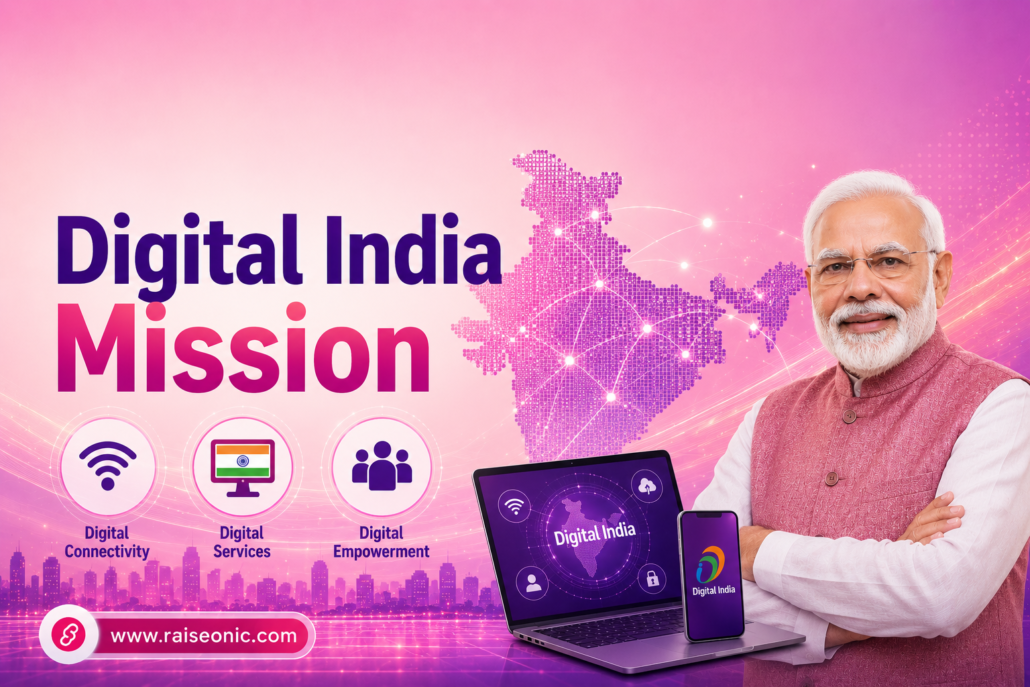
Digital India is built around three core vision areas:
1. Digital Infrastructure as a Core Utility to Every Citizen
The initiative aims to ensure that every citizen has access to reliable digital infrastructure, including internet connectivity, digital identity, and online services.
2. Governance and Services on Demand
Government services are delivered electronically, making them more efficient, transparent, and accessible.
3. Digital Empowerment of Citizens
Citizens are encouraged to develop digital skills and use technology for education, employment, business, and everyday life.
Objectives of Digital India
The programme has several important objectives.
1. Improve Digital Infrastructure
Expand broadband connectivity, mobile access, and public internet facilities across the country.
2. Promote Digital Literacy
Equip citizens with the knowledge and skills required to use digital technologies confidently.
3. Strengthen E-Governance
Simplify government processes through technology-driven solutions.
4. Expand Online Government Services
Provide faster, more transparent, and citizen-friendly public services.
5. Encourage Digital Payments
Promote secure and convenient cashless transactions.
6. Support Innovation and Entrepreneurship
Create an ecosystem that encourages startups, technology companies, and digital businesses.
The Nine Pillars of Digital India
The Digital India programme is built around nine key pillars.
1. Broadband Highways
Expanding high-speed internet connectivity across urban and rural India through initiatives such as BharatNet.
2. Universal Access to Mobile Connectivity
Improving mobile network coverage in underserved and remote areas.
3. Public Internet Access Programme
Strengthening Common Service Centres (CSCs) and digital service delivery points to provide online services at the grassroots level.
4. E-Governance
Using technology to simplify administrative processes, reduce paperwork, and improve efficiency.
5. E-Kranti
Delivering government services electronically in sectors such as education, healthcare, agriculture, banking, and justice.
6. Information for All
Promoting transparency by making government information easily accessible through digital platforms.
7. Electronics Manufacturing
Encouraging domestic manufacturing of electronic products to reduce imports and create employment.
8. IT for Jobs
Providing skill development programmes that prepare youth for careers in the information technology sector.
9. Early Harvest Programmes
Implementing projects that demonstrate the immediate benefits of digital transformation, such as biometric attendance systems and Wi-Fi in public institutions.
Major Initiatives Under Digital India
Several flagship programmes operate under the Digital India umbrella.
DigiLocker
A secure cloud-based platform that allows citizens to store and access important digital documents.
UMANG (Unified Mobile Application for New-age Governance)
A mobile application providing access to numerous government services through a single platform.
BharatNet
A project focused on providing broadband connectivity to Gram Panchayats across India.
Common Service Centres (CSCs)
CSCs enable citizens, especially in rural areas, to access government services, banking, insurance, telemedicine, and educational resources.
Digital Payments
The initiative has promoted digital payment systems such as:
- Unified Payments Interface (UPI)
- Aadhaar Enabled Payment System (AePS)
- Bharat Bill Payment System (BBPS)
- RuPay cards
These systems have made digital transactions faster, more secure, and widely accessible.
Digital Education
Digital India supports online learning platforms, virtual classrooms, and digital educational resources, expanding access to quality education.
Benefits of Digital India
1. Better Access to Government Services
Citizens can apply for certificates, licenses, subsidies, pensions, and other services online, reducing travel and paperwork.
2. Financial Inclusion
Digital banking and payment systems have made financial services more accessible to millions of people.
3. Increased Transparency
Digital processes reduce manual intervention and improve accountability in governance.
4. Employment Opportunities
The growth of the digital economy has created jobs in information technology, e-commerce, digital marketing, cybersecurity, and related sectors.
5. Support for Entrepreneurs
Startups and small businesses benefit from digital platforms, online marketplaces, and simplified regulatory processes.
6. Improved Education and Healthcare
Digital platforms enable remote learning, telemedicine, online consultations, and access to educational content.
7. Women’s Empowerment
Digital literacy and online services enable women to access government schemes, financial services, education, and entrepreneurial opportunities more easily.
Eligibility
Digital India is not a beneficiary-based scheme with fixed eligibility criteria. Instead, it is a nationwide initiative that benefits:
- Indian citizens
- Students
- Entrepreneurs
- Women
- Farmers
- Senior citizens
- Government employees
- Businesses
- Educational institutions
- Healthcare providers
Various programmes under Digital India may have their own eligibility requirements.
How Citizens Can Benefit from Digital India
Individuals can participate in Digital India by:
Step 1: Obtaining a Digital Identity
Use Aadhaar and other digital identity services where applicable.
Step 2: Accessing Online Government Services
Utilize official digital platforms for certificates, subsidies, pensions, education, and other services.
Step 3: Adopting Digital Payments
Use secure digital payment platforms for everyday transactions.
Step 4: Enhancing Digital Skills
Participate in digital literacy and skill development programmes.
Step 5: Leveraging Digital Opportunities
Use online platforms for education, business, employment, entrepreneurship, and professional development.
Impact of Digital India
Since its launch, Digital India has transformed multiple aspects of governance and public service delivery.
Some major achievements include:
- Significant expansion of internet connectivity.
- Rapid growth in digital payment adoption.
- Increased use of online government services.
- Improved digital infrastructure in rural areas.
- Growth of India’s startup ecosystem.
- Expansion of e-commerce and digital businesses.
- Enhanced digital literacy among citizens.
- Greater transparency in governance.
Digital India has also played a key role in supporting remote work, online education, and digital healthcare services.
Challenges and Future Opportunities
While Digital India has achieved remarkable progress, certain challenges remain.
Digital Divide
Ensuring equal access to digital infrastructure in remote areas remains a priority.
Cybersecurity
Strengthening cybersecurity measures is essential as digital adoption continues to grow.
Digital Literacy
Continuous training is needed to help citizens confidently use digital technologies.
Infrastructure Development
Further investment in broadband networks and public digital infrastructure will support future growth.
Addressing these challenges will help India fully realize the benefits of digital transformation.
How Digital India Supports India’s Vision of a Developed Nation
Digital India complements several national initiatives, including:
- Startup India
- Skill India
- Make in India
- Atmanirbhar Bharat
- Smart Cities Mission
- PM Gati Shakti
- Financial Inclusion Programmes
By leveraging technology to improve governance, services, education, healthcare, and business, Digital India is laying the foundation for a more inclusive, innovative, and competitive economy.
How Raiseonic Helps You Stay Updated on Government Digital Initiatives
Government digital initiatives continue to evolve with new platforms, services, policies, and technological innovations.
At Raiseonic, we simplify complex government programmes through easy-to-understand guides, practical insights, and expert information on digital initiatives, entrepreneurship schemes, startup funding, skill development, women empowerment, MSME support, financial assistance, and technology-driven government services.
Whether you are a student, entrepreneur, professional, or business owner, Raiseonic helps you stay informed and make the most of India’s growing digital ecosystem.
Conclusion
The Digital India initiative has transformed the way citizens interact with government, businesses, educational institutions, and financial services. By strengthening digital infrastructure, expanding internet access, promoting digital literacy, and making public services available online, the programme has improved transparency, efficiency, and accessibility across the country.
As India continues to embrace emerging technologies such as artificial intelligence, cloud computing, digital payments, and e-governance, Digital India will remain a key driver of economic growth, innovation, and inclusive development. Its emphasis on technology-enabled governance and citizen empowerment is helping build a stronger, more connected, and digitally capable nation.
For the latest updates on government schemes, digital initiatives, entrepreneurship programmes, startup opportunities, skill development, financial assistance, and technology-driven public services, stay connected with Raiseonic—your trusted source for simplified government scheme information and guidance.
