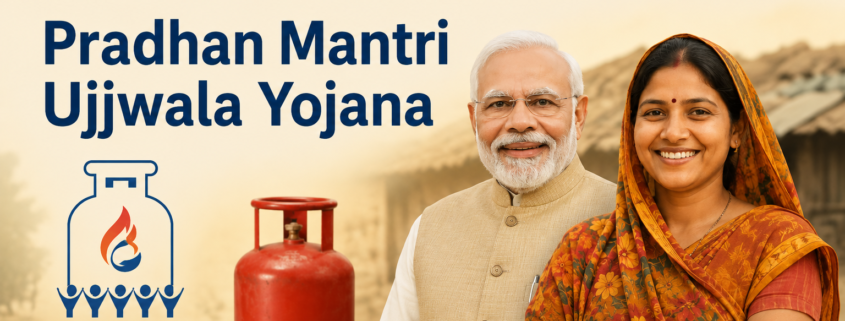
Introduction to Pradhan Mantri Ujjwala Yojana

Access to clean cooking fuel is essential for maintaining good health, protecting the environment, and improving the quality of life. For many years, millions of households in rural and economically weaker sections of India relied on traditional cooking fuels such as firewood, coal, cow dung cakes, crop residue, and kerosene. While these fuels were easily available, they produced harmful smoke that posed serious health risks, particularly for women and children who spent significant time in kitchens.

Indoor air pollution caused by traditional cooking methods has been linked to respiratory diseases, eye infections, cardiovascular problems, and other health complications. Moreover, collecting firewood requires considerable time and effort, limiting opportunities for women to pursue education, employment, or entrepreneurship.

Recognizing these challenges, the Government of India launched the Pradhan Mantri Ujjwala Yojana (PMUY) to provide free LPG (Liquefied Petroleum Gas) connections to eligible women from poor households. The scheme aims to replace traditional cooking methods with clean, safe, and environmentally friendly cooking fuel, thereby improving women’s health, reducing indoor air pollution, and promoting women empowerment.

Since its launch, PMUY has become one of India’s largest social welfare initiatives, benefiting millions of families across the country and contributing to cleaner energy adoption.

In this article, we will explore everything about the Pradhan Mantri Ujjwala Yojana, including its objectives, features, benefits, eligibility criteria, application process, documents required, and its impact on women’s lives and rural development.


What is Pradhan Mantri Ujjwala Yojana (PMUY)?

Pradhan Mantri Ujjwala Yojana (PMUY) is a flagship welfare scheme launched by the Ministry of Petroleum and Natural Gas, Government of India to provide LPG connections to eligible women belonging to economically weaker households.

The scheme was launched on 1 May 2016 with the objective of ensuring access to clean cooking fuel while improving health, hygiene, and environmental sustainability.

Under PMUY, eligible women receive financial assistance for obtaining a new LPG connection, helping them shift from traditional cooking fuels to cleaner and safer LPG.

The scheme primarily aims to:

  • Improve women’s health
  • Reduce indoor air pollution
  • Promote clean energy
  • Empower women
  • Protect the environment
  • Improve the quality of life for rural households

Why Was PMUY Introduced?

Before the launch of PMUY, millions of Indian households depended on biomass fuels for cooking. These traditional fuels generated harmful smoke that exposed women and children to dangerous indoor air pollution.

Some major challenges included:

  • Respiratory diseases caused by smoke
  • Eye irritation and long-term health problems
  • Time spent collecting firewood
  • Environmental degradation due to deforestation
  • Reduced productivity of women
  • Unsafe cooking conditions

To overcome these issues, the Government introduced PMUY to ensure that every eligible household could access clean cooking fuel.

The scheme supports national initiatives such as:

  • Clean India (Swachh Bharat)
  • Women Empowerment
  • Energy Access
  • Health Improvement
  • Environmental Protection
  • Sustainable Development Goals (SDGs)

Objectives of Pradhan Mantri Ujjwala Yojana

The scheme has several important objectives.

1. Promote Clean Cooking Fuel

The primary objective is to replace traditional cooking fuels with LPG.

2. Improve Women’s Health

Reducing indoor smoke exposure helps lower the risk of respiratory and other health-related illnesses.

3. Empower Women

LPG connections are issued in the name of the adult woman of the household, strengthening her role in the family.

4. Reduce Indoor Air Pollution

The scheme contributes to cleaner kitchens and healthier living conditions.

5. Protect the Environment

Reduced dependence on firewood helps decrease deforestation and environmental degradation.

6. Improve Quality of Life

Women save time and effort previously spent collecting fuel, allowing them to pursue education, employment, or income-generating activities.


Key Features of PMUY

Free LPG Connection

Eligible women receive financial assistance for a new LPG connection under the scheme.

The support generally covers:

  • LPG connection charges
  • Security deposit for the cylinder
  • Pressure regulator

The Government has also introduced support measures from time to time to make LPG adoption easier for beneficiaries.


Women-Centric Scheme

The LPG connection is provided in the name of the eligible adult woman of the household, encouraging financial and social empowerment.


Nationwide Coverage

The scheme is implemented across all States and Union Territories, benefiting eligible rural and urban households.


Direct Benefit Transfer (DBT)

Eligible LPG subsidies, where applicable, are transferred directly to beneficiaries’ bank accounts through the DBT system, ensuring transparency and reducing leakages.


Benefits of Pradhan Mantri Ujjwala Yojana

1. Better Health

Using LPG significantly reduces exposure to harmful smoke, improving respiratory health and overall well-being.


2. Time Savings

Women no longer need to spend hours collecting firewood or preparing traditional fuels.


3. Women’s Empowerment

Ownership of the LPG connection enhances women’s participation in household decision-making and promotes dignity.


4. Environmental Protection

Reduced use of firewood contributes to forest conservation and lower carbon emissions.


5. Improved Hygiene

Cleaner kitchens result in a healthier home environment.


6. Economic Benefits

Time saved from fuel collection can be utilized for education, skill development, self-employment, or other productive activities.


Eligibility Criteria for PMUY

Eligibility is determined according to the latest Government guidelines.

Generally, applicants should:

  • Be an adult woman (18 years or above).
  • Belong to an eligible household identified under the scheme guidelines.
  • Not already have an LPG connection in the same household.
  • Fulfil the eligibility conditions prescribed by the Government.

The Government has expanded beneficiary categories over time to include various eligible groups under revised PMUY guidelines.

Applicants should refer to the latest official guidelines for complete eligibility details.


Documents Required

Applicants generally require:

  • Aadhaar Card
  • Identity proof
  • Address proof
  • Ration Card or other eligible household document (where applicable)
  • Bank account details
  • Passport-size photograph
  • Mobile number

Additional documents may be required based on the applicant’s eligibility category.


How to Apply for Pradhan Mantri Ujjwala Yojana

The application process is straightforward.

Step 1: Visit the Nearest LPG Distributor

Eligible applicants can approach an authorized LPG distributor of an Oil Marketing Company.


Step 2: Obtain the Application Form

Collect the PMUY application form or apply through the official online platform, where available.


Step 3: Submit Documents

Attach all required identity, address, eligibility, and banking documents.


Step 4: Verification

The submitted application is verified by the concerned authorities.


Step 5: Approval and LPG Connection

After successful verification, the LPG connection is issued in the name of the eligible woman beneficiary.


Implementation of PMUY

The scheme is implemented by:

  • Ministry of Petroleum and Natural Gas
  • Public Sector Oil Marketing Companies (OMCs)
  • Authorized LPG distributors
  • State and district authorities

The implementing agencies ensure beneficiary identification, connection issuance, awareness campaigns, and efficient service delivery.


Impact of PMUY

Since its launch, Pradhan Mantri Ujjwala Yojana has had a transformative impact on millions of households.

Some major achievements include:

  • Crores of LPG connections released to eligible women.
  • Significant reduction in dependence on traditional cooking fuels.
  • Improved maternal and child health due to reduced indoor air pollution.
  • Increased awareness about clean energy.
  • Enhanced dignity and convenience for women.
  • Greater adoption of LPG in rural areas.
  • Contribution to environmental sustainability.

The scheme has become one of India’s largest clean energy and women empowerment initiatives.


Challenges in Implementation

Despite its success, some challenges remain.

Refill Affordability

For some low-income families, the recurring cost of LPG refills can be a concern. The Government has periodically announced support measures and subsidy provisions to improve affordability.


Awareness

Continuous awareness campaigns are required to encourage sustained use of LPG over traditional fuels.


Accessibility in Remote Areas

Ensuring timely LPG supply in remote and geographically difficult regions remains an ongoing priority.


Behavioural Change

Some households continue to use traditional fuels alongside LPG. Awareness and education can encourage exclusive adoption of clean cooking fuel.


How PMUY Supports India’s Vision of Sustainable Development

Pradhan Mantri Ujjwala Yojana contributes to several national development goals, including:

  • Women Empowerment
  • Clean Energy
  • Healthy India
  • Swachh Bharat
  • Environmental Conservation
  • Financial Inclusion
  • Sustainable Development Goals (SDGs)

The scheme improves health outcomes while supporting cleaner energy and inclusive development.


How Raiseonic Helps You Stay Updated on Government Welfare Schemes

Government welfare schemes frequently undergo updates related to eligibility, subsidy provisions, documentation requirements, and implementation guidelines.

At Raiseonic, we simplify government initiatives through easy-to-understand guides, practical insights, and expert information on women welfare schemes, social security programmes, entrepreneurship initiatives, startup support, financial assistance, healthcare schemes, and clean energy programmes.

Whether you are exploring welfare benefits, business opportunities, or government support programmes, Raiseonic helps you stay informed with reliable and simplified information.


Conclusion

The Pradhan Mantri Ujjwala Yojana (PMUY) is one of India’s most impactful social welfare initiatives, improving the lives of millions of women by providing access to clean cooking fuel. By replacing traditional cooking methods with LPG, the scheme has significantly reduced indoor air pollution, improved maternal and family health, strengthened women’s empowerment, and promoted environmental sustainability.

Beyond providing LPG connections, PMUY represents the Government’s commitment to ensuring dignity, better health, and improved living conditions for economically weaker households. As India continues its journey toward inclusive development and clean energy adoption, the Pradhan Mantri Ujjwala Yojana remains a cornerstone of social welfare and women-centric development.

For the latest updates on government schemes, women empowerment initiatives, healthcare programmes, clean energy schemes, financial assistance, and entrepreneurship opportunities, stay connected with Raiseonic—your trusted source for simplified government scheme information and guidance.
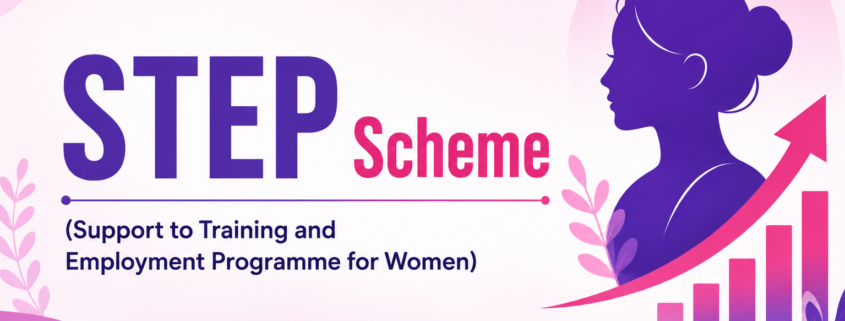
Introduction to the STEP Scheme

Women play a vital role in India’s economic and social development. Over the years, the Government of India has introduced several initiatives to improve women’s participation in education, entrepreneurship, employment, and financial inclusion. However, despite significant progress, many women—especially those in rural and economically weaker communities—continue to face challenges such as limited access to skill development, employment opportunities, and income-generating activities.

A lack of vocational training and industry-relevant skills often prevents women from securing stable employment or starting their own businesses. Recognizing this gap, the Government of India introduced the Support to Training and Employment Programme for Women (STEP) Scheme to equip women with market-oriented skills and improve their employability.

The STEP Scheme focuses on enhancing the capabilities of women through structured training programs, enabling them to become financially independent and actively participate in the workforce. By combining skill development with employment opportunities, the scheme contributes to women empowerment, poverty reduction, and inclusive economic growth.

In this article, we will explore everything you need to know about the STEP Scheme, including its objectives, features, benefits, eligibility criteria, training sectors, application process, and its role in empowering women across India.


What is the STEP Scheme?

The Support to Training and Employment Programme for Women (STEP) is a flagship initiative of the Government of India aimed at providing skill development and employment-oriented training to women above the age of 16 years.

The scheme is implemented by the Ministry of Women and Child Development and focuses on improving women’s employability by providing high-quality vocational training, capacity building, and livelihood support.

Unlike financial assistance schemes that primarily offer loans or subsidies, STEP emphasizes developing practical skills that help women secure employment or establish self-employment ventures.

The scheme supports women from both rural and urban areas, with special attention to those from economically and socially disadvantaged backgrounds.


Why Was the STEP Scheme Introduced?

Although women possess enormous talent and potential, many are unable to participate in the formal economy because they lack professional skills and employment opportunities.

Some common challenges include:

  • Limited vocational education
  • Lack of technical skills
  • Low workforce participation
  • Financial dependency
  • Limited awareness about employment opportunities
  • Lack of entrepreneurship training
  • Social and economic barriers

The STEP Scheme was introduced to bridge these gaps by providing women with industry-relevant skills and improving their access to sustainable livelihood opportunities.

The initiative also supports the Government’s vision of:

  • Women empowerment
  • Skill India
  • Employment generation
  • Financial inclusion
  • Inclusive development
  • Women-led economic growth

Objectives of the STEP Scheme

The scheme has several important objectives.

1. Enhance Women’s Employability

The primary objective is to improve women’s employment prospects through quality skill development programs.

2. Promote Self-Employment

The scheme encourages women to start income-generating activities and small businesses after completing training.

3. Develop Market-Oriented Skills

Training programs are designed according to industry requirements and local employment opportunities.

4. Reduce Poverty

By improving earning capacity, the scheme helps women achieve financial stability and better living standards.

5. Strengthen Women’s Participation in the Economy

The initiative encourages more women to become active participants in India’s workforce.

6. Promote Inclusive Development

Special focus is given to women from economically weaker sections, rural areas, and marginalized communities.


Key Features of the STEP Scheme

Skill Development Training

The scheme provides structured vocational training that equips women with practical and employable skills.

Training includes:

  • Technical skills
  • Business management
  • Entrepreneurship development
  • Financial literacy
  • Digital literacy
  • Soft skills and communication

Employment-Oriented Approach

Unlike conventional training programs, STEP focuses on helping women secure employment or become self-employed after completing the training.


Capacity Building

Women receive training that improves their confidence, leadership abilities, and professional competencies.


Focus on Sustainable Livelihoods

The scheme aims to create long-term income opportunities rather than short-term employment.


Industry-Relevant Curriculum

Training modules are designed to meet the changing demands of industries and local markets.


Sectors Covered Under the STEP Scheme

The STEP Scheme provides training in a variety of sectors depending on local demand and implementing agencies.

Some major sectors include:

Agriculture and Allied Activities

  • Dairy farming
  • Poultry farming
  • Horticulture
  • Food processing
  • Organic farming

Handicrafts and Traditional Industries

  • Handloom weaving
  • Embroidery
  • Tailoring
  • Handicrafts
  • Textile production

Hospitality and Tourism

  • Housekeeping
  • Food services
  • Hospitality management
  • Tourism-related services

Information Technology

  • Computer operations
  • Data entry
  • Digital marketing
  • Basic IT skills
  • Office applications

Retail and Service Sector

  • Retail management
  • Beauty and wellness
  • Customer service
  • Sales and marketing

Entrepreneurship Development

Women interested in starting businesses receive training in:

  • Business planning
  • Financial management
  • Marketing
  • Customer relations
  • Business registration
  • Digital business tools

Benefits of the STEP Scheme

1. Improved Employment Opportunities

Women acquire practical skills that increase their chances of securing employment.


2. Financial Independence

Skill development enables women to earn a stable income and become financially self-reliant.


3. Entrepreneurship Promotion

The scheme encourages women to establish small businesses and self-employment ventures.


4. Better Standard of Living

Higher income improves access to education, healthcare, nutrition, and housing.


5. Increased Confidence

Training enhances leadership skills, communication abilities, and professional confidence.


6. Social Empowerment

Financial independence enables women to participate more actively in family and community decision-making.


Eligibility Criteria for STEP Scheme

The eligibility conditions generally include:

Gender Requirement

Only women are eligible under the scheme.


Age Requirement

Applicants should generally be 16 years or above.


Priority Beneficiaries

Preference is often given to:

  • Rural women
  • Women from economically weaker families
  • SC/ST women
  • Minority women
  • Widows
  • Differently-abled women
  • Women with limited educational opportunities

Training Interest

Applicants should be willing to participate in skill development and employment-oriented training programs.


Documents Required for STEP Scheme

Applicants generally require:

  • Aadhaar Card
  • Identity proof
  • Address proof
  • Passport-size photographs
  • Age proof
  • Income certificate (if applicable)
  • Caste certificate (if applicable)
  • Educational qualification certificates (where required)

The exact documentation may vary depending on the implementing agency.


How to Apply for the STEP Scheme

The application process generally involves the following steps.

Step 1: Identify an Approved Training Provider

Eligible women should contact authorized implementing agencies or organizations conducting STEP training programs.


Step 2: Verify Eligibility

Applicants should ensure they satisfy the eligibility criteria for the selected training program.


Step 3: Submit the Application

Provide personal details and submit the required documents.


Step 4: Participate in the Selection Process

Some training providers may conduct counselling sessions or interviews before admission.


Step 5: Attend Skill Development Training

Participants undergo structured vocational and entrepreneurship training.


Step 6: Employment or Self-Employment Support

After successful completion of training, women may receive placement assistance, entrepreneurship guidance, or livelihood support depending on the training program.


Challenges Addressed by the STEP Scheme

The scheme plays an important role in overcoming several barriers faced by women.

Skill Gap

The program equips women with practical and industry-relevant skills.


Limited Employment Opportunities

Training improves employability across multiple sectors.


Financial Dependency

Income-generating skills enable women to achieve financial independence.


Lack of Entrepreneurial Knowledge

The scheme introduces women to business management and entrepreneurship concepts.


Social Barriers

Skill development and economic participation improve women’s confidence and social standing.


Impact of the STEP Scheme on Women Empowerment

The STEP Scheme has contributed significantly to:

  • Increasing women’s workforce participation
  • Promoting self-employment
  • Enhancing financial inclusion
  • Supporting rural development
  • Strengthening women’s entrepreneurship
  • Improving family income
  • Encouraging lifelong learning

By providing practical skills and employment opportunities, the scheme empowers women to build sustainable livelihoods and improve their quality of life.


How Raiseonic Helps Women Stay Updated on Government Skill Development Schemes

Government schemes related to skill development, entrepreneurship, and employment often involve different eligibility conditions, training providers, and application procedures that can be difficult to understand.

At Raiseonic, we simplify government initiatives through easy-to-understand guides, expert insights, and regular updates on women empowerment schemes, entrepreneurship programs, skill development initiatives, startup opportunities, and financial assistance programs.

Whether you are looking to build new skills, start your own business, or explore government support programs, Raiseonic helps you stay informed and make confident career and business decisions.


Conclusion

The Support to Training and Employment Programme for Women (STEP) Scheme is a transformative initiative that equips women with the skills, knowledge, and confidence needed to achieve financial independence and long-term career success.

By focusing on market-oriented training, employment opportunities, and entrepreneurship development, the scheme enables women to become active contributors to India’s economic growth while improving their own quality of life.

As India continues to prioritize women-led development and inclusive growth, initiatives like the STEP Scheme play a crucial role in building a skilled, confident, and economically empowered female workforce.

For the latest updates on government schemes, women empowerment initiatives, entrepreneurship programs, skill development opportunities, and financial assistance schemes, stay connected with Raiseonic—your trusted source for simplified government scheme information and guidance.

Geetanjali Tiwari, a prominent women entrepreneur in India, stands out as the co-founder of TasteHive, a rapidly growing startup that has been making waves in the culinary world. Geetanjali’s journey as a women founder and entrepreneur is nothing short of inspiring, as she defied traditional norms and societal expectations to chart her path in the competitive startup landscape.

TasteHive, founded by Geetanjali alongside her business partner, aims to revolutionize the way people experience and explore food. The platform leverages technology to connect food enthusiasts with unique and authentic culinary experiences, ranging from hidden gems in local neighborhoods to curated food trails across the country. Geetanjali’s vision for TasteHive is not just about creating a marketplace but also fostering a community of like-minded individuals who share a passion for good food and exploration.

As a startup women founder, Geetanjali has faced her fair share of challenges and obstacles along the way. From securing funding in a male-dominated industry to breaking stereotypes about women in leadership roles, she has persevered with unwavering determination and resilience. Geetanjali’s journey serves as a testament to the power of perseverance and belief in one’s vision, regardless of gender or societal expectations.

Geetanjali’s success as a women entrepreneur in India transcends beyond just her business accomplishments. She serves as a role model for aspiring women founders, showing that with dedication, hard work, and a bold vision, anything is possible. Her story inspires women across the country to overcome barriers and chase their entrepreneurial dreams, no matter how daunting they may seem.

In a landscape where women entrepreneurs are still underrepresented, Geetanjali Tiwari’s story shines as a beacon of hope and empowerment. Through TasteHive, she is not only transforming the culinary industry but also breaking barriers and paving the way for a new generation of women founders to rise and thrive in the startup ecosystem. Geetanjali’s journey is a living testament to the fact that women entrepreneurs have the power to drive change, innovate, and succeed in any field they choose to pursue.

Prerna Malhotra is a name synonymous with resilience, passion, and entrepreneurial spirit in the world of business. As a prominent figure in the realm of Indian women entrepreneurs, Prerna stands out as a beacon of inspiration for aspiring women founders and startup enthusiasts across the country. Her journey from a corporate professional to the founder of FoodBloom, a successful startup in the health and wellness sector, is a testament to her unwavering commitment to pursue her dreams and make a positive impact on society.

Prerna’s story is one of determination, courage, and a relentless pursuit of her vision. After years of working in the corporate world, she felt a deep-seated desire to channel her creativity and passion into building something of her own. With a firm belief in the transformative power of healthy eating and mindful living, Prerna set out to create FoodBloom, a startup that aimed to revolutionize the way people approach nutrition and well-being.

FoodBloom, under Prerna’s guidance, stands as a platform that offers a wide range of curated, nutritious meal plans and wellness services tailored to meet the evolving needs of its customers. From personalized diet consultations to organic food products, FoodBloom caters to individuals looking to adopt a healthier lifestyle without compromising on taste or convenience.

As a women entrepreneur in India, Prerna faced her fair share of challenges and obstacles along the way. However, her unwavering determination and innovative approach to business helped her navigate through the turbulent waters of entrepreneurship and emerge as a game-changer in the wellness industry. Through her startup journey, Prerna has not only carved a niche for herself but has also inspired a new generation of women founders to pursue their entrepreneurial ambitions fearlessly.

Prerna’s success story serves as a beacon of hope and inspiration for women entrepreneurs in India, showcasing the limitless possibilities that arise when passion meets perseverance. Her journey encapsulates the essence of empowerment, courage, and the unyielding spirit of a startup woman founder determined to make a mark in the entrepreneurial landscape.

In a world where the entrepreneurial ecosystem is continually evolving, Prerna Malhotra’s story stands as a shining example of how women entrepreneurs in India are rewriting the rules, challenging conventions, and redefining success on their own terms. Through her innovative startup, FoodBloom, Prerna continues to inspire, motivate, and empower women across the country to dream big, work hard, and create a lasting impact in the entrepreneurial world. Her story is a testament to the fact that with dedication, innovation, and a relentless pursuit of one’s passion, anything is achievable.

Indian Women Entrepreneur Aishwarya Rao – Co-founder, EcoBites | Women Startup Founder

In the realm of entrepreneurship, women founders are breaking barriers and redefining the startup landscape. Aishwarya Rao, the co-founder of EcoBites, is one such inspiring woman entrepreneur who is making waves with her innovative approach and dedication.

Aishwarya’s journey as a women entrepreneur in India is a testament to her resilience and determination. After identifying a gap in the market for sustainable food products, she embarked on her entrepreneurial journey and co-founded EcoBites. The startup focuses on creating eco-friendly and healthy snacks made from locally sourced ingredients.

EcoBites not only offers delicious and nutritious snacks but also promotes sustainable living by using biodegradable packaging and supporting local farmers. Aishwarya’s vision for her startup goes beyond profitability; it is about making a positive impact on the environment and society.

As a startup woman founder, Aishwarya has faced numerous challenges along the way. From securing funding to scaling her business, she has encountered setbacks that would have deterred many. However, her unwavering passion for her venture has seen her through tough times and propelled EcoBites to success.

Aishwarya’s story serves as an inspiration to aspiring women entrepreneurs in India and beyond. Her dedication, innovative thinking, and commitment to sustainability are not only commendable but also indicative of the immense potential that women founders possess.

In a male-dominated industry, Aishwarya stands out as a shining example of what women entrepreneurs can achieve. Her startup story is a reminder that with passion, perseverance, and a strong vision, women can conquer any challenges that come their way.

As EcoBites continues to grow and make a meaningful impact, Aishwarya remains focused on her mission of promoting sustainable living and empowering women entrepreneurs. Her journey serves as a beacon of hope and motivation for women who dare to dream big and carve their path in the world of entrepreneurship.

Title: Indian Women Entrepreneur Divya Joshi – Founder, NutriNest | Women Startup Founder

In the vast world of entrepreneurship, women founders are paving their way to success with determination, innovation, and passion. One such inspiring woman entrepreneur is Divya Joshi, the proud founder of NutriNest, a thriving startup in the health and wellness industry.

Divya Joshi’s journey as a women entrepreneur in India is nothing short of inspiring. With a background in nutrition and a passion for promoting healthy living, she saw an opportunity to make a difference in people’s lives through her startup venture. NutriNest was born out of her vision to create a platform that offers personalized nutrition and wellness solutions to individuals looking to improve their health and well-being.

As a startup women founder, Divya faced numerous challenges along the way, from sourcing funding to building a strong team and establishing a brand presence in a competitive market. However, her perseverance and unwavering commitment to her vision helped her overcome these obstacles and turn NutriNest into a growing success story.

NutriNest offers a range of products and services tailored to meet the diverse needs of its customers. From nutritious meal plans and supplements to virtual consultations with experienced nutritionists, the startup caters to individuals looking to lead a healthier lifestyle. What sets NutriNest apart is its focus on personalized solutions, ensuring that each customer receives tailored recommendations based on their unique requirements.

Divya Joshi’s leadership and dedication have been instrumental in driving NutriNest’s growth and success. Her ability to inspire and motivate her team, coupled with her strategic vision for the business, has positioned NutriNest as a trusted name in the health and wellness industry.

As a women entrepreneur in India, Divya Joshi’s story serves as a source of inspiration for aspiring startup women founders. Her journey is a testament to the power of passion, perseverance, and resilience in achieving entrepreneurial success.

In conclusion, Divya Joshi’s story exemplifies the incredible potential of women founders in the startup ecosystem. Through her dedication and vision, she has not only built a successful business but also impacted the lives of many individuals seeking to improve their health and well-being. Divya Joshi and NutriNest stand as shining examples of the entrepreneurial spirit and innovation that drive the success of women entrepreneurs in India.

Pallavi Mehta, a woman of vision and determination, is reshaping the entrepreneurial landscape in India with her innovative spirit and unwavering commitment. As the co-founder of AgroCraft, a pioneering agri-tech startup, Pallavi’s story is a testament to the power of women entrepreneurs in the country.

In a male-dominated industry, Pallavi has broken barriers and defied norms to build AgroCraft from the ground up. Armed with a passion for agriculture and a desire to bring positive change to rural communities, Pallavi saw an opportunity to leverage technology to revolutionize the agricultural sector in India.

AgroCraft, under Pallavi’s leadership, has developed groundbreaking solutions that empower farmers with real-time data, actionable insights, and sustainable practices. Through a combination of IoT devices, machine learning algorithms, and mobile applications, AgroCraft is driving efficiency, productivity, and profitability for farmers across the country.

Pallavi’s journey as a startup woman founder has been filled with challenges and triumphs. From securing funding to building a strong team, she has faced obstacles head-on and emerged victorious. Her relentless pursuit of excellence and her ability to navigate the complexities of entrepreneurship have earned her respect and admiration within the industry.

As a beacon of inspiration for aspiring women entrepreneurs in India, Pallavi’s story serves as a powerful reminder of the limitless potential that women possess in the startup ecosystem. Her commitment to building a more inclusive and sustainable future for agriculture is a testament to the transformative impact that women founders can have on society.

In a world where women entrepreneurs are still underrepresented, Pallavi Mehta stands as a shining example of what is possible when passion, perseverance, and purpose converge. Through AgroCraft, she is not only driving innovation in agriculture but also inspiring a new generation of women entrepreneurs to dream big and make their mark on the world.

As we celebrate the achievements of women entrepreneurs in India, Pallavi Mehta’s story serves as a reminder that with courage, creativity, and conviction, women can overcome any obstacle and create a brighter future for themselves and their communities. AgroCraft is not just a startup; it is a testament to the indomitable spirit of women entrepreneurs who are reshaping the world one idea at a time.

**Indian Women Entrepreneur Namrata Kapoor – Founder, CulinarySphere | Women Startup Founder**

Women entrepreneurs have been breaking barriers and making significant strides in the startup world, and one such inspiring figure is Namrata Kapoor, the founder of CulinarySphere. Namrata’s journey as a woman startup founder is a testament to her perseverance, dedication, and innovative spirit.

In a male-dominated industry, Namrata has defied the odds and carved a niche for herself as a successful women entrepreneur in India. With a passion for culinary art and a vision to bring unique and authentic flavors to people’s tables, Namrata founded CulinarySphere – a startup that specializes in gourmet food products.

From the inception of CulinarySphere, Namrata faced many challenges typical for women founders in the startup world. However, her unwavering determination and belief in her vision propelled her forward. She worked tirelessly to establish her brand, create standout products, and build a loyal customer base.

CulinarySphere offers a wide range of artisanal food products that cater to the evolving tastes of discerning consumers. Namrata’s attention to detail, commitment to quality, and focus on innovation have set her brand apart in the competitive marketplace. Her products have received rave reviews from customers and critics alike, solidifying her position as a rising star in the food industry.

As a women entrepreneur in India, Namrata is not just building a successful business but also inspiring other women to pursue their entrepreneurial dreams. She actively mentors aspiring women founders, shares her experiences, and advocates for gender equality in the startup ecosystem.

Namrata’s startup story serves as a beacon of hope and inspiration for women entrepreneurs everywhere. Her journey is a reminder that with passion, perseverance, and dedication, women can achieve great success in the world of startups. CulinarySphere continues to flourish under Namrata’s leadership, showcasing the power and potential of women founders in India’s startup landscape.

Sushmita Sharma, a shining example of women entrepreneurship in India, is the co-founder of FreshNest. This visionary entrepreneur is breaking barriers and inspiring women across the nation with her remarkable journey in the startup ecosystem.

FreshNest, the brainchild of Sushmita Sharma, is a cutting-edge startup revolutionizing the home cleaning and maintenance industry in India. With a mission to provide professional and eco-friendly services, FreshNest offers a range of customized solutions to meet the diverse needs of modern households.

Sushmita Sharma’s entrepreneurial spirit and determination has driven FreshNest to become a leading player in the market, gaining a loyal customer base and receiving rave reviews for their exceptional services. Her commitment to quality, innovation, and sustainability sets FreshNest apart from the competition and has cemented its position as a trusted brand in the industry.

As a women startup founder, Sushmita Sharma has faced numerous challenges along the way, but her resilience and passion have been the driving force behind her success. She is a true inspiration to aspiring women entrepreneurs in India, proving that gender is not a barrier to achieving great heights in the startup world.

Sushmita Sharma’s story exemplifies the power of women entrepreneurs in driving economic growth, creating employment opportunities, and fostering innovation. Her unwavering dedication to her vision and her unwavering belief in herself have propelled FreshNest to tremendous success, inspiring women across the country to pursue their entrepreneurial dreams.

In a male-dominated industry, Sushmita Sharma stands out as a shining beacon of empowerment and inspiration. Her story is a testament to the fact that with passion, perseverance, and a strong work ethic, women can conquer any obstacles and achieve their entrepreneurial goals.

With her relentless pursuit of excellence, Sushmita Sharma continues to lead FreshNest to new heights, setting an example for women entrepreneurs in India and beyond. Her story is a reminder that the entrepreneurial journey is not easy, but with vision, determination, and resilience, anything is possible.

Indian Women Entrepreneur Kiran Gupta – Founder, FarmHive

Women entrepreneurs have been breaking barriers and carving their path in the competitive world of startups. One such inspiring figure is Kiran Gupta, the Founder of FarmHive, a leading agri-tech startup in India. Kiran Gupta’s journey as a women startup founder is a testament to resilience, determination, and passion for making a meaningful impact in the agriculture sector.

Kiran Gupta, a visionary entrepreneur, identified the growing need to revolutionize traditional farming practices in India. With a background in agriculture and a strong desire to empower farmers, she founded FarmHive with a mission to provide innovative solutions to enhance agricultural productivity and sustainability.

FarmHive, under Kiran’s leadership, has developed cutting-edge technologies that help farmers optimize their yield, reduce costs, and mitigate environmental impact. The startup offers a range of services, including personalized crop management strategies, soil health monitoring systems, and data-driven insights for informed decision-making.

Kiran’s dedication to uplifting rural communities and promoting sustainable agriculture has been recognized nationwide. She has become a role model for aspiring women entrepreneurs in India, inspiring them to pursue their dreams and make a difference in society.

As a women entrepreneur in India, Kiran Gupta embodies the spirit of resilience and determination. She has faced challenges and setbacks along the way but has always remained steadfast in her vision for FarmHive. Her success story is a reminder that with passion, hard work, and a clear vision, women can excel in the world of entrepreneurship.

Kiran Gupta’s journey as a startup women founder serves as an inspiration to countless individuals, proving that gender is not a barrier to success in the startup ecosystem. Her commitment to innovation and social impact has positioned FarmHive as a frontrunner in the agri-tech industry, creating a lasting legacy for future generations of women entrepreneurs in India.

In conclusion, Kiran Gupta’s story is a shining example of resilience, perseverance, and innovation in the realm of women entrepreneurship. Her journey with FarmHive is a testament to the transformative power of women founders in driving positive change and disrupting established industries. Kiran Gupta’s entrepreneurial spirit continues to inspire and uplift women entrepreneurs in India, paving the way for a more inclusive and diverse startup ecosystem.