
Introduction To Stand-Up India Scheme

Entrepreneurship plays a crucial role in driving economic growth, creating employment opportunities, and fostering innovation. In India, the startup ecosystem has expanded rapidly over the last decade, with thousands of individuals turning their ideas into successful businesses. However, access to finance remains one of the biggest challenges for aspiring entrepreneurs, particularly women and individuals belonging to Scheduled Castes (SC) and Scheduled Tribes (ST).

Many talented entrepreneurs struggle to start or expand their businesses due to insufficient capital, lack of collateral, and limited access to formal credit. Recognizing these challenges, the Government of India launched the Stand-Up India Scheme to promote entrepreneurship among underrepresented sections of society.

The scheme aims to facilitate bank loans to women entrepreneurs and SC/ST entrepreneurs for establishing greenfield enterprises in manufacturing, services, trading, and allied agricultural sectors. By improving access to finance and providing handholding support, the initiative seeks to create a more inclusive entrepreneurial ecosystem and encourage self-employment across the country.

In this article, we will explore everything about the Stand-Up India Scheme, including its objectives, benefits, eligibility criteria, loan features, application process, and its role in strengthening India’s startup and MSME ecosystem.


What is the Stand-Up India Scheme?

The Stand-Up India Scheme was launched by the Government of India on 5 April 2016 with the objective of promoting entrepreneurship among women and SC/ST communities.

Under the scheme, every scheduled commercial bank branch is encouraged to provide loans to at least:

  • One Scheduled Caste (SC) or Scheduled Tribe (ST) borrower, and
  • One woman entrepreneur.

The scheme facilitates bank loans ranging from ₹10 lakh to ₹1 crore for setting up greenfield enterprises, meaning new businesses that are being established for the first time.

The initiative is implemented by the Department of Financial Services, Ministry of Finance, and supported through the Stand-Up India portal and various handholding agencies.


Why Was the Stand-Up India Scheme Introduced?

Despite significant economic progress, women and entrepreneurs from SC/ST communities often face barriers when trying to establish businesses.

Some common challenges include:

  • Limited access to institutional credit
  • Lack of collateral for obtaining loans
  • Limited financial literacy
  • Lack of mentorship and business guidance
  • Difficulty in preparing business plans
  • Lower participation in entrepreneurship activities

The Stand-Up India Scheme was introduced to bridge these gaps and create opportunities for aspiring entrepreneurs who may otherwise struggle to access formal financing.

The scheme also aligns with the government’s vision of:

  • Inclusive economic growth
  • Financial empowerment
  • Job creation
  • Women-led development
  • Promotion of entrepreneurship among marginalized communities

Objectives of the Stand-Up India Scheme

The scheme has several important objectives.

1. Promoting Entrepreneurship

The primary objective is to encourage entrepreneurship among women and SC/ST communities.

2. Improving Access to Finance

The scheme facilitates easier access to bank loans for establishing new enterprises.

3. Creating Employment Opportunities

New businesses established under the scheme contribute to job creation and economic development.

4. Supporting Financial Inclusion

The initiative helps bring more entrepreneurs into the formal banking and financial system.

5. Strengthening the MSME Ecosystem

The scheme encourages the growth of micro, small, and medium enterprises across India.


Key Features of the Stand-Up India Scheme

Loan Amount

Eligible entrepreneurs can obtain loans ranging from:

₹10 lakh to ₹1 crore

The loan amount depends on the nature, scale, and financial requirements of the proposed business.


Greenfield Enterprise Requirement

The scheme supports only greenfield projects, meaning the business should be a new venture and not an existing enterprise.

The applicant should be entering the business activity for the first time.


Composite Loan Facility

The loan includes both:

  • Term loan
  • Working capital component

This helps entrepreneurs meet both setup and operational expenses.


Margin Money Requirement

The borrower may be required to contribute a certain percentage of the project cost as margin money. Government schemes and subsidies can sometimes be used to meet part of this requirement, subject to applicable guidelines.


Repayment Period

The repayment period can extend up to 7 years, with a possible moratorium period as per bank policies and scheme guidelines.


Credit Guarantee Support

Loans under the scheme may be covered under the Credit Guarantee Fund for Stand-Up India Scheme (CGFSI), reducing the risk for lending institutions.


Eligibility Criteria for Stand-Up India Scheme

To avail benefits under the scheme, applicants must fulfill certain conditions.

For Individual Entrepreneurs

The applicant must be:

  • A woman entrepreneur, or
  • A Scheduled Caste (SC) entrepreneur, or
  • A Scheduled Tribe (ST) entrepreneur.

Age Requirement

The applicant should generally be:

18 years or above.


Greenfield Enterprise

The business should be a new enterprise and should not have been previously established by the applicant.


Non-Individual Enterprises

In the case of partnerships or companies:

  • At least 51% of the shareholding and controlling stake must be held by a woman or SC/ST entrepreneur.

Credit History

Applicants should not be in default with any bank or financial institution.


Sectors Covered Under the Scheme

The Stand-Up India Scheme supports greenfield enterprises in the following sectors:

Manufacturing

Businesses involved in producing goods and products.


Services

Service-based enterprises such as education, healthcare, consultancy, hospitality, and technology services.


Trading

Businesses involved in buying and selling goods.


Allied Agricultural Activities

Certain activities related to agriculture and rural enterprises may also be covered under the scheme.


Benefits of Stand-Up India Scheme

1. Access to Formal Credit

The scheme enables aspiring entrepreneurs to access institutional financing that may otherwise be difficult to obtain.


2. Encouragement for First-Time Entrepreneurs

The focus on greenfield enterprises encourages new entrepreneurs to pursue their business ideas.


3. Women Empowerment

The initiative significantly promotes women entrepreneurship and economic participation.


4. Social Inclusion

By focusing on SC/ST entrepreneurs, the scheme contributes to inclusive economic development.


5. Employment Generation

Businesses established under the scheme create jobs and contribute to local economic growth.


6. Entrepreneurial Ecosystem Development

The scheme strengthens India’s startup and MSME ecosystem by increasing the number of formal enterprises.


Handholding Support Under Stand-Up India

One of the unique features of the scheme is the availability of handholding support.

Entrepreneurs may receive assistance in:

  • Preparing project reports
  • Skill development and training
  • Financial literacy
  • Registration processes
  • Market linkages
  • Business guidance and mentorship

This support is particularly valuable for first-time business owners.


Documents Required for Stand-Up India Scheme

Applicants generally require:

  • Aadhaar Card
  • PAN Card
  • Identity proof
  • Address proof
  • Caste certificate (for SC/ST applicants)
  • Business plan or project report
  • Bank account details
  • Educational qualifications (if applicable)
  • Financial statements and estimates
  • Additional documents requested by the lending institution

Document requirements may vary depending on the bank and nature of the business.


How to Apply for Stand-Up India Scheme

The application process can be completed online or through participating banks.

Step 1: Prepare a Business Plan

Applicants should prepare a clear project report outlining:

  • Business idea
  • Investment requirements
  • Revenue projections
  • Operational plans

Step 2: Visit the Stand-Up India Portal or Bank

Applicants can approach:

  • Scheduled commercial banks
  • Stand-Up India portal
  • Lead district offices
  • Entrepreneurship support agencies

Step 3: Submit the Application

Provide personal details, business information, and upload the required documents.


Step 4: Loan Assessment

The bank evaluates:

  • Project feasibility
  • Applicant eligibility
  • Financial requirements
  • Repayment capacity

Step 5: Loan Sanction and Disbursement

Upon approval, the loan amount is sanctioned and disbursed according to the project requirements.


Challenges Faced by Entrepreneurs

Although the scheme has created numerous opportunities, some challenges still exist.

Lack of Awareness

Many eligible entrepreneurs remain unaware of the scheme and its benefits.


Business Planning Difficulties

First-time entrepreneurs may struggle to prepare project reports and financial estimates.


Market Competition

New businesses often face challenges related to market access and customer acquisition.


Financial Management

Managing cash flow and business finances requires continuous learning and support.

Increasing awareness, mentorship, and training can further strengthen the impact of the scheme.


How Stand-Up India Supports India’s Vision of Inclusive Growth

The Stand-Up India Scheme is a major step toward creating an inclusive and equitable entrepreneurial ecosystem.

The scheme contributes by:

  • Promoting women-led development
  • Supporting marginalized communities
  • Creating employment opportunities
  • Strengthening MSMEs
  • Encouraging self-employment
  • Expanding financial inclusion
  • Driving local economic growth

By empowering aspiring entrepreneurs, the scheme helps transform innovative ideas into sustainable enterprises.


How Raiseonic Helps Entrepreneurs Understand Government Opportunities

Government schemes often involve multiple eligibility conditions, documentation requirements, and application procedures that can be difficult to understand.

At Raiseonic, we simplify government initiatives by providing easy-to-understand guides, practical insights, and expert information on startup schemes, business funding, subsidies, loans, and entrepreneurship opportunities.

Whether you are planning to launch your first business, expand an existing enterprise, or explore government support programs, Raiseonic helps you stay informed and make better business decisions.


Conclusion

The Stand-Up India Scheme is a transformative initiative that aims to empower women and SC/ST entrepreneurs by improving access to formal financing and promoting entrepreneurship.

By providing loans ranging from ₹10 lakh to ₹1 crore, along with handholding support and credit guarantee mechanisms, the scheme has created opportunities for thousands of aspiring entrepreneurs to establish and grow their businesses.

As India continues to build a strong startup and MSME ecosystem, initiatives like Stand-Up India play a vital role in ensuring that economic growth is inclusive and accessible to all sections of society.

For the latest updates on government schemes, startup funding opportunities, subsidies, business loans, and entrepreneurship initiatives, stay connected with Raiseonic—your trusted source for simplified government scheme information and guidance.


Introduction To Lakhpati Didi Scheme

Women empowerment has emerged as one of the most important drivers of India’s economic and social development. Across the country, millions of women are contributing to their families and communities through agriculture, handicrafts, small businesses, and self-employment activities. However, despite their potential and hard work, many women in rural areas still face challenges such as limited income opportunities, lack of access to finance, insufficient skill development, and restricted market exposure.

Recognizing the need to economically empower women and promote entrepreneurship at the grassroots level, the Government of India launched the Lakhpati Didi Scheme. The initiative aims to help women associated with Self-Help Groups (SHGs) increase their annual income and become financially independent by earning at least ₹1 lakh per year through sustainable livelihood activities.

The scheme is more than just a financial assistance program—it is a nationwide movement to transform rural women into successful entrepreneurs, business owners, and community leaders. Through skill development, financial literacy, access to credit, and entrepreneurship opportunities, the Lakhpati Didi Scheme is creating pathways for millions of women to improve their standard of living and contribute to India’s economic growth.

In this article, we will explore everything about the Lakhpati Didi Scheme, including its objectives, features, benefits, eligibility criteria, implementation process, and its role in promoting women-led development in India.


What is the Lakhpati Didi Scheme?

The Lakhpati Didi Scheme is an initiative of the Government of India aimed at helping women members of Self-Help Groups (SHGs) achieve sustainable annual incomes of ₹1 lakh or more through entrepreneurship and livelihood activities.

The scheme operates under the broader framework of the Deendayal Antyodaya Yojana – National Rural Livelihoods Mission (DAY-NRLM), which focuses on poverty reduction and women empowerment by strengthening Self-Help Groups across rural India.

The term “Lakhpati Didi” refers to women who have successfully achieved an annual household income of at least ₹1 lakh through income-generating activities and entrepreneurial initiatives.

The government has set an ambitious target of creating crores of Lakhpati Didis across the country by empowering rural women through skill development, financial inclusion, and business opportunities.


Why Was the Lakhpati Didi Scheme Introduced?

Although millions of women are associated with Self-Help Groups, many continue to earn modest incomes due to limited access to resources, markets, and entrepreneurial opportunities.

Some of the major challenges faced by rural women include:

  • Limited access to formal finance and credit
  • Lack of business training and financial literacy
  • Dependence on seasonal or low-income activities
  • Limited market exposure
  • Lack of awareness about government support schemes
  • Insufficient opportunities for skill development

The Lakhpati Didi Scheme was introduced to address these challenges and create an ecosystem where women can become financially independent and self-reliant.

The initiative aligns with the government’s vision of women-led development, rural entrepreneurship, and inclusive economic growth.


Objectives of the Lakhpati Didi Scheme

The scheme has several important objectives.

1. Increasing Women’s Income

The primary objective is to help women earn an annual income of at least ₹1 lakh through sustainable livelihood activities.

2. Promoting Women Entrepreneurship

The scheme encourages women to establish and expand micro-enterprises and small businesses.

3. Strengthening Self-Help Groups

The initiative aims to make SHGs economically stronger and more self-sufficient.

4. Promoting Financial Inclusion

The scheme helps women gain access to banking services, credit facilities, and financial literacy.

5. Generating Rural Employment

By supporting women-led enterprises, the scheme creates employment opportunities within rural communities.

6. Encouraging Skill Development

Women receive training and guidance to improve their business, technical, and managerial capabilities.


Key Features of Lakhpati Didi Scheme

Skill Development and Training

One of the most important aspects of the scheme is providing women with skill training that helps them start and manage income-generating activities.

Training may include:

  • Entrepreneurship development
  • Financial literacy
  • Business planning
  • Digital literacy
  • Marketing techniques
  • Product packaging and branding
  • Customer management

The goal is to equip women with the knowledge required to build sustainable businesses.


Financial Support and Access to Credit

The scheme facilitates easier access to:

  • Bank loans
  • Microfinance support
  • Government assistance programs
  • SHG credit facilities

Financial access enables women to start or expand their businesses without significant financial barriers.


Promotion of Diverse Livelihood Activities

Women under the scheme are encouraged to engage in various income-generating activities, including:

  • Agriculture and allied activities
  • Dairy farming
  • Poultry farming
  • Food processing
  • Handicrafts
  • Tailoring and garment manufacturing
  • Retail businesses
  • Digital services
  • Small manufacturing enterprises

This diversification helps reduce dependency on a single source of income.


Encouragement of Entrepreneurship

The scheme promotes entrepreneurship by encouraging women to become business owners rather than only wage earners.

Women are supported in identifying local business opportunities and creating sustainable enterprises.


Community-Based Development

The initiative uses the strong network of Self-Help Groups to create community-driven economic development and peer support.


Benefits of Lakhpati Didi Scheme

1. Financial Independence

The scheme enables women to become financially self-reliant and improve their household incomes.


2. Better Standard of Living

Higher income allows families to spend more on:

  • Education
  • Healthcare
  • Nutrition
  • Housing
  • Savings and investments

3. Increased Confidence and Decision-Making Power

Financial independence improves women’s confidence and strengthens their participation in family and community decisions.


4. Employment Generation

Women-led enterprises often create employment opportunities for other women in the community.


5. Reduction in Rural Poverty

Increased household income contributes to poverty reduction and improved economic stability.


6. Promotion of Women-Led Development

The scheme positions women as active contributors to India’s economic progress.


Who Can Benefit from the Lakhpati Didi Scheme?

The scheme primarily targets:

  • Women associated with Self-Help Groups (SHGs)
  • Rural women seeking income-generating opportunities
  • Women interested in entrepreneurship
  • Existing women entrepreneurs looking to expand their businesses
  • Women involved in agriculture and allied activities
  • Women engaged in traditional skills and local crafts

The initiative particularly focuses on economically weaker sections and underserved rural communities.


Role of Self-Help Groups (SHGs) in the Scheme

Self-Help Groups are at the heart of the Lakhpati Didi Scheme.

SHGs help by:

  • Identifying potential women entrepreneurs
  • Facilitating access to credit
  • Providing peer support and mentoring
  • Encouraging savings and financial discipline
  • Promoting group-based enterprises
  • Creating market linkages

The collective strength of SHGs has played a major role in empowering women and reducing poverty in rural India.


How Women Can Become a Lakhpati Didi

The journey to becoming a Lakhpati Didi generally involves several steps:

Step 1: Join a Self-Help Group

Women become members of local SHGs and participate in group savings and activities.

Step 2: Undergo Training

Participants receive skill development and entrepreneurship training.

Step 3: Identify a Livelihood Activity

Women select suitable business opportunities based on their interests, skills, and local market demand.

Step 4: Access Financial Support

Eligible women can obtain credit and financial assistance to start or expand their businesses.

Step 5: Scale Income Activities

By increasing productivity and improving market access, women can gradually achieve annual incomes of ₹1 lakh or more.


Examples of Income-Generating Activities Under the Scheme

Women can pursue multiple livelihood opportunities, including:

  • Dairy farming
  • Goat rearing
  • Poultry farming
  • Mushroom cultivation
  • Food processing units
  • Beauty and wellness services
  • Tailoring and embroidery
  • Handicrafts and home décor products
  • Digital service centers
  • Retail stores
  • Agricultural input services

The scheme encourages women to explore activities that are sustainable and locally viable.


Challenges Faced by Rural Women Entrepreneurs

Despite the opportunities created by the scheme, certain challenges remain.

Limited Market Access

Many women struggle to find customers outside their local communities.

Financial Literacy Gaps

Understanding loans, investments, and business management can be difficult without proper guidance.

Digital Divide

Some women require additional support in using digital tools and online platforms.

Social Barriers

Traditional social norms can sometimes limit women’s participation in business activities.

Continuous training, awareness campaigns, and mentorship programs are helping address these challenges.


How Lakhpati Didi Scheme Supports India’s Vision of Women-Led Development

The Government of India has emphasized the idea of women-led development, where women become active leaders of economic growth.

The Lakhpati Didi Scheme contributes to this vision by:

  • Creating women entrepreneurs
  • Increasing household incomes
  • Promoting financial inclusion
  • Encouraging rural enterprises
  • Supporting skill development
  • Generating employment opportunities
  • Strengthening Self-Help Groups

The initiative demonstrates how empowering women can accelerate social and economic development.


How Raiseonic Helps Women Understand Government Opportunities

Many women are unaware of the numerous government schemes and opportunities available for entrepreneurship, financial assistance, and skill development.

At Raiseonic, we simplify complex government initiatives through easy-to-understand articles, expert insights, and practical guides. Our mission is to help women, entrepreneurs, startups, and businesses discover opportunities that can improve their lives and accelerate their growth.

Whether you are looking for women empowerment schemes, startup support, subsidies, loans, or business opportunities, Raiseonic helps you stay informed and make better decisions.


Conclusion

The Lakhpati Didi Scheme is a transformative initiative that aims to make millions of rural women financially independent and economically empowered. By promoting entrepreneurship, improving access to finance, and strengthening Self-Help Groups, the scheme is creating sustainable income opportunities across rural India.

The initiative is not just about increasing income—it is about building confidence, promoting leadership, and enabling women to become active contributors to the nation’s growth story.

As India moves toward a future of inclusive and women-led development, the Lakhpati Didi Scheme stands as a powerful example of how empowering women can transform families, communities, and the economy.

For the latest updates on government schemes, women entrepreneurship initiatives, financial assistance programs, and business opportunities, stay connected with Raiseonic—your trusted source for simplified government scheme information and guidance.
Introduction To Annapurna Yojana

Food security is one of the most fundamental necessities for a healthy and dignified life. However, a significant number of elderly citizens in India, especially those living below the poverty line and without adequate family support, face challenges in accessing regular and nutritious food. Old age often brings financial dependency, health issues, and reduced earning capacity, making it difficult for many senior citizens to meet their basic needs.

Recognizing this challenge, the Government of India launched the Annapurna Yojana to provide food support to elderly citizens who are unable to secure their daily nutritional requirements. The scheme acts as a social safety net for vulnerable senior citizens by providing free food grains and helping them live with greater dignity and security.

Annapurna Yojana is an important step toward strengthening India’s social welfare system and ensuring that no elderly person suffers from hunger due to financial hardship. It complements other old-age welfare schemes and reflects the government’s commitment to protecting the rights and well-being of senior citizens.

In this article, we will understand everything about Annapurna Yojana, including its objectives, benefits, eligibility criteria, application process, implementation, and its role in improving the lives of elderly citizens.

What is Annapurna Yojana?

Annapurna Yojana is a social welfare scheme introduced by the Government of India under the Ministry of Rural Development. It was launched on 1st April 2000 with the objective of providing free food grains to eligible senior citizens who are unable to receive benefits under the National Old Age Pension Scheme (NOAPS).

Under the scheme, eligible elderly citizens receive 10 kilograms of food grains per month free of cost. The primary purpose of this support is to ensure food security for senior citizens who have no regular source of income and are unable to afford their basic nutritional needs.

The scheme mainly targets older persons who are economically vulnerable and are not covered under pension assistance despite being eligible for old-age welfare support.

Why Was Annapurna Yojana Introduced?

India has a large population of elderly citizens, many of whom live in financially difficult circumstances. With increasing age, the ability to work and earn decreases, and many senior citizens become dependent on their families or society for support.

While pension schemes provide financial assistance to many elderly individuals, some eligible citizens remain outside the pension system due to limited availability of pension slots, administrative delays, or other reasons. Such individuals are at a greater risk of hunger and malnutrition.

Annapurna Yojana was introduced to bridge this gap by ensuring that elderly citizens who are unable to receive old-age pensions still receive basic food support from the government.

The scheme reflects the principle that every citizen deserves access to food and a life of dignity, irrespective of their economic condition or age.

Objectives of Annapurna Yojana

The Annapurna Yojana has several important objectives aimed at improving the quality of life of elderly citizens.

1. Ensuring Food Security

The primary objective of the scheme is to provide a minimum quantity of food grains to economically disadvantaged senior citizens so that they do not suffer from hunger.

2. Supporting Vulnerable Elderly Citizens

The scheme focuses on elderly people who do not have a reliable source of income or adequate financial support.

3. Reducing Hunger and Malnutrition

By providing regular food grains, Annapurna Yojana helps reduce the risk of hunger and nutritional deficiencies among poor senior citizens.

4. Promoting Social Welfare

The scheme strengthens the government’s social security network by extending assistance to individuals who are often the most vulnerable members of society.

5. Providing Dignity in Old Age

Access to basic necessities like food allows senior citizens to live with greater independence, self-respect, and dignity.

Key Features of Annapurna Yojana

The scheme includes several features that make it a crucial welfare initiative for elderly citizens.

Free Food Grain Assistance

Eligible beneficiaries receive 10 kilograms of food grains every month free of cost. The food grains are generally provided through the Public Distribution System (PDS).

Central Government Initiative

The scheme was introduced by the Government of India and is implemented with the support of state governments and local administrative authorities.

Targeted Support

Annapurna Yojana specifically targets elderly citizens who are eligible for old-age pension benefits but are not receiving pension support.

Focus on Rural and Economically Weaker Sections

The scheme primarily benefits senior citizens belonging to poor households, especially those living in rural areas with limited financial resources.

Simple Benefit Structure

Unlike schemes that involve complex financial transactions, Annapurna Yojana directly provides food grains, ensuring that beneficiaries receive immediate support for their nutritional needs.

Benefits of Annapurna Yojana

1. Protection Against Hunger

The biggest benefit of Annapurna Yojana is that it protects vulnerable elderly citizens from hunger by guaranteeing a minimum supply of food grains.

2. Financial Relief

Since beneficiaries receive food grains free of cost, they can reduce their monthly household expenses and use their limited income for other necessities such as healthcare and medicines.

3. Better Nutrition and Health

Regular access to food contributes to better nutrition and supports the overall health and well-being of senior citizens.

4. Improved Quality of Life

The scheme provides a sense of security and reduces the uncertainty faced by elderly individuals regarding their daily food requirements.

5. Social Inclusion

Annapurna Yojana ensures that elderly citizens who are left out of pension schemes are not neglected and continue to receive government support.

Eligibility Criteria for Annapurna Yojana

To receive benefits under the Annapurna Yojana, applicants must meet certain eligibility requirements.

Age Requirement

The applicant must be 65 years of age or above.

Economic Condition

The applicant should belong to a financially weaker section and generally be identified under the criteria prescribed by the respective government authorities.

Pension Status

The most important condition is that the individual should be eligible for the National Old Age Pension Scheme but should not be receiving pension benefits under that scheme.

Residency

The applicant must be a resident of the concerned state or union territory where the application is submitted.

Since implementation guidelines may vary across states, applicants should verify specific requirements with local authorities.

How to Apply for Annapurna Yojana

The application process for Annapurna Yojana is generally managed by state governments and local administrative offices.

Step 1: Contact the Local Authorities

Eligible applicants can visit the nearest Gram Panchayat office, Block Development Office, or local social welfare department to obtain information about the scheme.

Step 2: Collect the Application Form

Applicants need to collect and fill out the Annapurna Yojana application form provided by the concerned authority.

Step 3: Submit Required Documents

Common documents that may be required include:

  • Age proof such as Aadhaar card, birth certificate, or other valid documents
  • Address proof
  • Identity proof
  • Proof of eligibility for old-age pension
  • Passport-size photographs
  • Any additional documents requested by the local authority

Step 4: Verification Process

Government officials verify the applicant’s eligibility, documents, and financial status before approving the benefits.

Step 5: Distribution of Food Grains

Once approved, beneficiaries receive food grains through the designated Public Distribution System channels or other authorized distribution points.

Documents Required for Annapurna Yojana

Applicants may generally require the following documents:

  • Aadhaar card
  • Age proof certificate
  • Residence certificate
  • Passport-size photographs
  • Ration card (where applicable)
  • Proof related to old-age pension eligibility
  • Income or poverty-related certificates as required by the state government

Applicants should confirm the exact documentation requirements with their local administrative offices because requirements can differ across states.

Challenges in Implementation

While Annapurna Yojana has benefited many elderly citizens, certain challenges remain in ensuring complete coverage.

Lack of Awareness

Many eligible senior citizens are unaware of the scheme and therefore fail to apply for the benefits.

Identification of Beneficiaries

Identifying all eligible elderly citizens, especially those living in remote rural areas, remains a challenge.

Administrative Delays

Delays in verification and approval can sometimes prevent timely access to benefits.

Need for Better Outreach

Greater awareness campaigns, community involvement, and improved local administration can help ensure that more deserving citizens receive support.

Role of Annapurna Yojana in India’s Social Security System

Annapurna Yojana plays an important role in strengthening India’s social welfare framework. It complements pension schemes by ensuring that elderly citizens who remain outside the pension system still receive basic food support.

The scheme demonstrates the government’s commitment toward inclusive growth, social justice, and the welfare of senior citizens. By addressing food insecurity among the elderly, it contributes to a more compassionate and equitable society.

How Raiseonic Helps You Stay Informed About Government Welfare Schemes

Many citizens remain unaware of the various government schemes available for their financial security, food assistance, healthcare, entrepreneurship, and social welfare. Understanding eligibility criteria, required documentation, and application procedures can often be confusing.

At Raiseonic, we aim to simplify government schemes and make important information accessible to everyone. Through detailed guides, expert insights, and regular updates, we help individuals understand opportunities and welfare programs introduced by the government.

Whether you are looking for information about social security schemes, financial assistance programs, women empowerment initiatives, startup support, or MSME benefits, Raiseonic serves as your trusted source for reliable and simplified government scheme knowledge.

Conclusion

Annapurna Yojana is a significant welfare initiative that ensures vulnerable elderly citizens do not suffer from hunger and food insecurity. By providing 10 kilograms of free food grains every month to eligible senior citizens, the scheme protects the dignity and well-being of those who need support the most.

Although challenges such as awareness and implementation remain, the scheme continues to play an important role in India’s social security system. With stronger outreach and effective implementation, Annapurna Yojana has the potential to reach more deserving elderly citizens and improve their quality of life.

For individuals seeking reliable information on government schemes and welfare initiatives, staying updated is essential. Follow Raiseonic for simplified explanations, latest updates, and expert guidance on government opportunities that can help improve lives and create a more secure future.

Introduction

Women entrepreneurship has become one of the strongest pillars of India’s economic growth and social transformation. Across villages, towns, and cities, millions of women are creating exceptional products through their creativity, skills, and determination. From handmade crafts and traditional textiles to food products, organic goods, and home-based services, women-led enterprises are contributing significantly to local economies.

However, despite having quality products and entrepreneurial talent, many women face challenges in reaching larger markets. Limited access to customers, dependency on middlemen, lack of digital knowledge, and inadequate marketing opportunities often restrict the growth of their businesses.

To address these challenges and empower women entrepreneurs, the Government of India introduced SHE-Marts, a dedicated marketplace initiative designed to provide women, particularly members of Self-Help Groups (SHGs), with better market access and opportunities to sell their products directly to consumers.

SHE-Marts aims to create an ecosystem where women entrepreneurs can showcase their products, expand their customer base, increase their earnings, and become financially independent. The initiative represents a major step toward strengthening women-led enterprises and promoting inclusive economic development.

In this article, we will understand everything about SHE-Marts, including its purpose, features, benefits, eligibility, implementation, challenges, and its role in shaping the future of women entrepreneurship in India.

What is SHE-Marts?

SHE-Marts is a marketplace initiative introduced to support women entrepreneurs and Self-Help Groups by providing them with a platform to display and sell their products. The concept focuses on connecting women producers directly with consumers, thereby reducing the dependence on multiple intermediaries and enabling better income generation.

The term SHE represents the strength, creativity, and entrepreneurial potential of women, while Marts refers to organized marketplaces where products can reach a wider audience.

Through SHE-Marts, women involved in small-scale manufacturing, handicrafts, agriculture-based products, food processing, textiles, and other home-based industries can receive greater visibility for their work.

The initiative aligns with India’s broader vision of women-led development, rural empowerment, and strengthening local enterprises under the spirit of Vocal for Local and self-reliant economic growth.

Why Was SHE-Marts Introduced?

India has millions of women who possess valuable traditional skills and entrepreneurial abilities. Many of them are associated with Self-Help Groups and micro-enterprises that produce high-quality goods. However, their businesses often remain confined to local markets due to various limitations.

Some of the major challenges faced by women entrepreneurs include:

  • Lack of access to large customer markets
  • Limited knowledge of branding and marketing
  • Dependence on local sellers or middlemen
  • Difficulty in obtaining fair prices for products
  • Lack of awareness about digital selling platforms
  • Limited exposure to modern business practices

SHE-Marts was introduced to overcome these barriers by creating a structured marketplace where women can independently market their products and improve their income opportunities.

The initiative also helps preserve traditional art forms and local craftsmanship by giving them access to a larger consumer base.

Objectives of SHE-Marts

The primary objective of SHE-Marts is to economically empower women by creating better business opportunities. The major goals of the initiative include:

1. Promoting Women Entrepreneurship

SHE-Marts encourages women to start and expand their businesses by giving them a reliable platform to sell their products.

2. Improving Market Access

One of the biggest barriers for small women entrepreneurs is reaching customers beyond their local area. SHE-Marts helps connect them with broader markets.

3. Eliminating Dependence on Middlemen

By enabling direct interaction between producers and consumers, women can receive better prices and higher profits for their products.

4. Increasing Financial Independence

Higher sales and improved income opportunities help women become financially stronger and contribute more actively to their households and communities.

5. Encouraging Rural Development

Many SHGs are located in rural areas. By promoting their products, SHE-Marts contributes to employment generation and economic development in villages.

Key Features of SHE-Marts

SHE-Marts provides several features that make it a valuable initiative for women entrepreneurs.

Dedicated Marketplace for Women

It offers a dedicated platform where women-owned businesses and SHGs can display their products and connect with potential buyers.

Promotion of Local Products

The initiative supports locally produced goods and helps traditional products gain recognition beyond regional boundaries.

Better Income Opportunities

With access to a wider customer network and reduced involvement of intermediaries, women can improve their earning potential.

Support for Self-Help Groups

SHGs play a major role in rural entrepreneurship. SHE-Marts provides these groups with a platform to convert their skills into sustainable businesses.

Encouragement of Digital and Modern Selling Practices

The initiative promotes the adoption of digital platforms, online selling, product branding, and modern marketing methods among women entrepreneurs.

Types of Products Available Through SHE-Marts

SHE-Marts provides opportunities for a wide variety of women-made products. Some common categories include:

Handicrafts and Handmade Items

Traditional crafts, decorative products, handmade accessories, and artistic creations prepared by women artisans can be promoted through SHE-Marts.

Textiles and Clothing

Products such as handloom fabrics, embroidered garments, traditional clothing, and customized apparel receive greater visibility through organized marketplaces.

Food and Processed Products

Women involved in preparing homemade food items, snacks, pickles, spices, and processed agricultural products can reach a larger customer base.

Natural and Eco-Friendly Products

Organic products, environmentally friendly items, and sustainable goods can find new markets through SHE-Marts.

Household and Lifestyle Products

Various home utility products, accessories, and lifestyle goods created by women entrepreneurs can also be showcased.

Benefits of SHE-Marts for Women Entrepreneurs

Increased Visibility

Many women produce excellent products but struggle to make customers aware of them. SHE-Marts helps them gain visibility among a larger audience.

Higher Income Potential

Direct selling reduces unnecessary commissions and enables women to earn better returns for their efforts.

Development of Business Skills

Participation in organized marketplaces encourages women to learn important skills such as pricing, packaging, customer communication, branding, and marketing.

Confidence and Social Empowerment

Financial independence improves confidence and allows women to participate more actively in social and economic decision-making.

Employment Generation

Growing women-led businesses can create employment opportunities for other women in their communities.

Role of Self-Help Groups (SHGs) in SHE-Marts

Self-Help Groups are among the biggest beneficiaries of SHE-Marts. Across India, thousands of SHGs are involved in activities such as agriculture processing, handicrafts, textiles, and small-scale production.

However, many SHGs face challenges in selling their products beyond local markets. SHE-Marts provides them with an opportunity to connect with larger audiences, improve sales, and build sustainable enterprises.

By strengthening SHGs, the initiative also supports rural development, community participation, and inclusive economic growth.

How SHE-Marts Supports the Vision of Women-Led Development

The Government of India has increasingly focused on transforming women from beneficiaries of welfare programs into active leaders of economic growth.

SHE-Marts contributes to this vision by:

  • Encouraging women to become entrepreneurs
  • Providing equal economic opportunities
  • Supporting rural and grassroots enterprises
  • Promoting local products and traditional skills
  • Creating sustainable sources of income
  • Strengthening the role of women in the economy

The initiative reflects the larger goal of building a society where women are not only participants but also leaders in business and innovation.

Challenges and the Way Forward

While SHE-Marts has the potential to transform women entrepreneurship, continuous efforts are required to maximize its impact.

Some areas that require attention include:

Digital Literacy

Many rural women may require training to understand online platforms, digital payments, and e-commerce processes.

Product Standardization

Improving packaging, maintaining quality standards, and developing strong branding can help women compete in larger markets.

Awareness and Outreach

More awareness campaigns are necessary so that eligible women entrepreneurs and SHGs can take advantage of the initiative.

Training and Capacity Building

Regular workshops on business management, marketing, financial literacy, and customer engagement can help women achieve long-term success.

With proper support and infrastructure, SHE-Marts can become a powerful platform for millions of women entrepreneurs across India.

How Raiseonic Helps Women Entrepreneurs Explore Government Opportunities

Many women entrepreneurs and Self-Help Groups are unaware of government initiatives that can support their growth. Understanding eligibility criteria, registration procedures, documentation requirements, and available benefits can often be challenging.

At Raiseonic, we simplify access to government schemes, funding opportunities, subsidies, and entrepreneurial support programs. Our goal is to spread awareness and provide expert guidance so that women entrepreneurs can make informed decisions for the growth of their businesses.

Whether you are a startup founder, an MSME owner, a Self-Help Group, or a first-time entrepreneur, Raiseonic helps you discover the right government opportunities that align with your business goals.

Conclusion

SHE-Marts is more than just a marketplace—it is a movement toward creating financially independent, confident, and successful women entrepreneurs across India. By providing market access, reducing dependence on middlemen, promoting local products, and supporting Self-Help Groups, the initiative opens new doors for women-led enterprises.

As India moves toward becoming a stronger and more inclusive economy, empowering women entrepreneurs will play a crucial role in this journey. Initiatives like SHE-Marts ensure that the skills, creativity, and hard work of millions of women receive the recognition and market opportunities they truly deserve.

For women entrepreneurs looking to expand their reach and understand government initiatives that can support their growth, staying informed is the first step. Follow Raiseonic for the latest updates on government schemes, subsidies, funding opportunities, and business growth initiatives that can help transform your entrepreneurial journey.

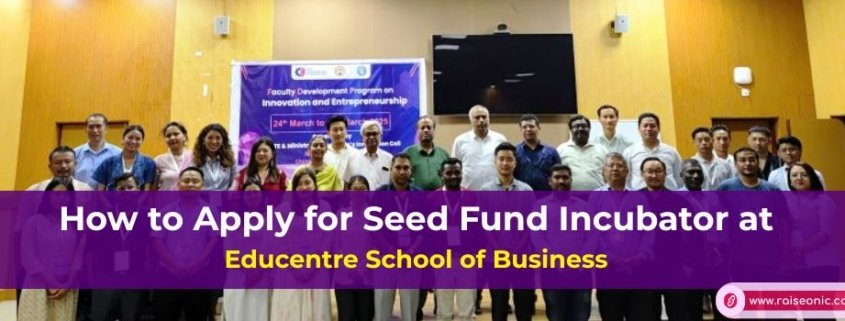
Educentre School of Business

Introduction

In today’s dynamic world, education is not just about learning theories — it’s about applying knowledge to create impact. The Educentre School of Business is redefining this vision by combining academic excellence with entrepreneurial action.

At the heart of Educentre lies an unwavering commitment to nurturing innovators, leaders, and changemakers. The institution not only imparts management education but also empowers students and professionals to transform ideas into viable ventures.

The Educentre Seed Fund Incubator plays a pivotal role in this mission. As part of India’s growing startup ecosystem and under initiatives like the Startup India Seed Fund Scheme, Educentre offers aspiring entrepreneurs the platform, mentorship, and funding support to bring their ideas to life.

From early ideation to commercialization, Educentre provides an environment where innovation meets execution. The incubator is designed to foster creativity, collaboration, and confidence — three pillars that every entrepreneur needs on their journey.

Whether you’re a student with a disruptive idea or a budding entrepreneur seeking to refine your business model, the Educentre School of Business Incubation Program provides the structure, mentorship, and resources to succeed.


About Educentre School of Business

The Educentre School of Business is an innovation-led institution committed to building the next generation of business leaders and entrepreneurs. Established with a vision to bridge the gap between education and enterprise, Educentre integrates academic rigor with real-world business exposure.

The Educentre Incubation Centre serves as a platform where students, innovators, and startup founders come together to ideate, experiment, and launch ventures. The incubator provides access to seed funding, mentoring, industry linkages, and investor networks, creating a full-circle support system for entrepreneurs.

Educentre believes that innovation is the key driver of growth — not just for individuals, but for society at large. Its incubation programs are structured around key focus areas such as:

  • EdTech and FinTech

  • Healthcare and Wellness

  • Sustainability and Green Innovation

  • Agribusiness and Rural Development

  • Technology and Artificial Intelligence

  • Social Impact and Community Solutions

By blending entrepreneurial education with practical incubation support, the Educentre School of Business is helping founders turn ideas into enterprises that make a difference.


Objectives of Educentre School of Business Incubation Program

The Educentre Incubation Program is driven by clear and impactful objectives that align with national priorities such as Startup India and Atmanirbhar Bharat.

  1. Foster Entrepreneurship: Encourage students, alumni, and innovators to take bold steps toward starting their own ventures.

  2. Bridge the Skill-Enterprise Gap: Equip young entrepreneurs with the managerial, financial, and operational skills required to run successful startups.

  3. Support Innovation Commercialization: Help innovators take their ideas from prototype to product and from concept to company.

  4. Create Access to Funding: Provide seed-stage financial support through the Startup India Seed Fund Scheme and connect startups with investors.

  5. Develop a Collaborative Ecosystem: Build a strong network of mentors, investors, industry partners, and researchers to guide startups.

  6. Promote Sustainable Business Models: Encourage startups that focus on social impact, green technologies, and inclusive growth.

Educentre’s goal is simple yet transformative — to turn learning into leadership and knowledge into entrepreneurship.


Facilities and Infrastructure

Educentre School of Business offers a world-class environment that combines academic learning with entrepreneurial experimentation. Its incubation and innovation infrastructure provides everything a founder needs to ideate, build, and grow.

Key Facilities Include:

  • Modern Co-Working Spaces: Fully equipped with internet, meeting rooms, and collaboration zones for startups to work and innovate.

  • Innovation and Prototype Labs: Tools and resources for creating and testing early-stage product models.

  • Conference and Pitch Rooms: Spaces designed for startup events, investor meets, and mentoring sessions.

  • Access to Research and Faculty Support: Guidance from experts in business strategy, marketing, technology, and finance.

  • Networking and Collaboration Hubs: Regular community events that connect entrepreneurs with mentors, investors, and peers.

Educentre believes that a conducive environment sparks creativity. Therefore, its incubator functions as both a workspace and a learning hub, where every discussion, every workshop, and every connection becomes a step toward innovation.


Programs and Initiatives

The Educentre Seed Fund Incubator runs specialized programs to support startups at different stages of their journey. Each program is designed with a balance of theory, practice, and mentorship, ensuring that entrepreneurs receive comprehensive guidance.

1. Pre-Incubation Program

Ideal for individuals or teams with a promising idea. The program focuses on idea validation, business model design, and feasibility studies. Participants engage in workshops on design thinking, problem-solving, and go-to-market strategies.

2. Incubation Program

For early-stage startups that have validated their idea and built a prototype. The incubator offers structured mentoring, market access, networking, and financial support. Startups are connected with domain experts and potential partners.

3. Acceleration Program

This program helps startups that are ready to scale. It focuses on growth strategies, market expansion, investor pitching, and brand development.

4. Seed Fund Support

Under the Startup India Seed Fund Scheme (SISFS), Educentre provides financial assistance for prototype development, testing, and early commercialization. This funding helps founders bridge the crucial gap between idea validation and institutional investment.

5. Workshops and Bootcamps

Regular events, such as Hackathons, Startup Weekends, and Business Plan Competitions, allow founders to test their ideas, receive feedback, and connect with mentors.

These programs are not just about funding — they are about creating an entrepreneurial mindset and providing an environment where innovation thrives.


Mentorship and Networking

At Educentre, mentorship is more than advice — it’s the backbone of every successful startup journey. The institution has built a diverse mentor network comprising business leaders, investors, educators, and domain experts.

Mentors provide hands-on guidance in:

  • Business planning and strategy

  • Financial management and investor readiness

  • Product design and technology validation

  • Legal and regulatory compliance

  • Brand positioning and digital marketing

In addition, the incubator’s strong industry partnerships and collaborations with angel networks ensure that founders have access to real opportunities and connections.

Educentre also facilitates cross-learning opportunities through interactive sessions with successful entrepreneurs, alumni, and innovation leaders.


Impact and Achievements

The Educentre School of Business Incubator has already made a visible impact on India’s entrepreneurship landscape.

Key Achievements:

  • Supported over 60 startups since inception.

  • Enabled multiple seed fund disbursements under Startup India Seed Fund Scheme.

  • Created a strong alumni network of entrepreneurs across sectors like EdTech, AI, and Green Tech.

  • Hosted annual entrepreneurship conclaves and demo days featuring investors and corporate leaders.

  • Partnered with leading organizations and government bodies to promote innovation and skill development.

Through its initiatives, Educentre is not only building businesses but also empowering individuals to think differently — to lead with purpose and to innovate with impact.


How to Apply for the Seed Fund Incubator at Educentre School of Business

If you are ready to take the next step toward building your startup, applying to the Educentre Seed Fund Incubator is simple.

Step 1: Visit the Official Website

Go to the Educentre School of Business website and explore the incubation and seed fund sections.

Step 2: Review Eligibility

Eligible applicants include:

  • Registered startups recognized by DPIIT.

  • Early-stage founders with a working prototype or MVP.

  • Entrepreneurs solving scalable, innovation-driven problems.

Step 3: Submit Your Application

Complete the online application form, describing your startup’s vision, business model, target market, and team composition. Attach any supporting documents, pitch decks, or prototypes.

Step 4: Screening and Evaluation

Shortlisted applicants will be invited for an evaluation round, where they’ll pitch their idea before an expert committee comprising mentors, investors, and faculty members.

Step 5: Selection and Onboarding

Successful applicants are onboarded into the incubator and may receive seed funding, mentorship, and infrastructure support to scale their ventures.

Step 6: Ongoing Mentorship and Growth

Once selected, startups receive continuous guidance through review sessions, workshops, and demo events until they are ready to raise follow-on funding or expand operations.


Why Choose Educentre School of Business Incubator?

Educentre stands out for its unique blend of academic rigor, practical exposure, and entrepreneurial focus.

Here’s why founders choose Educentre:

  • Backed by expert mentors and industry leaders.

  • Access to funding through Startup India Seed Fund Scheme.

  • Exposure to corporate collaborations and investor networks.

  • Focus on sustainable and socially responsible entrepreneurship.

  • A vibrant student and alumni entrepreneur community.

The incubator’s holistic approach ensures that every founder not only builds a successful startup but also grows as a resilient leader.


Conclusion

The Educentre School of Business is more than an academic institution — it’s a hub of ideas, innovation, and impact. Through its Seed Fund Incubator, Educentre provides the right foundation for startups to grow from spark to scale.

By offering mentorship, funding, and a thriving ecosystem, the school ensures that every dreamer gets the tools to become a doer.

If you have an idea that can make a difference, don’t wait for the right time — create it.
Apply for the Seed Fund Incubator at Educentre School of Business today and be part of India’s next wave of innovation and entrepreneurship.

IIT Mandi iHub and HCI Foundation

Introduction: Bridging Innovation and Human-Centric Technology

India’s startup ecosystem is undergoing a paradigm shift — innovation today is not just about technology but about creating meaningful human impact. At the heart of this transformation stands IIT Mandi iHub and HCI Foundation, a leading technology innovation hub that empowers entrepreneurs and researchers to design solutions at the intersection of Human-Computer Interaction (HCI), AI, and Digital Transformation.

As one of India’s premier incubation centers supported under the Startup India Seed Fund Scheme (SISFS), IIT Mandi iHub and HCI Foundation offers a platform where research meets real-world application. The Foundation provides startups with the tools, mentorship, and funding they need to move from idea to implementation — turning scientific breakthroughs into scalable businesses.

This article explores how innovators can leverage the incubation and seed funding opportunities at IIT Mandi iHub and HCI Foundation to transform their ideas into impactful enterprises.


About IIT Mandi iHub and HCI Foundation

The IIT Mandi iHub and HCI Foundation is a Section 8, not-for-profit organization established by the Indian Institute of Technology (IIT) Mandi under the National Mission on Interdisciplinary Cyber-Physical Systems (NM-ICPS) of the Department of Science and Technology (DST), Government of India.

Its primary goal is to strengthen the Human-Computer Interaction (HCI) ecosystem in India by fostering innovation in technology that improves how humans engage with machines. Through research collaboration, startup incubation, and entrepreneurial development, iHub acts as a catalyst for human-centric innovation.

The foundation brings together academia, industry, government, and startups to create a thriving ecosystem that fuels next-generation technologies in AI, Robotics, IoT, AR/VR, and Digital Health.


Vision and Mission

Vision:
To be India’s leading hub for Human-Computer Interaction and technology-driven innovation that enhances human potential and societal well-being.

Mission:

  • Foster cutting-edge research in HCI and related fields.

  • Support startups in creating impactful, human-centered technologies.

  • Facilitate collaboration between academia, startups, and industry.

  • Accelerate innovation through funding, mentorship, and market access.

  • Bridge the gap between research and commercialization in emerging technologies.

The iHub at IIT Mandi aims to create an environment where science, design, and entrepreneurship converge to build sustainable, inclusive innovation.


Focus Areas

IIT Mandi iHub and HCI Foundation supports startups and innovators working across a wide range of technology domains aligned with human-centered design principles. Its key focus areas include:

  1. Human-Computer Interaction (HCI):
    Designing intuitive, accessible, and inclusive interfaces that improve human interaction with technology.

  2. Artificial Intelligence and Machine Learning:
    AI applications for healthcare, education, agriculture, and digital governance.

  3. Augmented and Virtual Reality (AR/VR):
    Creating immersive learning, design, and simulation experiences.

  4. Digital Health and Assistive Technologies:
    Building tech-driven healthcare solutions to enhance accessibility and patient outcomes.

  5. Robotics and IoT:
    Developing smart automation solutions for manufacturing, logistics, and home applications.

  6. Data Science and Cybersecurity:
    Enabling safe, data-driven decision-making for enterprises and governments.

This diversity ensures that every innovator working to improve human experience through technology finds the right support ecosystem at IIT Mandi iHub.


Startup India Seed Fund Scheme at IIT Mandi iHub and HCI Foundation

The Startup India Seed Fund Scheme (SISFS), launched by the Department for Promotion of Industry and Internal Trade (DPIIT), provides early-stage funding to startups for proof-of-concept, prototype development, product trials, and market entry.

IIT Mandi iHub and HCI Foundation is an approved incubator under SISFS, making it a key enabler for entrepreneurs at the idea and prototype stage. The foundation’s seed fund program offers both financial and non-financial support, including access to laboratories, technical guidance, and business mentorship.

Objectives of SISFS at IIT Mandi iHub

  • Provide financial assistance to startups for product development and validation.

  • Strengthen India’s innovation ecosystem through HCI and digital technologies.

  • Support young innovators, students, and researchers in commercializing their ideas.

  • Promote inclusive innovation across Tier-II and Tier-III cities.

Funding Support

Startups can avail two types of financial support:

  1. Grant Support (Up to ₹20 Lakhs):
    For prototype development, validation, and early testing.

  2. Investment Support (Up to ₹50 Lakhs):
    For market entry, commercialization, and scaling through equity-linked funding.

The fund allocation depends on the startup’s stage, technology readiness, and market potential.


Eligibility Criteria

To apply for the Seed Fund Program at IIT Mandi iHub and HCI Foundation, startups must fulfill the following conditions:

  • Be recognized by DPIIT under the Startup India initiative.

  • Be registered in India as a Private Limited Company, LLP, or Partnership Firm.

  • The product or service should be innovative, technology-based, and scalable.

  • The startup should not have received more than ₹10 lakhs of funding from any other government source.

  • The founding team must be committed full-time to the venture.

  • A functional prototype or proof of concept should exist.

Preference is given to startups led by women entrepreneurs, young founders, or those from rural and semi-urban regions.


Step-by-Step Application Process

Here’s a simple guide to applying for the Seed Fund Incubation Program at IIT Mandi iHub:

  1. Register on the SISFS Portal
    Visit the official Startup India Seed Fund Scheme Portal and create your startup profile.

  2. Select IIT Mandi iHub and HCI Foundation
    Choose IIT Mandi iHub from the list of approved incubators.

  3. Fill in Application Details
    Provide key information about your startup — problem statement, solution, target market, and scalability plan.

  4. Upload Required Documents
    Attach DPIIT certificate, business registration details, pitch deck, and founder information.

  5. Screening and Evaluation
    Applications are reviewed by an Expert Evaluation Committee comprising domain experts and industry mentors.

  6. Pitch Presentation
    Shortlisted startups are invited to present their business models before the panel.

  7. Selection and Onboarding
    Selected startups receive funding and incubation support, joining the iHub community of innovators.


Facilities and Support

The IIT Mandi iHub and HCI Foundation offers a holistic innovation ecosystem with access to advanced infrastructure and knowledge resources.

  • State-of-the-Art Labs: Access to prototyping facilities, testing equipment, and digital labs.

  • Co-working Space: Collaborative workspaces for founders and teams.

  • Mentorship and Training: Guidance from IIT faculty, industry leaders, and investors.

  • Investor Network: Opportunities to connect with venture capital firms and angel investors.

  • Technical Support: Product design, UI/UX development, and market validation assistance.

  • Entrepreneurship Development Programs: Workshops on business modeling, leadership, and fundraising.


Benefits of Incubation

  • Access to Seed Funding under SISFS.

  • Hands-on mentorship from experts in technology and business.

  • Opportunities to collaborate with IIT faculty and researchers.

  • Access to cutting-edge facilities and laboratories.

  • National and international exposure through conferences and demo days.

  • Legal, IP, and compliance support.


Impact and Success Stories

Over the years, IIT Mandi iHub and HCI Foundation has incubated numerous startups working on transformative solutions — from AI-based healthcare diagnostics to digital farming tools and assistive devices for the differently-abled.

Some of the remarkable success stories include:

  • A health-tech startup that developed an AI-powered screening tool for rural health centers.

  • A robotics firm that automated agricultural operations for small farmers.

  • An EdTech startup leveraging VR for immersive STEM learning.

These success stories reflect iHub’s mission to promote inclusive innovation that reaches every corner of society.


Future Roadmap

Looking ahead, IIT Mandi iHub aims to:

  • Incubate over 500 startups in the next decade.

  • Build global collaborations with research and industry partners.

  • Launch sector-specific accelerator programs in AI, AR/VR, and HealthTech.

  • Establish a venture fund for scaling deep-tech startups.

  • Promote student entrepreneurship across universities in Northern India.

By continuously evolving with the startup ecosystem, IIT Mandi iHub envisions becoming a national leader in human-centric technology innovation.


Why Choose IIT Mandi iHub and HCI Foundation

✅ Backed by the Startup India Seed Fund Scheme (SISFS)
✅ Access to IIT’s research ecosystem and state-of-the-art labs
✅ Strong mentor and investor network
✅ Focus on HCI, AI, and sustainable innovation
✅ Proven track record of nurturing deep-tech startups


Conclusion: Empowering Human-Centered Innovation

The future of technology lies not just in algorithms or hardware — but in how innovation enhances human life. The IIT Mandi iHub and HCI Foundation stands as a beacon of this philosophy, empowering innovators to design technologies that are intuitive, inclusive, and impactful.

Through seed funding, incubation, and mentorship, iHub is enabling India’s next generation of entrepreneurs to build globally relevant, human-centered technologies.

If you have a bold idea that blends technology with empathy, this is your platform.
🌱 Apply now for the Seed Fund Incubator at IIT Mandi iHub and HCI Foundation — and turn your vision into value!

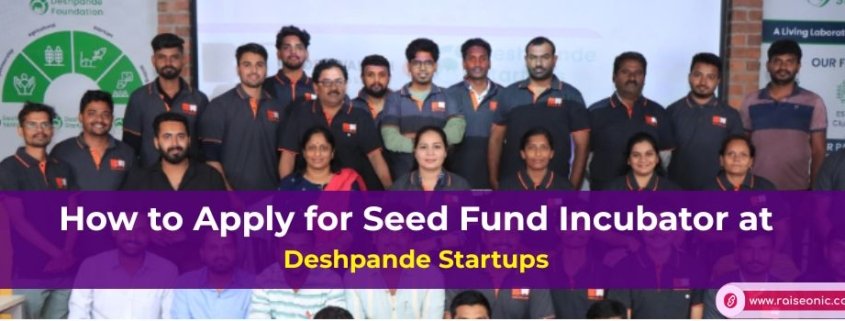
Deshpande Startups

Introduction: Empowering Grassroots Innovation for Global Impact

India’s startup revolution isn’t just happening in big cities — it’s thriving in the heart of the nation, where innovation meets purpose.
At the forefront of this movement stands Deshpande Startups, one of India’s largest and most impactful incubation hubs based in Hubballi, Karnataka.

Founded with a vision to nurture innovation-driven entrepreneurship from Tier-II and Tier-III regions, Deshpande Startups empowers founders to build scalable ventures that solve real-world challenges.
Backed by the Startup India Seed Fund Scheme (SISFS) and the Deshpande Foundation, this ecosystem provides funding, infrastructure, mentorship, and global exposure — turning local ideas into national and international success stories.

If you’re an innovator, student, or entrepreneur ready to transform your idea into a sustainable business, this guide walks you through everything you need to know about applying for incubation and seed funding at Deshpande Startups.


About Deshpande Startups

Deshpande Startups was established under the visionary leadership of Dr. Gururaj “Desh” Deshpande, a renowned entrepreneur and philanthropist, and Mrs. Jaishree Deshpande, with the goal of fostering entrepreneurship in non-metro regions of India.

Located in the Sandbox ecosystem of Hubballi, Karnataka, Deshpande Startups acts as a catalyst for economic and social transformation. The incubator provides early-stage innovators with seed funding, lab access, mentorship, and industry partnerships to bridge the gap between ideas and market-ready products.

Over the years, it has supported hundreds of startups across domains like agriculture, healthcare, education, clean energy, and manufacturing, helping them create jobs, generate value, and impact millions of lives.


Vision and Mission

Vision:
To create a thriving innovation ecosystem that empowers entrepreneurs from all backgrounds to build sustainable, impact-driven ventures.

Mission:

  • Foster entrepreneurship that drives both economic and social impact.

  • Bridge the urban-rural divide by enabling innovation in regional ecosystems.

  • Provide infrastructure, mentorship, and funding support to early-stage startups.

  • Encourage collaboration among entrepreneurs, academia, investors, and corporates.

Deshpande Startups believes that “Innovation is everywhere — opportunity should be too.”


Core Focus Areas

Deshpande Startups supports innovation across diverse, high-impact sectors, including:

  • AgriTech: Technologies for productivity, sustainability, and supply chain efficiency.

  • HealthTech: Affordable diagnostic, telemedicine, and assistive solutions.

  • Clean Energy: Renewable energy products, solar innovations, and waste management.

  • Education and Skilling: EdTech platforms for inclusive learning and employability.

  • Manufacturing and Engineering: Product development, IoT, and industrial automation.

  • Social Impact Innovations: Startups solving grassroots problems in rural India.

This multidisciplinary focus helps build inclusive and sustainable innovation models that directly contribute to India’s development goals.


Startup India Seed Fund Scheme at Deshpande Startups

The Startup India Seed Fund Scheme (SISFS), launched by the Department for Promotion of Industry and Internal Trade (DPIIT), is designed to support early-stage startups through financial assistance and incubation.

As an approved incubator under the SISFS, Deshpande Startups enables founders to access grants and equity-linked funding to bring their ideas to life.

Objectives of SISFS at Deshpande Startups

  • Bridge the funding gap in the early stages of innovation.

  • Promote entrepreneurship in Tier-II and Tier-III cities.

  • Support prototypes, proof of concepts, and commercialization.

  • Empower founders from underserved communities and regions.


Funding Support

Deshpande Startups provides startups with funding through two main categories:

  1. Grant Support (Up to ₹20 Lakhs)

    • For idea-stage and prototype development.

    • To validate concept and conduct product testing.

  2. Equity/Convertible Debt Support (Up to ₹50 Lakhs)

    • For scaling market-ready startups.

    • To support manufacturing, marketing, and team expansion.

This funding structure ensures a smooth transition from ideation to commercialization.


Eligibility Criteria

To apply for the Seed Fund Program at Deshpande Startups, the startup must:

  • Be recognized by DPIIT under Startup India.

  • Develop an innovative, technology-based, or scalable solution.

  • Not have received more than ₹10 lakh financial support from any other central/state scheme.

  • Be incorporated in India as a Private Limited Company, LLP, or Partnership Firm.

  • Have a working prototype or proof of concept.

  • Have founders committed full-time to the startup.

Preference is given to:

  • Startups from Tier-II and Tier-III cities.

  • Women-led and student-led startups.

  • Ventures focused on social and environmental impact.


Step-by-Step Application Process

Step 1: Register on the SISFS Portal

Visit the official Startup India Seed Fund Scheme website and register your startup.

Step 2: Choose Deshpande Startups as Incubator

While applying, select Deshpande Startups, Hubballi as your preferred incubator.

Step 3: Prepare Your Application

Include details such as:

  • Problem statement and innovative solution

  • Target market and scalability

  • Business model and team expertise

  • Prototype details and fund requirement

Step 4: Upload Required Documents

Attach your DPIIT certificate, incorporation documents, and pitch deck.

Step 5: Evaluation and Shortlisting

Applications are reviewed by a Seed Fund Evaluation Committee (SFEC) for innovation, market readiness, and social impact.

Step 6: Pitch Presentation

Shortlisted startups present their ideas to a panel of experts, investors, and mentors.

Step 7: Selection and Onboarding

Selected startups are provided with funding and onboarded into the Deshpande incubation program.


Facilities and Infrastructure

Deshpande Startups offers world-class facilities that make it one of India’s most comprehensive incubators:

  • Co-working and Lab Spaces: High-tech work areas and maker labs.

  • Product Prototyping Labs: Equipped with tools for design, fabrication, and testing.

  • Mentorship Access: 200+ mentors from academia, industry, and entrepreneurship.

  • Investor Connect: Access to angel investors, VCs, and corporate funds.

  • Training and Capacity Building: Regular sessions on business planning, IP, and leadership.

  • Networking and Events: Startup showcases, hackathons, and demo days.


Benefits of Incubation at Deshpande Startups

  • Access to Seed Funding under SISFS.

  • Holistic mentorship and technical guidance.

  • Infrastructure for research, design, and prototyping.

  • Market access through corporate and industry partnerships.

  • Exposure through demo days and investor meets.

  • Business support — legal, IP, and compliance services.


Impact and Success Stories

Deshpande Startups has transformed hundreds of local ideas into successful ventures. Some notable examples include:

  • AgriTech startups improving farmers’ yield through smart sensors.

  • Healthcare innovators building affordable diagnostic kits for rural areas.

  • Clean energy ventures promoting solar-powered cold storage and irrigation.

These ventures have created employment, secured investments, and scaled their impact nationwide.


Collaborations and Partnerships

Deshpande Startups collaborates with:

  • Deshpande Foundation for social entrepreneurship.

  • NABARD for agri-innovation funding.

  • Karnataka State Innovation Council (K-SIC).

  • Corporate partners in energy, healthcare, and IT sectors.

  • Academic institutions and global development agencies.


Future Vision

Looking ahead, Deshpande Startups aims to:

  • Support 500+ startups over the next decade.

  • Establish sector-specific accelerators in AgriTech, HealthTech, and Sustainability.

  • Build international partnerships for global outreach.

  • Create a rural innovation fund to back grassroots entrepreneurs.

The long-term goal is to make Hubballi a model for decentralized innovation ecosystems across India.


Why Choose Deshpande Startups

  • Backed by a globally recognized foundation.

  • Offers funding, infrastructure, mentorship, and global visibility.

  • Focused on inclusive and impact-driven innovation.

  • Proven success in scaling grassroots entrepreneurship.


Conclusion

The Deshpande Startups ecosystem stands as a testament to how local innovation can drive global change.
By combining mentorship, funding, and purpose-driven entrepreneurship, it empowers founders to create ventures that uplift communities and fuel India’s innovation economy.

If you have an idea ready to make an impact — this is where your startup journey begins.


Apply now for the Seed Fund Incubator at Deshpande Startups and rise with innovation.

TBI-KIET

Introduction: Nurturing Tomorrow’s Innovators Today

In India’s vibrant startup ecosystem, innovation thrives not only in major cities but also in academic campuses where technology meets entrepreneurial spirit. One such hub of innovation is the Technology Business Incubator (TBI) at KIET Group of Institutions, Ghaziabad, Uttar Pradesh.

Backed by the Startup India Seed Fund Scheme (SISFS), TBI-KIET serves as a catalyst for early-stage technology startups — enabling them to transform innovative ideas into scalable business ventures through funding, mentoring, and incubation support.

Whether you’re a student innovator, researcher, or first-time entrepreneur, TBI-KIET offers the right ecosystem to ideate, prototype, and launch your startup successfully.


About TBI-KIET

The Technology Business Incubator at KIET (TBI-KIET) was established with the vision of fostering innovation and entrepreneurship among young technologists. It operates under the aegis of the Department of Science and Technology (DST), Government of India, and is also supported by Startup India Seed Fund Scheme (SISFS) and MSME Ministry initiatives.

Situated in the academic and technological hub of Ghaziabad, TBI-KIET provides an ideal ecosystem for technology-driven startups to grow — combining access to academic resources, R&D facilities, and industry mentors.

Since its inception, the incubator has nurtured more than 100 startups, supported by funding, infrastructure, and market linkages. It has played a key role in positioning KIET as one of India’s leading innovation-driven institutions.


Vision and Mission

Vision:
To become a national model for fostering technology-based entrepreneurship that fuels innovation, employment, and socio-economic development.

Mission:

  • Promote technology-led entrepreneurship through incubation and mentoring.

  • Support innovators from ideation to commercialization stages.

  • Build partnerships between academia, industry, and government.

  • Develop an entrepreneurial culture among students and researchers.


Key Focus Areas

TBI-KIET focuses on fostering startups that leverage technology to address real-world problems across domains such as:

  • Artificial Intelligence & Machine Learning

  • Internet of Things (IoT)

  • Healthcare and MedTech

  • AgriTech

  • CleanTech & Renewable Energy

  • Automotive & Mobility Solutions

  • EdTech & SkillTech

  • Smart Manufacturing & Industry 4.0

This multidisciplinary approach allows entrepreneurs to work on futuristic technologies while solving critical challenges in India’s growth sectors.


Startup India Seed Fund Scheme (SISFS) at TBI-KIET

The Startup India Seed Fund Scheme (SISFS), an initiative of the Department for Promotion of Industry and Internal Trade (DPIIT), provides financial support to early-stage startups for proof of concept, prototype development, product trials, and market entry.

As an approved incubator under SISFS, TBI-KIET plays a vital role in identifying promising startups and supporting them through grants and equity-based funding.

Objectives of SISFS at TBI-KIET

  • Bridge the funding gap during the early stages of startup growth.

  • Encourage technology-led startups from Tier-II and Tier-III cities.

  • Promote innovations with high potential for scalability and job creation.

  • Strengthen India’s innovation-driven economy.


Funding Support

Under the SISFS, startups incubated at TBI-KIET are eligible for the following financial assistance:

  1. Grant Support (Up to ₹20 Lakhs)

    • For development of proof of concept or prototype.

    • Used for product design, testing, and validation.

  2. Equity / Convertible Debt Support (Up to ₹50 Lakhs)

    • For scaling up startups with validated business models.

    • Supports commercialization, product manufacturing, and go-to-market strategies.

This structured funding ensures startups can transition from lab prototypes to full-fledged businesses.


Eligibility Criteria

To apply for the Seed Fund at TBI-KIET, startups must meet the following conditions:

  • Recognized as a DPIIT-registered startup under Startup India.

  • Should be a Private Limited Company, LLP, or Partnership Firm incorporated in India.

  • Should not have received more than ₹10 lakh of financial assistance under any other Central or State Government scheme.

  • Must be developing a tech-based innovative solution with market potential.

  • Should have a prototype or proof of concept ready for validation.

  • The founder(s) should be committed full-time to the startup.

Preference will be given to:

  • Startups from academic backgrounds and research labs.

  • Women-led and student-led startups.

  • Startups contributing to sustainability or social impact.


Application Process for Seed Fund at TBI-KIET

Here’s how to apply step-by-step for the Seed Fund Incubator:

Step 1: Register on Startup India Seed Fund Portal

Visit the official Startup India Seed Fund Scheme (SISFS) portal and register your startup.

Step 2: Choose TBI-KIET as Preferred Incubator

Select Technology Business Incubator – KIET (Ghaziabad) from the list of approved incubators.

Step 3: Submit Application

Fill in details like:

  • Problem and solution statement

  • Technology and innovation description

  • Business model and revenue plan

  • Fund requirement and utilization plan

  • Team background and traction

Step 4: Upload Required Documents

Attach DPIIT recognition certificate, incorporation documents, and a detailed pitch deck.

Step 5: Screening and Evaluation

Applications are reviewed by an expert committee based on innovation, impact, and scalability potential.

Step 6: Pitch Presentation

Shortlisted startups will pitch before the Seed Fund Evaluation Committee (SFEC) for final approval.

Step 7: Fund Disbursement & Incubation Onboarding

Selected startups are awarded funding and onboarded into the incubation program at TBI-KIET.


Infrastructure and Facilities at TBI-KIET

TBI-KIET offers a comprehensive physical and digital ecosystem that supports every stage of startup growth:

  • Co-working and Private Office Spaces for startups.

  • Prototyping and Fabrication Labs for product design and testing.

  • IoT, Robotics, and Electronics Labs with high-end equipment.

  • Business Mentorship Programs by successful entrepreneurs and domain experts.

  • Investor and Market Connects through demo days and pitch events.

  • Networking Opportunities with corporate partners and government agencies.

  • Access to Academic Resources and R&D facilities of KIET.

  • Legal and IP Support for patents and compliance.


Programs and Initiatives

TBI-KIET runs several specialized programs that encourage innovation and entrepreneurship:

  • Pre-Incubation Program: For idea validation and mentorship.

  • Incubation Program: For prototype development and go-to-market support.

  • Acceleration Program: For scaling and investment readiness.

  • Women Entrepreneurship Program: Dedicated mentorship and funding for women founders.

  • Innovation Bootcamps and Hackathons: To nurture student innovators.

  • Industry Collaboration Programs: To build market linkages and partnerships.


Benefits of Joining TBI-KIET

  • Seed Funding Support under Startup India Seed Fund Scheme.

  • Access to labs, tools, and high-end technical infrastructure.

  • Personalized mentorship and business coaching.

  • Investor and corporate network exposure.

  • Skill development workshops and entrepreneurship training.

  • Opportunity to collaborate with KIET faculty and researchers.

  • Assistance with IPR filing, branding, and scaling.


Impact and Success Stories

TBI-KIET has successfully nurtured multiple startups that have made their mark in the ecosystem:

  • Infiheal – A healthtech startup providing AI-based mental wellness support.

  • Vyorius – Drone-based logistics and data delivery solutions.

  • Saptkrishi Scientific Pvt. Ltd. – AgriTech startup offering smart storage solutions.

These ventures have received recognition at national and international levels, validating the impact of TBI-KIET’s incubation model.


Collaborations and Partnerships

TBI-KIET collaborates with:

  • DST and DPIIT under the Government of India.

  • MSME Ministry and Startup India Mission.

  • Industry partners and investors for startup funding.

  • Academic institutions and R&D organizations for joint projects.

  • Corporate networks for market linkages.

These partnerships strengthen its ability to guide startups from ideation to commercialization.


Future Vision

Looking ahead, TBI-KIET aims to:

  • Incubate 500+ technology startups in the next decade.

  • Build sector-specific innovation hubs in AI, IoT, and healthcare.

  • Expand its national and international collaborations.

  • Launch a Venture Capital arm for scaling high-potential startups.

  • Promote green and sustainable innovation models.


Why Choose TBI-KIET

✅ Backed by DST and Startup India Seed Fund Scheme
✅ Strong academic-industry network
✅ Access to funding, labs, and mentorship
✅ Proven track record of successful incubatees
✅ Located in NCR’s innovation corridor (Ghaziabad)


Conclusion

The Technology Business Incubator at KIET stands as a symbol of how academia and innovation can join forces to shape India’s entrepreneurial future.

With its comprehensive support under the Startup India Seed Fund Scheme, world-class infrastructure, and expert mentorship, TBI-KIET is enabling founders to take their startups from concept to commercialization.

🚀 Apply today for the Seed Fund Incubator at TBI-KIET and transform your technological idea into a thriving business!

SSCBS Innovation Foundation

Introduction

India’s startup revolution is being powered by young minds — and institutions like Shaheed Sukhdev College of Business Studies (SSCBS) are at the forefront of nurturing these innovators.
The SSCBS Innovation and Incubation Foundation (SIIF) is one such initiative that transforms entrepreneurial dreams into scalable, real-world ventures.

Supported by the Startup India Seed Fund Scheme, SIIF provides early-stage startups with access to capital, infrastructure, mentorship, and networking opportunities. The incubator’s vision aligns with India’s broader goal of empowering young entrepreneurs and enabling innovation-driven growth across sectors.

Located in New Delhi, SSCBS has long been recognized as a leading institution for management and entrepreneurship education. Through SIIF, the college extends this legacy beyond academics — fostering a culture of creation, collaboration, and commercialization.

Whether you’re a student entrepreneur with a campus-born idea or an early-stage founder seeking to refine your prototype, SIIF offers the right blend of support, strategy, and structure to turn your concept into a sustainable business.


About SSCBS Innovation and Incubation Foundation

The SSCBS Innovation and Incubation Foundation (SIIF) was established under the aegis of the Shaheed Sukhdev College of Business Studies, University of Delhi, with support from the Department of Science and Technology (DST) and the Government of India.

SIIF acts as a Technology Business Incubator (TBI) that supports early-stage startups, especially those led by young founders, students, and first-generation entrepreneurs.

Its core mission is to bridge the gap between idea and execution by providing a complete innovation ecosystem — from ideation and product development to funding and market launch.

The foundation focuses on startups in diverse sectors such as:

  • FinTech and EdTech

  • Sustainability and Green Tech

  • HealthTech and Bio-Innovation

  • AI, Data Analytics, and Software Solutions

  • Social Impact and Community Development


Objectives of SSCBS Innovation and Incubation Foundation

SIIF was designed with clear objectives that align with India’s National Innovation and Startup Policy (NISP):

  1. To Encourage Entrepreneurship — Inspire students and alumni of SSCBS and other institutions to consider entrepreneurship as a viable career path.

  2. To Support Early-Stage Startups — Provide pre-incubation and incubation support to transform ideas into scalable ventures.

  3. To Promote Innovation-Led Development — Create a pipeline of innovative products, technologies, and business models that address real-world challenges.

  4. To Build an Entrepreneurial Ecosystem — Connect startups with mentors, investors, corporate partners, and academic researchers.

  5. To Facilitate Seed Funding — Support startups through the Startup India Seed Fund Scheme (SISFS) for prototype development, product trials, and go-to-market strategies.

Through these objectives, SIIF has become a launchpad for student-led innovation and a catalyst for Delhi’s growing startup ecosystem.


Facilities and Infrastructure

SIIF provides a well-equipped and supportive environment for entrepreneurs to develop their ideas. The foundation ensures that founders have everything they need to focus on innovation and growth.

Key Facilities Include:

  • Co-Working Space: A modern, collaborative workspace designed for creativity and productivity.

  • Dedicated Incubation Hubs: Specialized zones for sector-specific innovation, such as FinTech or HealthTech.

  • Prototyping and R&D Labs: Facilities for developing and testing product prototypes.

  • Conference and Training Rooms: Spaces for workshops, seminars, and investor meetings.

  • High-Speed Internet and IT Support: Digital infrastructure to ensure seamless operations.

  • Access to Experts and Mentors: Guidance from industry veterans, academic professionals, and startup founders.

The physical and intellectual infrastructure at SIIF ensures that startups receive both technical assistance and strategic direction, empowering them to take their ideas to market efficiently.


Programs and Initiatives

The SSCBS Innovation and Incubation Foundation runs multiple initiatives to cater to startups at different stages of their entrepreneurial journey:

1. Pre-Incubation Program

Focused on ideation and validation, this program helps aspiring founders test the feasibility of their ideas. Entrepreneurs get access to design thinking workshops, business model refinement sessions, and expert feedback.

2. Incubation Program

For early-stage startups that are ready to scale. The program provides access to mentorship, funding, networking, and market linkages. Startups also receive guidance on regulatory and legal compliance, branding, and marketing.

3. Acceleration Program

Tailored for startups that have achieved product-market fit and are looking for expansion or investment. The accelerator connects startups with angel investors, venture capitalists, and government grant schemes.

4. Seed Fund Support

Through the Startup India Seed Fund Scheme, SIIF provides financial assistance for prototype development, product testing, and market entry. The fund helps bridge the gap between early validation and commercial investment.

5. Entrepreneurial Events and Workshops

SIIF regularly organizes hackathons, boot camps, investor meetups, and pitch competitions to encourage innovation and provide exposure to budding entrepreneurs.


Mentorship and Networking

Mentorship is a key pillar of SIIF’s success. The incubator boasts a network of seasoned mentors from academia, corporate leadership, and the startup community.

These mentors guide founders in:

  • Strategic business planning

  • Market research and competitive analysis

  • Financial modeling and investor readiness

  • Technology development and IP management

  • Pitch preparation and storytelling

Additionally, SIIF collaborates with industry associations, investors, and government agencies to create a robust network that accelerates startup growth.


Impact and Success Stories

Since its inception, the SSCBS Innovation and Incubation Foundation has supported numerous startups that have gone on to raise funds, generate employment, and build impactful solutions.

Some of the key achievements include:

  • Incubating over 50 startups across diverse sectors.

  • Facilitating seed funding under SISFS for early-stage ventures.

  • Creating a community of student entrepreneurs at SSCBS and beyond.

  • Hosting multiple entrepreneurship conclaves and demo days to connect founders with investors.

Through its initiatives, SIIF has positioned itself as one of Delhi’s most dynamic college-based incubators — transforming ideas from the classroom into real-world solutions.


How to Apply for the Seed Fund Incubator at SSCBS Innovation and Incubation Foundation

If you’re an aspiring entrepreneur looking to apply for incubation or seed funding at SIIF, here’s how to get started:

Step 1: Visit the Official Website

Go to the official SSCBS Innovation and Incubation Foundation website to learn more about the programs, eligibility criteria, and application deadlines.

Step 2: Check Eligibility

Applicants should have:

  • A business idea or prototype with innovation potential.

  • A registered startup (as per DPIIT norms).

  • At least one founder committed full-time to the venture.

Step 3: Fill Out the Application Form

Submit your application online with details such as your business concept, problem statement, proposed solution, and team details.

Step 4: Pitch and Evaluation

Shortlisted applicants are invited to present their business idea to an expert evaluation committee. This includes a Q&A session covering innovation, scalability, and social impact.

Step 5: Onboarding and Funding

Selected startups are onboarded into the incubation program and receive funding support under the Startup India Seed Fund Scheme (if applicable).


Why Choose SSCBS Innovation and Incubation Foundation?

  • Backed by one of India’s top business colleges (SSCBS)

  • Supported by DST and Startup India Seed Fund Scheme

  • Access to experienced mentors and corporate partners

  • State-of-the-art infrastructure and R&D support

  • Exposure to investor networks and pitch events

  • A thriving student entrepreneur community

Whether you’re working on a tech solution, a sustainability startup, or a social enterprise, SIIF provides the foundation to grow your idea into a high-impact business.


Conclusion

The SSCBS Innovation and Incubation Foundation stands as a shining example of how academic institutions can become powerful engines of entrepreneurship. By offering the right mix of funding, mentorship, and resources, SIIF empowers startups to move confidently from ideation to execution.

If you’re an innovator ready to turn your vision into a viable venture, now is the time to act.
Apply for the Seed Fund Incubator at SSCBS Innovation and Incubation Foundation and become part of India’s growing community of change-makers.

SANDIP TBI

Introduction: Empowering Innovation from Classroom to Marketplace

India’s innovation ecosystem is growing rapidly, and academic institutions are emerging as powerful hubs for entrepreneurship. One such pioneer is the SANDIP Technology Business Incubator (SANDIP TBI) — an initiative of Sandip Foundation, Nashik, dedicated to transforming research ideas into viable startups.

SANDIP TBI operates under the Atal Innovation Mission (AIM) and is supported by the Startup India Seed Fund Scheme (SISFS), providing early-stage entrepreneurs with the funding, infrastructure, and mentorship they need to succeed.

If you have a technology-driven idea and are looking for the right place to build, validate, and launch your innovation, this guide will walk you through how to apply for incubation and seed funding at SANDIP TBI, step by step.


About SANDIP TBI

Located within the Sandip Foundation campus in Nashik, Maharashtra, the SANDIP Technology Business Incubator (TBI) serves as a dynamic platform for innovation-led entrepreneurship.

It focuses on nurturing startups in areas such as engineering, healthcare, IT, renewable energy, agritech, and advanced manufacturing. The incubator acts as a bridge between research and commercialization — transforming ideas from laboratories into sustainable enterprises.

Supported by NITI Aayog’s Atal Innovation Mission (AIM) and recognized under Startup India, SANDIP TBI provides an enabling ecosystem that combines academic expertise, industrial collaboration, investor networks, and market access.


Vision and Mission

Vision:
To become a premier incubation hub driving innovation, entrepreneurship, and societal impact through technology and collaboration.

Mission:

  • Empower entrepreneurs to build scalable, technology-led solutions.

  • Foster a startup ecosystem integrating academia, industry, and investors.

  • Provide funding, infrastructure, and mentorship for early-stage startups.

  • Create employment and promote “Make in India” through local innovation.

The incubator’s long-term goal is to position Nashik as a regional innovation hub, nurturing a generation of entrepreneurs who combine scientific knowledge with market insight.


Core Focus Areas

SANDIP TBI supports a wide range of sectors aligned with national priorities and regional strengths. Its incubation focus includes:

1. Engineering and Manufacturing

Innovations in product design, industrial automation, robotics, and Industry 4.0 solutions that enhance productivity and sustainability.

2. Information Technology and AI

AI-based applications, IoT systems, data analytics, and software solutions for efficiency, optimization, and predictive insights.

3. Healthcare and MedTech

Affordable and accessible medical devices, diagnostics, wearable health technologies, and telemedicine tools.

4. Renewable Energy & Sustainability

Solutions in solar, wind, and biomass energy, sustainable materials, and waste management technologies promoting a green economy.

5. AgriTech & Food Processing

Smart farming tools, precision agriculture, supply chain optimization, and food preservation innovations.

6. Education Technology (EdTech)

Digital learning, skill development, and remote education platforms that bridge educational gaps across India.

This multidisciplinary approach ensures that startups from diverse fields receive tailored incubation, sector-specific mentorship, and access to funding.


Startup India Seed Fund Scheme at SANDIP TBI

The Startup India Seed Fund Scheme (SISFS), initiated by DPIIT, aims to support early-stage startups that need capital for proof of concept, prototype development, product trials, and market entry.

SANDIP TBI is one of the selected incubators under SISFS, ensuring that innovators from across India — especially from Tier-II and Tier-III regions — gain access to much-needed early-stage funding.

Objectives of SISFS at SANDIP TBI

  • Bridge the gap between idea and market.

  • Promote commercialization of research-driven technology.

  • Empower innovators with financial, technical, and strategic support.

  • Encourage student-led, women-led, and social impact startups.


Funding Categories

1. Grants up to ₹20 Lakhs:

For prototype development, proof of concept, or pilot testing.

2. Equity-linked Funding up to ₹50 Lakhs:

For startups ready to scale operations, enter markets, or expand production.

This dual funding model ensures both idea-stage innovators and growth-stage entrepreneurs can access appropriate support depending on their business maturity.


Eligibility Criteria

To apply for incubation and funding at SANDIP TBI, a startup must meet the following conditions:

  • Recognized as a DPIIT-certified Startup (Startup India registration).

  • Developing an innovative, technology-based, and scalable solution.

  • Should not have received more than ₹10 lakh in financial support from any government scheme.

  • Must possess a working prototype or minimum viable product (MVP).

  • Registered as a Private Limited Company, LLP, or Partnership Firm in India.

  • Founders must be working full-time on their startup.

Preference is given to:

  • Startups from non-metro regions (Tier-II and Tier-III cities).

  • Women entrepreneurs and student innovators.

  • Startups creating social, rural, or environmental impact.


Step-by-Step Application Process

Step 1: Register on the Seed Fund Portal

Visit seedfund.startupindia.gov.in and create your startup profile under the Startup India Seed Fund Scheme.

Step 2: Choose SANDIP TBI as Your Incubator

Select SANDIP Technology Business Incubator, Nashik from the list of approved incubators.

Step 3: Prepare a Comprehensive Application

Your application must include:

  • Problem statement and proposed solution

  • Product roadmap and innovation details

  • Market research and scalability potential

  • Team details and founder profiles

  • Financial requirements and utilization plan

  • Anticipated social/economic impact

Step 4: Submit Required Documents

Attach the DPIIT recognition certificate, incorporation documents, pitch deck, and prototype visuals.

Step 5: Evaluation and Shortlisting

Applications are screened by the Seed Fund Evaluation Committee (SFEC) based on parameters like innovation, feasibility, and business potential.

Step 6: Pitch Presentation

Shortlisted applicants will be invited to present before a panel of mentors, investors, and domain experts at SANDIP TBI.

Step 7: Selection and Onboarding

Selected startups are inducted into the incubation program and gain access to funding, mentorship, labs, and workspace.


Facilities and Infrastructure at SANDIP TBI

To help startups progress efficiently from idea to market, SANDIP TBI provides access to world-class infrastructure:

  • Co-working Spaces: Modern, collaborative office areas for founders.

  • Innovation & Prototyping Labs: Electronics, 3D printing, IoT, and fabrication facilities.

  • High-Speed Internet & Cloud Access: Essential for R&D and digital businesses.

  • Mentorship & Advisory Network: Academic experts, successful entrepreneurs, and business strategists.

  • Investor Connects & Demo Days: Opportunities to pitch before angel investors and venture funds.

  • Training & Skill Development: Sessions on intellectual property, business planning, compliance, and marketing.

  • Events & Networking: Hackathons, idea challenges, and startup summits to foster collaboration.

This integrated infrastructure ensures that startups have the resources they need to move from prototype to production.


Benefits of Incubation at SANDIP TBI

  1. Funding Access: Grants and equity funding under the SISFS.

  2. Tailored Mentorship: Guidance from industry professionals.

  3. Technical Infrastructure: Prototyping, fabrication, and design labs.

  4. Business Support: Legal, IP, and financial advisory services.

  5. Investor Engagement: Networking with funding institutions.

  6. Visibility and Recognition: Opportunities to showcase at national-level startup platforms.

With its holistic support structure, SANDIP TBI ensures that entrepreneurs not only survive but thrive.


Impact and Success Stories

Since its inception, SANDIP TBI has nurtured startups across sectors such as:

  • AI-based precision agriculture improving yield predictions.

  • Affordable medical diagnostics for rural communities.

  • Smart solar energy systems promoting sustainability.

  • IoT-enabled automation tools for industrial applications.

Many of these startups have gone on to secure external funding, achieve market validation, and create local employment opportunities, thereby contributing to regional economic development.


Collaborations and Partnerships

SANDIP TBI has partnered with several institutions and organizations to strengthen its ecosystem:

  • DST (Department of Science and Technology)

  • MSInS (Maharashtra State Innovation Society)

  • NABARD for agritech-focused projects

  • Corporate R&D partners in healthcare, IT, and manufacturing

  • Academic collaborations for research translation

These partnerships give startups access to a vast network of expertise, testing facilities, and funding opportunities.


Future Roadmap

SANDIP TBI’s future vision is deeply aligned with India’s innovation and startup growth agenda. It plans to:

  • Support over 100 startups across Maharashtra by 2030.

  • Launch thematic accelerators in healthtech, cleantech, and agritech.

  • Establish international partnerships for technology exchange.

  • Introduce a student innovation grant program within Sandip Foundation.

  • Create a rural innovation hub empowering grassroots entrepreneurs.


Why Choose SANDIP TBI

Choosing SANDIP TBI means being part of a mission-driven innovation ecosystem that values creativity, collaboration, and impact.

✅ Supported by Atal Innovation Mission & Startup India
✅ Access to seed funding, labs, and mentorship
✅ A growing community of innovators and investors
✅ Proven record in research-led entrepreneurship
✅ Located in Nashik, a rising startup destination in western India


Conclusion

The SANDIP Technology Business Incubator (SANDIP TBI) is not just an incubation center — it’s a launchpad for ideas, innovation, and impact.

Through the Startup India Seed Fund Scheme, SANDIP TBI empowers innovators to transform ideas into commercially viable ventures that strengthen India’s startup ecosystem.

If you’re a student innovator, early-stage founder, or researcher looking to bring your idea to life, this is your opportunity.

💡 Apply today to the Seed Fund Incubator at SANDIP TBI and take the first step toward building the future. 🚀