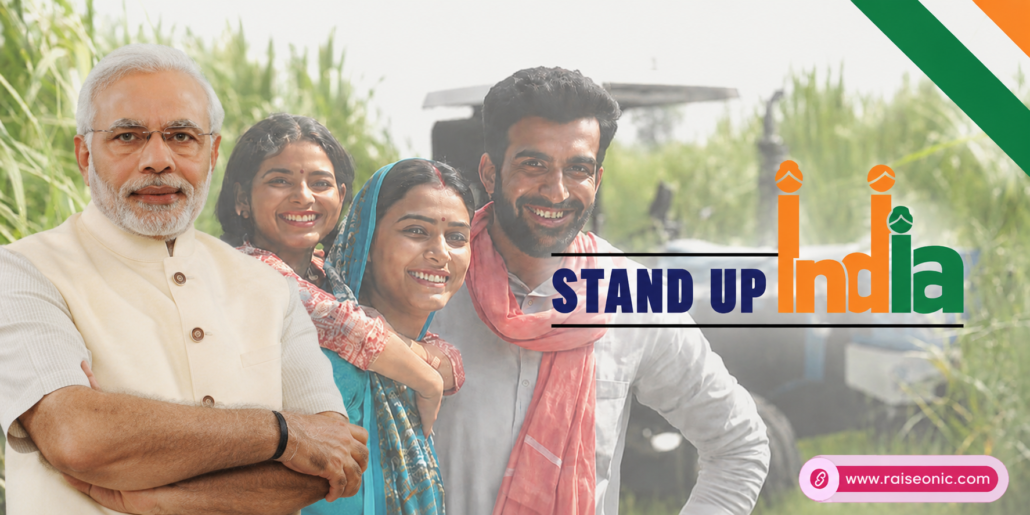
Stand-Up India Scheme: Empowering Women and SC/ST Entrepreneurs Through Business Financing
Introduction To Stand-Up India Scheme
Entrepreneurship plays a crucial role in driving economic growth, creating employment opportunities, and fostering innovation. In India, the startup ecosystem has expanded rapidly over the last decade, with thousands of individuals turning their ideas into successful businesses. However, access to finance remains one of the biggest challenges for aspiring entrepreneurs, particularly women and individuals belonging to Scheduled Castes (SC) and Scheduled Tribes (ST).
Many talented entrepreneurs struggle to start or expand their businesses due to insufficient capital, lack of collateral, and limited access to formal credit. Recognizing these challenges, the Government of India launched the Stand-Up India Scheme to promote entrepreneurship among underrepresented sections of society.
The scheme aims to facilitate bank loans to women entrepreneurs and SC/ST entrepreneurs for establishing greenfield enterprises in manufacturing, services, trading, and allied agricultural sectors. By improving access to finance and providing handholding support, the initiative seeks to create a more inclusive entrepreneurial ecosystem and encourage self-employment across the country.
In this article, we will explore everything about the Stand-Up India Scheme, including its objectives, benefits, eligibility criteria, loan features, application process, and its role in strengthening India’s startup and MSME ecosystem.
What is the Stand-Up India Scheme?
The Stand-Up India Scheme was launched by the Government of India on 5 April 2016 with the objective of promoting entrepreneurship among women and SC/ST communities.
Under the scheme, every scheduled commercial bank branch is encouraged to provide loans to at least:
- One Scheduled Caste (SC) or Scheduled Tribe (ST) borrower, and
- One woman entrepreneur.
The scheme facilitates bank loans ranging from ₹10 lakh to ₹1 crore for setting up greenfield enterprises, meaning new businesses that are being established for the first time.
The initiative is implemented by the Department of Financial Services, Ministry of Finance, and supported through the Stand-Up India portal and various handholding agencies.
Why Was the Stand-Up India Scheme Introduced?
Despite significant economic progress, women and entrepreneurs from SC/ST communities often face barriers when trying to establish businesses.
Some common challenges include:
- Limited access to institutional credit
- Lack of collateral for obtaining loans
- Limited financial literacy
- Lack of mentorship and business guidance
- Difficulty in preparing business plans
- Lower participation in entrepreneurship activities
The Stand-Up India Scheme was introduced to bridge these gaps and create opportunities for aspiring entrepreneurs who may otherwise struggle to access formal financing.
The scheme also aligns with the government’s vision of:
- Inclusive economic growth
- Financial empowerment
- Job creation
- Women-led development
- Promotion of entrepreneurship among marginalized communities
Objectives of the Stand-Up India Scheme
The scheme has several important objectives.
1. Promoting Entrepreneurship
The primary objective is to encourage entrepreneurship among women and SC/ST communities.
2. Improving Access to Finance
The scheme facilitates easier access to bank loans for establishing new enterprises.
3. Creating Employment Opportunities
New businesses established under the scheme contribute to job creation and economic development.
4. Supporting Financial Inclusion
The initiative helps bring more entrepreneurs into the formal banking and financial system.
5. Strengthening the MSME Ecosystem
The scheme encourages the growth of micro, small, and medium enterprises across India.
Key Features of the Stand-Up India Scheme
Loan Amount
Eligible entrepreneurs can obtain loans ranging from:
₹10 lakh to ₹1 crore
The loan amount depends on the nature, scale, and financial requirements of the proposed business.
Greenfield Enterprise Requirement
The scheme supports only greenfield projects, meaning the business should be a new venture and not an existing enterprise.
The applicant should be entering the business activity for the first time.
Composite Loan Facility
The loan includes both:
- Term loan
- Working capital component
This helps entrepreneurs meet both setup and operational expenses.
Margin Money Requirement
The borrower may be required to contribute a certain percentage of the project cost as margin money. Government schemes and subsidies can sometimes be used to meet part of this requirement, subject to applicable guidelines.
Repayment Period
The repayment period can extend up to 7 years, with a possible moratorium period as per bank policies and scheme guidelines.
Credit Guarantee Support
Loans under the scheme may be covered under the Credit Guarantee Fund for Stand-Up India Scheme (CGFSI), reducing the risk for lending institutions.
Eligibility Criteria for Stand-Up India Scheme
To avail benefits under the scheme, applicants must fulfill certain conditions.
For Individual Entrepreneurs
The applicant must be:
- A woman entrepreneur, or
- A Scheduled Caste (SC) entrepreneur, or
- A Scheduled Tribe (ST) entrepreneur.
Age Requirement
The applicant should generally be:
18 years or above.
Greenfield Enterprise
The business should be a new enterprise and should not have been previously established by the applicant.
Non-Individual Enterprises
In the case of partnerships or companies:
- At least 51% of the shareholding and controlling stake must be held by a woman or SC/ST entrepreneur.
Credit History
Applicants should not be in default with any bank or financial institution.
Sectors Covered Under the Scheme
The Stand-Up India Scheme supports greenfield enterprises in the following sectors:
Manufacturing
Businesses involved in producing goods and products.
Services
Service-based enterprises such as education, healthcare, consultancy, hospitality, and technology services.
Trading
Businesses involved in buying and selling goods.
Allied Agricultural Activities
Certain activities related to agriculture and rural enterprises may also be covered under the scheme.
Benefits of Stand-Up India Scheme
1. Access to Formal Credit
The scheme enables aspiring entrepreneurs to access institutional financing that may otherwise be difficult to obtain.
2. Encouragement for First-Time Entrepreneurs
The focus on greenfield enterprises encourages new entrepreneurs to pursue their business ideas.
3. Women Empowerment
The initiative significantly promotes women entrepreneurship and economic participation.
4. Social Inclusion
By focusing on SC/ST entrepreneurs, the scheme contributes to inclusive economic development.
5. Employment Generation
Businesses established under the scheme create jobs and contribute to local economic growth.
6. Entrepreneurial Ecosystem Development
The scheme strengthens India’s startup and MSME ecosystem by increasing the number of formal enterprises.
Handholding Support Under Stand-Up India
One of the unique features of the scheme is the availability of handholding support.
Entrepreneurs may receive assistance in:
- Preparing project reports
- Skill development and training
- Financial literacy
- Registration processes
- Market linkages
- Business guidance and mentorship
This support is particularly valuable for first-time business owners.
Documents Required for Stand-Up India Scheme
Applicants generally require:
- Aadhaar Card
- PAN Card
- Identity proof
- Address proof
- Caste certificate (for SC/ST applicants)
- Business plan or project report
- Bank account details
- Educational qualifications (if applicable)
- Financial statements and estimates
- Additional documents requested by the lending institution
Document requirements may vary depending on the bank and nature of the business.
How to Apply for Stand-Up India Scheme
The application process can be completed online or through participating banks.
Step 1: Prepare a Business Plan
Applicants should prepare a clear project report outlining:
- Business idea
- Investment requirements
- Revenue projections
- Operational plans
Step 2: Visit the Stand-Up India Portal or Bank
Applicants can approach:
- Scheduled commercial banks
- Stand-Up India portal
- Lead district offices
- Entrepreneurship support agencies
Step 3: Submit the Application
Provide personal details, business information, and upload the required documents.
Step 4: Loan Assessment
The bank evaluates:
- Project feasibility
- Applicant eligibility
- Financial requirements
- Repayment capacity
Step 5: Loan Sanction and Disbursement
Upon approval, the loan amount is sanctioned and disbursed according to the project requirements.
Challenges Faced by Entrepreneurs
Although the scheme has created numerous opportunities, some challenges still exist.
Lack of Awareness
Many eligible entrepreneurs remain unaware of the scheme and its benefits.
Business Planning Difficulties
First-time entrepreneurs may struggle to prepare project reports and financial estimates.
Market Competition
New businesses often face challenges related to market access and customer acquisition.
Financial Management
Managing cash flow and business finances requires continuous learning and support.
Increasing awareness, mentorship, and training can further strengthen the impact of the scheme.
How Stand-Up India Supports India’s Vision of Inclusive Growth
The Stand-Up India Scheme is a major step toward creating an inclusive and equitable entrepreneurial ecosystem.
The scheme contributes by:
- Promoting women-led development
- Supporting marginalized communities
- Creating employment opportunities
- Strengthening MSMEs
- Encouraging self-employment
- Expanding financial inclusion
- Driving local economic growth
By empowering aspiring entrepreneurs, the scheme helps transform innovative ideas into sustainable enterprises.
How Raiseonic Helps Entrepreneurs Understand Government Opportunities
Government schemes often involve multiple eligibility conditions, documentation requirements, and application procedures that can be difficult to understand.
At Raiseonic, we simplify government initiatives by providing easy-to-understand guides, practical insights, and expert information on startup schemes, business funding, subsidies, loans, and entrepreneurship opportunities.
Whether you are planning to launch your first business, expand an existing enterprise, or explore government support programs, Raiseonic helps you stay informed and make better business decisions.
Conclusion
The Stand-Up India Scheme is a transformative initiative that aims to empower women and SC/ST entrepreneurs by improving access to formal financing and promoting entrepreneurship.
By providing loans ranging from ₹10 lakh to ₹1 crore, along with handholding support and credit guarantee mechanisms, the scheme has created opportunities for thousands of aspiring entrepreneurs to establish and grow their businesses.
As India continues to build a strong startup and MSME ecosystem, initiatives like Stand-Up India play a vital role in ensuring that economic growth is inclusive and accessible to all sections of society.
For the latest updates on government schemes, startup funding opportunities, subsidies, business loans, and entrepreneurship initiatives, stay connected with Raiseonic—your trusted source for simplified government scheme information and guidance.

