Startup India Seed Fund Scheme (SISFS): Complete Guide to Eligibility, Benefits, Funding, Application Process & Startup Support
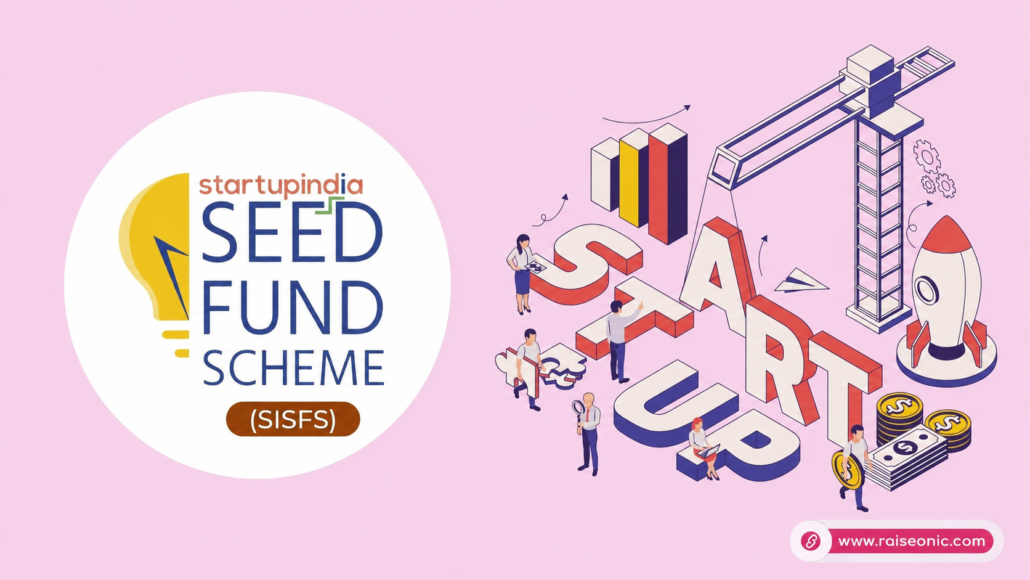
Introduction to Startup India Seed Fund Scheme (SISFS)
India has emerged as one of the world’s fastest-growing startup ecosystems, with thousands of innovative businesses developing solutions across sectors such as technology, healthcare, agriculture, education, fintech, clean energy, manufacturing, and artificial intelligence. Startups play a crucial role in driving innovation, generating employment, attracting investments, and strengthening the country’s economy.
However, one of the biggest challenges faced by early-stage startups is obtaining seed capital. While venture capital firms and angel investors often invest in startups with proven traction, many innovative businesses struggle to secure funding during the idea, prototype, or product validation stage. Without early financial support, several promising startup ideas fail before reaching the market.
To bridge this funding gap, the Government of India launched the Startup India Seed Fund Scheme (SISFS) under the Startup India Initiative. The scheme provides financial assistance to eligible startups through approved incubators to help them develop prototypes, conduct proof of concept, undertake product trials, enter the market, and scale their businesses.
The Startup India Seed Fund Scheme has become one of India’s most important startup funding initiatives, enabling innovative entrepreneurs to transform ideas into successful enterprises while promoting innovation, job creation, and economic growth.
In this article, we will explore everything about the Startup India Seed Fund Scheme (SISFS), including its objectives, features, funding support, eligibility, benefits, application process, required documents, and its role in strengthening India’s startup ecosystem.
What is the Startup India Seed Fund Scheme (SISFS)?
The Startup India Seed Fund Scheme (SISFS) is a flagship startup funding programme launched by the Department for Promotion of Industry and Internal Trade (DPIIT), Ministry of Commerce and Industry, Government of India.
The scheme was launched in 2021 to provide financial assistance to eligible startups during their early stages of development through a network of approved incubators across the country.
Unlike traditional bank loans, the scheme focuses on providing seed funding to innovative startups that require financial assistance for validating ideas, building prototypes, testing products, conducting market trials, and preparing for commercialization.
Funds are disbursed through approved incubators that evaluate startup proposals and provide mentoring, incubation, and business development support in addition to financial assistance.
Why Was the Startup India Seed Fund Scheme Introduced?
Many startups face difficulties during the early stages of business development because they lack access to institutional finance.
Common challenges include:
- Difficulty raising seed capital
- Limited access to investors
- High cost of product development
- Lack of prototype funding
- Insufficient mentoring support
- Limited market validation opportunities
- Financial constraints before commercialization
Recognizing these challenges, the Government introduced SISFS to ensure that innovative startups receive timely financial support and incubation assistance.
The scheme supports national initiatives such as:
- Startup India Initiative
- Make in India
- Digital India
- Atmanirbhar Bharat
- Skill India Mission
- National Education Policy (NEP)
Objectives of the Startup India Seed Fund Scheme
The scheme has several important objectives.
1. Support Early-Stage Startups
Provide financial assistance during the critical early stages of business development.
2. Encourage Innovation
Promote innovative ideas capable of solving real-world problems.
3. Facilitate Prototype Development
Help startups convert ideas into functional prototypes.
4. Promote Commercialization
Support startups in launching market-ready products and services.
5. Generate Employment
Encourage entrepreneurship that creates sustainable employment opportunities.
6. Strengthen India’s Startup Ecosystem
Build a supportive environment for innovation, incubation, and technology-driven enterprises.
Key Features of SISFS
Financial Assistance Through Incubators
Funding is provided through incubators selected by the Government rather than directly to startups.
Seed Funding Support
Financial assistance may be used for:
- Proof of Concept
- Prototype Development
- Product Trials
- Market Entry
- Commercialization
- Business Scaling
Mentorship and Incubation
Approved incubators provide:
- Business mentoring
- Technical guidance
- Investor networking
- Legal support
- Business strategy assistance
- Market access support
Focus on Innovation
Priority is given to startups developing innovative products, services, or technology-based solutions with strong growth potential.
Transparent Selection Process
Applications are evaluated by expert committees based on innovation, feasibility, scalability, market potential, and business viability.
Funding Support Under SISFS
Eligible startups may receive financial assistance as per the prevailing scheme guidelines.
Support can generally include:
- Grants for proof of concept, prototype development, or product trials.
- Investments through approved financial instruments for market entry, commercialization, or scaling.
The exact funding limits, eligible expenditure, and disbursement conditions are determined by the latest Government guidelines and the incubator’s selection committee.
Benefits of the Startup India Seed Fund Scheme
1. Early-Stage Funding
Provides financial support when startups need it the most.
2. Reduced Funding Gap
Helps bridge the gap between idea development and investor readiness.
3. Faster Product Development
Enables startups to build and test prototypes efficiently.
4. Mentorship Support
Entrepreneurs receive expert guidance throughout their startup journey.
5. Increased Investment Readiness
Well-developed startups become more attractive to angel investors and venture capital firms.
6. Employment Generation
Successful startups create new jobs and contribute to economic growth.
7. Promotes Innovation
Encourages entrepreneurs to develop technology-driven and scalable business solutions.
Eligibility Criteria
Eligibility is governed by the official SISFS guidelines. Generally, a startup should:
- Be recognized as a Startup by DPIIT.
- Be incorporated within the period specified in the latest scheme guidelines.
- Be working on an innovative product, service, or technology with commercial potential.
- Have a business idea requiring seed support for validation, prototype development, or market entry.
- Meet the ownership and shareholding conditions prescribed under the scheme.
- Not have received seed support beyond the permissible limit under other specified Government schemes for the same purpose.
Applicants should always verify the latest eligibility criteria before applying.
Eligible Sectors
The scheme supports startups across multiple sectors, including:
- Information Technology
- Artificial Intelligence
- Healthcare
- Biotechnology
- Agriculture
- Education Technology
- FinTech
- Manufacturing
- Clean Energy
- Robotics
- Deep Technology
- Food Processing
- Sustainability
- Mobility
- Space Technology
Innovative startups from other sectors may also be considered if they meet the scheme guidelines.
Documents Required
Applicants generally need:
- DPIIT Startup Recognition Certificate
- Certificate of Incorporation
- PAN Card
- Aadhaar Card of founders
- Business plan
- Pitch deck
- Financial projections
- Prototype details (if available)
- Bank account details
- Shareholding pattern
- Any additional documents requested by the incubator
How to Apply for Startup India Seed Fund Scheme
Step 1: Prepare Your Startup Proposal
Develop a comprehensive business plan, pitch deck, and financial projections.
Step 2: Register on the Startup India Portal
Ensure your startup has valid DPIIT recognition.
Step 3: Apply Through the SISFS Portal
Submit the online application and select a suitable approved incubator based on your startup’s sector and location.
Step 4: Screening by the Incubator
The incubator evaluates applications based on innovation, feasibility, market potential, and scalability.
Step 5: Presentation Before the Selection Committee
Shortlisted startups may be invited to present their business idea before an expert committee.
Step 6: Funding Approval
Successful startups receive funding according to the approved proposal and applicable guidelines.
Role of Approved Incubators
Approved incubators play a central role by:
- Evaluating startup applications
- Providing mentoring
- Releasing approved funds
- Monitoring project progress
- Connecting startups with investors
- Supporting commercialization
Incubators help startups grow beyond the funding stage by providing strategic business support.
Impact of SISFS
Since its launch, the Startup India Seed Fund Scheme has strengthened India’s startup ecosystem by:
- Supporting thousands of innovative startups.
- Encouraging technology-based entrepreneurship.
- Increasing prototype development.
- Improving commercialization of innovative products.
- Expanding incubation infrastructure.
- Creating employment opportunities.
- Promoting innovation-led economic growth.
The scheme continues to encourage first-generation entrepreneurs across India.
Challenges and Future Opportunities
Despite its success, some challenges remain.
Awareness
Many startups are still unaware of the funding opportunities available under SISFS.
Regional Accessibility
Expanding incubator networks in Tier-2 and Tier-3 cities can improve access for entrepreneurs across India.
Commercialization Support
Additional support for marketing, exports, and investor networking can further strengthen startup success.
Deep-Tech Innovation
Greater investment in AI, semiconductors, clean technology, and advanced manufacturing can boost India’s global competitiveness.
Continued policy support and incubation infrastructure will further strengthen India’s innovation ecosystem.
How SISFS Supports India’s Startup Vision
The Startup India Seed Fund Scheme complements several national initiatives, including:
- Startup India Initiative
- Atal Innovation Mission (AIM)
- TIDE 2.0
- MSME Innovative Scheme
- Credit Guarantee Scheme for Startups (CGSS)
- Digital India
- Skill India Mission
- PM Vishwakarma
- Prime Minister Employment Generation Programme (PMEGP)
Together, these programmes create a strong ecosystem for innovation, entrepreneurship, and employment generation.
Internal Links for Raiseonic
To improve SEO and enhance user experience, link this article to related Raiseonic content:
- Startup India Initiative
- MSME Innovative Scheme
- Prime Minister Employment Generation Programme (PMEGP)
- Credit Guarantee Scheme for Startups (CGSS)
- Atal Innovation Mission (AIM)
- TIDE 2.0
- Skill India Mission
- Digital India
- Stand-Up India Scheme
- Pradhan Mantri Mudra Yojana (PMMY)
How Raiseonic Helps Startups Stay Updated
Government startup programmes are regularly updated with new funding opportunities, incubation initiatives, policy reforms, and business support services.
At Raiseonic, we simplify government schemes through easy-to-understand guides, practical insights, and expert information on startup funding, MSME schemes, innovation programmes, business loans, women entrepreneur initiatives, agricultural schemes, and financial assistance programmes.
Whether you are launching your first startup or scaling an innovative business, Raiseonic helps you stay informed about the latest government opportunities that can accelerate your entrepreneurial journey.
Conclusion
The Startup India Seed Fund Scheme (SISFS) is a transformative initiative that addresses one of the biggest challenges faced by early-stage startups—access to seed capital. By providing financial assistance through approved incubators, along with mentorship and business development support, the scheme empowers entrepreneurs to validate ideas, develop prototypes, launch products, and build scalable enterprises.
By encouraging innovation, strengthening incubation networks, and promoting technology-driven entrepreneurship, SISFS plays a significant role in advancing India’s vision of becoming a global startup hub. Entrepreneurs with innovative ideas should explore this scheme to leverage government-backed funding and expert guidance during the critical early stages of business development.
For the latest updates on startup schemes, MSME initiatives, government funding programmes, innovation support, business loans, women entrepreneur schemes, and financial assistance opportunities, stay connected with Raiseonic—your trusted source for simplified government scheme information and guidance.

