
Tag Archive for: Startup Schemes

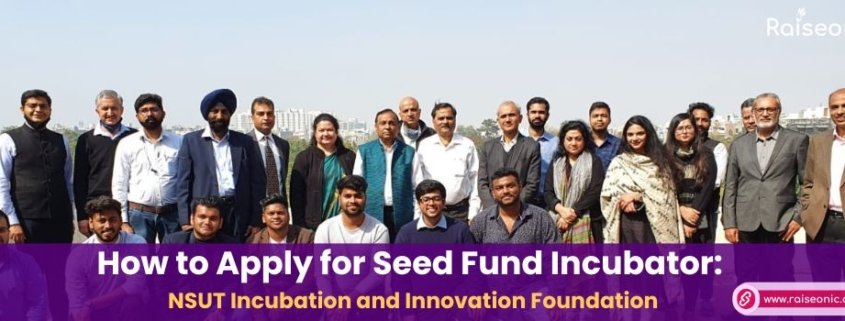
NSUT Incubation and Innovation Foundation

Introduction

Turning an idea into a startup is exciting — but early-stage entrepreneurs face many challenges, from building prototypes to finding mentors and investors. For founders looking for guidance, incubation centres play a critical role in bridging the gap between innovation and execution.

One of India’s leading incubation centres is the NSUT Incubation and Innovation Foundation (NIIF), the official incubation arm of Netaji Subhas University of Technology (NSUT), Delhi. Supported by the Startup India Seed Fund Scheme (SISFS) and DPIIT, NIIF provides startups with seed funding, mentorship, infrastructure, and networking opportunities.

If you’re an aspiring entrepreneur, this guide explains how to apply for NIIF’s seed fund incubator, including eligibility, funding structure, and benefits.

About NSUT Incubation and Innovation Foundation (NIIF)

NIIF is a Section 8 not-for-profit company established by NSUT to promote innovation, research, and entrepreneurship. The foundation supports startups across diverse sectors — from deep-tech and AI to social impact and sustainability.

Through mentorship, funding programs, and industry partnerships, NIIF enables startups to scale efficiently while maintaining a strong focus on innovation.

Why Choose NIIF?

NIIF stands out for its academia-industry collaboration, access to technical talent, and investor networks.

Key Offerings:

  • Seed Funding: Through SISFS for prototype and market validation

  • Mentorship: Guidance from NSUT faculty and industry experts

  • Infrastructure: Labs, co-working spaces, and testing facilities

  • Networking Opportunities: Connect with VCs, angel investors, and corporate partners

  • Business Development Support: Guidance on legal, financial, and marketing strategies

This ecosystem ensures startups are equipped to move from prototype to market stage successfully.

About the Seed Fund Program (SISFS)

The Startup India Seed Fund Scheme provides financial assistance for proof of concept, prototype development, and commercialization.

Funding Structure at NIIF:

  • Grant: Up to ₹20 lakh for prototype development and validation

  • Investment: Up to ₹50 lakh for market entry and scaling

  • Equity-Free: No repayment or equity dilution under grant-based funding

Eligibility Criteria

To apply for NIIF seed funding, startups must:

  • Be DPIIT-recognized

  • Be incorporated in India as a Private Limited Company, LLP, or OPC

  • Be less than 2 years old at the time of application

  • Offer innovative products or processes

  • Not have received more than ₹10 lakh from other government schemes (excluding awards/prizes)

  • Have at least 51% Indian promoter ownership

How to Apply

  1. Visit the Official Website: NIIF or SISFS portal → “Apply for Incubation”

  2. Prepare Documents:

    • DPIIT Recognition Certificate

    • Incorporation Certificate

    • Pitch Deck / Business Plan

    • Founder Profiles (Resumes)

    • Financial Projections (if available)

    • Proof of Concept / Prototype Details

  3. Fill Out the Application Form: Startup details, problem-solution statement, business model, funding requirement, and milestones

  4. Screening & Evaluation: Innovation, feasibility, team expertise, and impact

  5. Pitch Presentation: Shortlisted startups present their idea to NIIF’s expert panel

  6. Approval & Onboarding: Agreement includes funding tranches, milestones, and mentorship schedules

  7. Fund Disbursement: Phased funding based on milestone achievements

Support Ecosystem at NIIF

Being incubated at NIIF offers more than funding:

  • Expert Mentorship: Personalized guidance from NSUT professors and industry leaders

  • Investor Connections: Access to venture capitalists and angel networks

  • Workshops & Bootcamps: Business models, fundraising, and scaling

  • Technical Labs: Cutting-edge research and innovation facilities

  • Community Events: Networking sessions, demo days, and ecosystem meetups

Focus Sectors

NIIF welcomes startups in:

  • AI & Machine Learning

  • Robotics & IoT

  • CleanTech & Renewable Energy

  • EdTech & HealthTech

  • Agritech & Social Impact

  • SaaS, FinTech, and DeepTech

Cross-sector diversity encourages collaboration and learning across technology and business domains.

Tips to Strengthen Your Application

  • Articulate a Clear Vision: Define your purpose, market gap, and audience

  • Showcase Your Prototype: Working demos increase credibility

  • Quantify Market Potential: Use data or early customer feedback

  • Explain Fund Utilization: Clearly outline measurable growth plans

  • Highlight Team Expertise: Strong teams often get preference

  • Stay Authentic: Transparency about challenges is valued

Why Apply to NIIF?

Joining NIIF means accessing:
✅ Delhi’s innovation ecosystem
✅ Equity-free seed funding up to ₹50 lakh
✅ Mentorship from academic and business leaders
✅ Exposure to investors, government bodies, and accelerators
✅ Infrastructure for research, testing, and product development

Whether you are a student innovator or startup founder, NIIF provides the foundation to turn your vision into a viable, high-impact business.

Conclusion

The NSUT Incubation and Innovation Foundation (NIIF) is shaping the next generation of entrepreneurs through its seed fund incubator program. With financial support, technical mentorship, and access to a robust ecosystem, NIIF offers everything a startup needs to succeed.

If you have a breakthrough idea, apply for the NIIF seed fund incubator today — and take the first step toward building India’s next big innovation story.
Seed Fund Incubator Maker Village

Introduction

Launching a startup in the electronic hardware and IoT space can be both exciting and challenging. While innovative ideas are essential, access to resources, mentorship, funding, and specialized infrastructure is critical to transform these ideas into market-ready products.

Maker Village, a premier electronic hardware incubator, addresses this challenge by providing early-stage startups with seed funding, prototyping facilities, mentorship, and a collaborative ecosystem. Supported by government initiatives and industry partners, Maker Village has become a launchpad for hardware startups in India, particularly those working in electronics, IoT, robotics, and deep-tech sectors.

This article provides a detailed guide on how to apply for seed funding at Maker Village, including eligibility criteria, application steps, funding details, tips for a successful application, and real-world success stories.

What is Maker Village?

Maker Village is a specialized hardware-focused incubator designed to nurture innovation in electronics, embedded systems, IoT, and hardware-based startups. Located in Kochi, Kerala, Maker Village provides a structured ecosystem that supports startups from prototype development to market launch.

The incubator is backed by government programs, industry partnerships, and technology experts, offering startups mentorship, funding, co-working spaces, prototyping labs, and access to investors. Maker Village is ideal for entrepreneurs who want to build electronic hardware products with scalability and commercial potential.

Key Features of Maker Village:

  • Mentorship: Access to domain experts in hardware, IoT, and electronics.

  • Infrastructure Support: State-of-the-art prototyping labs, testing equipment, and co-working spaces.

  • Funding Support: Equity-free seed funding for early-stage hardware startups.

  • Networking & Exposure: Connect with investors, corporates, and ecosystem partners.

  • Workshops & Bootcamps: Training programs focused on hardware design, manufacturing, and commercialization.

  • Sectoral Focus: Electronic hardware, embedded systems, IoT, robotics, wearables, and deep-tech solutions.

Maker Village’s mission is to empower hardware entrepreneurs with resources, knowledge, and networks to transform innovative ideas into commercially viable products.

Key Offerings of Maker Village

Maker Village provides startups with comprehensive support to accelerate growth and innovation:

1. Zero-Cost Incubation

Startups accepted into Maker Village receive access to workspace, prototyping labs, and mentorship at no upfront cost, enabling founders to focus on product development and testing.

2. Equity-Free Seed Funding

Maker Village offers seed funding without requiring equity, allowing entrepreneurs to access financial resources while retaining full ownership of their venture.

3. Mentorship & Advisory

Startups gain guidance from industry veterans, electronics and IoT experts, academicians, and successful entrepreneurs, helping them navigate challenges in hardware design, supply chain management, and commercialization.

4. Infrastructure & Prototyping Support

Maker Village provides state-of-the-art prototyping labs, electronics testing equipment, 3D printers, and embedded system tools, enabling startups to quickly build, test, and iterate their products.

5. Networking & Industry Exposure

The incubator connects startups with investors, corporates, and potential clients, facilitating collaborations, partnerships, and growth opportunities.

6. Sectoral Focus

Maker Village specializes in supporting hardware startups, particularly those in:

  • IoT & Smart Devices

  • Electronic Components & Embedded Systems

  • Robotics & Automation

  • Wearables & Medical Devices

  • Deep-Tech Hardware Solutions

This sectoral focus ensures startups receive targeted mentorship, infrastructure, and funding relevant to hardware development.

Eligibility Criteria

To apply for seed funding and incubation at Maker Village, startups should meet the following criteria:

  • Incorporation: Registered as a Private Limited Company or LLP in India.

  • Promoter Ownership: At least 51% shareholding by Indian promoters.

  • Stage of Development: Early-stage startups with a prototype, MVP, or functional hardware.

  • Sector Preference: Focus on electronic hardware, IoT, robotics, embedded systems, and deep-tech solutions.

  • Government Recognition: Preferably recognized by the Department for Promotion of Industry and Internal Trade (DPIIT).

Application Process

Maker Village follows a structured process to identify and select high-potential hardware startups:

Step 1: Visit the Official Website

Go to the Maker Village official portal to explore incubation programs and funding opportunities.

Step 2: Register Your Startup

Create an account by submitting basic information about your startup and founders. Registration grants access to the detailed application form.

Step 3: Complete the Application Form

Provide comprehensive details, including:

  • Startup Overview: Company mission, vision, and product summary

  • Problem Statement & Solution: Clearly define the problem your hardware product solves

  • Market Analysis: Target customers, competitors, and market size

  • Business Model: Revenue streams, pricing strategy, and scalability

  • Financial Projections: Revenue forecast, costs, and funding requirements

  • Team Composition: Founders’ experience, expertise, and roles

Step 4: Submit Required Documents

Attach relevant supporting documents:

  • Certificate of Incorporation

  • DPIIT Recognition Certificate (if available)

  • Pitch Deck

  • Prototype Images or Videos

  • Financial Statements (if any)

  • Founders’ CVs

Step 5: Selection Process

Applications are evaluated through multiple stages:

  1. Screening: Initial assessment based on product innovation, feasibility, and scalability

  2. Pitch Presentation: Shortlisted startups present their hardware solution to the selection committee

  3. Due Diligence: Evaluation of startup feasibility, financials, and operational plan

  4. Onboarding: Selected startups are inducted into the incubation program, gaining mentorship, funding, and infrastructure access

Funding Details

Maker Village provides seed funding to early-stage hardware startups:

1. Startup India Seed Fund Scheme (SISFS)

  • Funding Amount: Up to ₹50 lakh

  • Purpose: Product development, prototyping, testing, and operational costs

  • Disbursement: Milestone-based

  • Eligibility: Early-stage startups developing electronic hardware products or innovative IoT solutions

2. Maker Village Seed Fund

  • Funding Amount: Up to ₹50 lakh

  • Instrument: Equity-free funding or convertible instruments

  • Eligibility: Startups incubated at Maker Village for a minimum period

  • Reporting: Quarterly financial and progress updates

Both funding streams are designed to provide financial support without forcing founders to give up equity, enabling them to focus on growth, prototyping, and commercialization.

Tips for a Successful Application

  • Highlight Problem-Solution Fit: Clearly articulate how your hardware product solves a real-world problem.

  • Show Technical Innovation: Demonstrate uniqueness and technological differentiation.

  • Understand Your Market: Include detailed insights about target customers, competitors, and market size.

  • Emphasize Scalability: Show potential for scaling the hardware solution nationally or globally.

  • Showcase a Strong Team: Investors look for technical expertise and complementary skills.

  • Financial Prudence: Provide realistic projections and a clear plan for seed fund utilization.

  • Prepare a Compelling Pitch Deck: Use visuals, prototypes, and demo videos to make a strong impression.

Success Stories

Several hardware startups have successfully leveraged Maker Village’s seed fund and incubation program:

  • IoT Smart Devices: Developed smart home IoT products and scaled operations nationwide.

  • RoboTech Solutions: Built industrial robotics prototypes and attracted investment for commercialization.

  • Wearable HealthTech Devices: Developed wearable medical devices that reached hospitals and clinics.

These success stories highlight the power of mentorship, funding, and specialized infrastructure in turning hardware ideas into market-ready products.

Benefits Beyond Funding

In addition to seed funding, Maker Village provides startups with:

  • Mentorship from hardware and IoT experts

  • Access to prototyping labs, testing equipment, and 3D printing facilities

  • Networking opportunities with investors, corporates, and ecosystem partners

  • Support in product validation, testing, and commercialization

This comprehensive support ensures startups are not only funded but also equipped to scale successfully.

Conclusion

For hardware-focused entrepreneurs, applying for seed funding at Maker Village is a significant opportunity. By providing funding, mentorship, infrastructure, and industry exposure, Maker Village enables early-stage startups to overcome challenges and scale innovations into commercially viable products.

Following the application steps, meeting eligibility criteria, and preparing a strong proposal can significantly increase the chances of selection. Maker Village is the ideal launchpad for electronic hardware, IoT, and deep-tech startups seeking mentorship and funding.

GST and tax policy changes for startups and MSMEs

Being a woman entrepreneur in India today is exciting, empowering, and full of opportunities. Yet, it’s no secret that juggling a growing business with personal responsibilities can be overwhelming. Long hours, decision fatigue, and constant multitasking can take a toll on health, relationships, and mental well-being.

Achieving work-life balance isn’t about spending equal hours on work and life — it’s about prioritizing, planning, and building systems that allow you to thrive professionally while nurturing your personal life.

This guide provides actionable tips, real-life strategies, and mindset shifts to help women entrepreneurs maintain balance and excel in all areas of life.

Why Work-Life Balance Matters for Women Entrepreneurs

Running a startup or business is often an all-consuming venture. However, neglecting personal life or health can have serious consequences:

  • Burnout: Chronic stress can lead to fatigue, anxiety, and decreased productivity.
  • Impact on Decision-Making: Mental exhaustion affects clarity and strategic thinking.
  • Strained Relationships: Personal connections can suffer if work takes priority over family and social life.
  • Reduced Creativity: Rest and downtime are essential for innovation and problem-solving.

For women entrepreneurs, balance is not optional — it’s a business strategy, ensuring sustainability, growth, and personal well-being.

Top Work-Life Balance Tips for Women Entrepreneurs

1. Prioritize Ruthlessly

Not every task deserves your time and energy. Learn to differentiate between urgent, important, and non-essential tasks.

  • Actionable Tip:

    • Use tools like the Eisenhower Matrix to categorize tasks.
    • Delegate low-priority work to employees, freelancers, or virtual assistants.

Example: Vineeta Singh of SUGAR Cosmetics delegates operational decisions to her team while focusing on strategy and brand vision.

2. Set Boundaries Between Work and Personal Life

Blurring lines between work and home can lead to stress and resentment.

  • Actionable Tip:

    • Define working hours and communicate them clearly to your team.
    • Avoid checking emails or business messages during family or personal time.

3. Learn to Delegate Effectively

Entrepreneurship often makes women feel responsible for everything. But delegation is not weakness; it’s smart leadership.

  • Actionable Tip:

    • Identify tasks that don’t require your expertise and assign them.
    • Hire virtual assistants or part-time employees for administrative work.

4. Plan Your Day, But Stay Flexible

Structured routines reduce stress, but flexibility ensures you adapt to unexpected challenges.

  • Actionable Tip:

    • Block time for focused work, meetings, and personal activities.
    • Leave buffer periods for urgent tasks or last-minute decisions.

5. Practice Self-Care Regularly

Self-care isn’t a luxury; it’s a necessity. Entrepreneurs who neglect health and mental well-being risk burnout and poor decision-making.

  • Actionable Tip:

    • Schedule exercise, meditation, or hobbies daily.
    • Ensure 7–8 hours of sleep every night.
    • Take short breaks during the workday to recharge.

Tip: Even 10 minutes of mindfulness or deep breathing can reduce stress significantly.

6. Leverage Technology to Streamline Work

Digital tools can save hours of manual work, allowing you to focus on high-impact activities.

  • Recommended Tools:

    • Project management: Trello, Asana, Monday.com
    • Communication: Slack, Zoom, Microsoft Teams
    • Accounting: QuickBooks, Zoho Books, Tally

7. Build a Support System

Entrepreneurship is challenging, and no one should do it alone. Support networks provide guidance, encouragement, and perspective.

  • Actionable Tip:

    • Join women entrepreneur communities, incubators, or peer groups like Raiseonic founder programs, WE Hub, or SHELEADS.
    • Seek mentorship from experienced women founders who understand the unique challenges you face.

8. Combine Work with Family Time When Possible

Instead of seeing work and family as competing priorities, find creative ways to integrate them.

  • Examples:

    • Schedule important calls when children are at school or napping.
    • Include family in celebrations or milestones at work.
    • Delegate some household responsibilities to focus on quality family moments.

9. Master the Art of Saying No

Women entrepreneurs often feel obligated to say yes to every request — from investors, clients, or even social commitments.

  • Actionable Tip:

    • Evaluate if opportunities align with your goals, energy, and priorities.
    • Saying no strategically frees up time for high-impact work and personal well-being.

10. Reflect and Reassess Regularly

Work-life balance isn’t static; it requires continuous adjustment.

  • Actionable Tip:

    • Conduct weekly reviews of your schedule and commitments.
    • Ask yourself: Am I spending time on what truly matters professionally and personally?
    • Adjust routines and priorities as your business and personal life evolve.

Challenges Women Entrepreneurs Face in Maintaining Balance

Despite these strategies, women founders face unique challenges:

  1. Cultural Expectations: Many women are expected to prioritize family over business, creating guilt and stress.
  2. Limited Access to Support: Lack of domestic help or childcare can affect focus and productivity.
  3. Pressure to Excel in Multiple Roles: Women often feel they must excel as leaders, caregivers, and homemakers simultaneously.
  4. Startup Demands: Early-stage businesses often demand long hours, adding to work-life tension.

Awareness of these challenges allows founders to proactively plan solutions, rather than reacting to stress and fatigue.

Mindset Shifts for True Work-Life Balance

  1. Accept Imperfection: You cannot do everything perfectly. Progress matters more than perfection.
  2. Prioritize Energy Over Time: Focus on tasks that maximize impact and align with your energy levels.
  3. View Balance as Dynamic: Some weeks may require more work focus; others may require personal focus. Balance is about flexibility, not equality.
  4. Celebrate Small Wins: Recognize and reward yourself for both personal and professional achievements.

Raiseonic’s Perspective: Supporting Women Entrepreneurs

At Raiseonic, we believe that well-being fuels business success. Supporting women founders includes:

  • Providing mentorship and guidance on scaling without burnout.
  • Sharing time management and productivity strategies.
  • Connecting founders to networks and communities that reduce isolation and stress.

Because empowered, balanced founders are more creative, resilient, and impactful in their ventures.

Final Thoughts

Work-life balance isn’t a checklist — it’s a continuous practice of planning, prioritization, and self-care.

For women entrepreneurs, it means:

  • Protecting mental and physical health.
  • Delegating tasks and building support systems.
  • Saying no to what doesn’t align with goals.
  • Embracing flexibility and reflection.

By implementing these strategies, women entrepreneurs can grow thriving businesses without sacrificing personal well-being, proving that it’s possible to succeed in business and life simultaneously.

Balance isn’t about doing it all — it’s about doing what matters most, intentionally, and sustainably.