
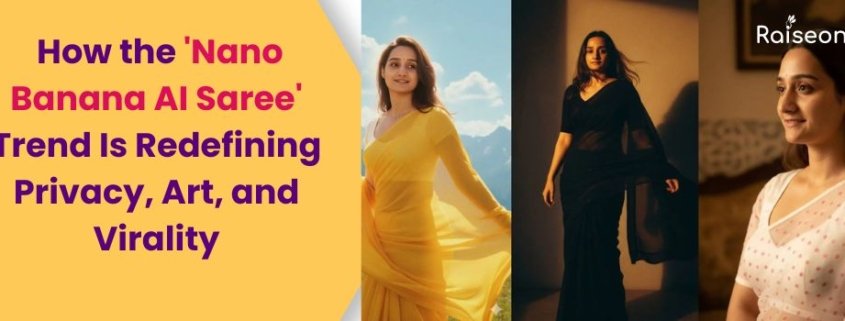
In the constantly evolving landscape of social media, new trends emerge almost daily, capturing public imagination in ways that are as unpredictable as they are fascinating. One such phenomenon that has recently gone viral is the “Nano Banana AI Saree” trend. Powered by Google’s Gemini 2.5 model, this trend allows users to upload selfies and transform them into visually stunning portraits reminiscent of retro Bollywood cinema. Users see themselves adorned in flowing sarees, bathed in cinematic lighting, and placed against nostalgic or stylized backdrops.
While this trend has garnered immense popularity for its aesthetic appeal and nostalgic charm, it also raises pressing concerns about privacy, AI ethics, and the social dynamics of virality. In this article, we delve into the allure of AI-generated saree edits, explore the potential risks, and provide guidance for navigating such trends responsibly.
The Allure of AI-Generated Saree Edits
The magic of the Nano Banana AI tool lies in its ability to merge technology with cultural nostalgia. By uploading a selfie and applying certain prompts, users can see themselves in a 1990s Bollywood-inspired setting. The AI generates lifelike saree drapes, retro hairstyles, and cinematic lighting that evoke a sense of familiarity for fans of classic Indian cinema. The results are not only visually striking but also emotionally resonant for those who grew up watching Bollywood films of the ‘80s and ‘90s.
Social media platforms such as Instagram, WhatsApp, and even Telegram have become fertile grounds for sharing these AI-generated images. Thousands of users are participating in challenges, posting their “Nano Banana AI Saree” portraits, and tagging friends to try the trend themselves. The viral nature of the trend demonstrates how technology can tap into cultural nostalgia and create a shared digital experience.
However, alongside its charm, the trend has revealed some unsettling issues. Users have reported instances where AI-generated images introduced features not present in the original photos. For example, one user noted a mole appearing on her AI portrait that wasn’t on her real face, sparking discussions about the fidelity and ethics of AI-generated content. Such anomalies highlight that while AI can create art, it does not always do so in a neutral or entirely accurate way.
Privacy Concerns: The Hidden Risks
AI-powered image editing tools inherently carry privacy risks, particularly when personal photos are uploaded to online platforms. Even when companies claim that uploaded images are not used for training AI models, the very act of uploading can expose users to potential breaches. Once images are online, controlling their distribution and preventing misuse becomes difficult.
Experts warn that these images can be harvested, stored, and repurposed in ways users may not anticipate. For instance, AI-generated portraits may be stored indefinitely on servers, and unauthorized copies could be shared without consent. This concern is particularly acute when platforms integrate AI functionality into widely used apps like WhatsApp, where sharing is seamless and instant. While such integration democratizes access to creative tools, it simultaneously magnifies the potential for data misuse.
Furthermore, the growing trend of AI-powered editing tools has blurred the lines between public and private digital spaces. Users may inadvertently share intimate or identifiable images that could be exploited in unintended ways, leading to ethical and legal dilemmas.
Ethical Considerations in AI-Generated Art
Beyond privacy, the rise of AI-generated art sparks important ethical debates. Traditional artists have voiced concerns that AI can replicate their styles without permission, potentially infringing on intellectual property rights. At events like FanX in Utah, some conventions have banned AI-generated art entirely, aiming to protect the livelihoods and creative ownership of human artists.
Celebrities have also expressed unease. Singer SZA, for example, publicly criticized the creation of AI-generated images of herself without consent. Her concerns highlight not only the ethical implications of using someone’s likeness without approval but also the environmental costs of AI technologies. Training large AI models consumes vast amounts of energy, contributing to carbon emissions and raising questions about the sustainability of these digital innovations.
Ethical issues extend to consent, authenticity, and attribution. When AI creates content inspired by existing art or photography, questions arise: Who owns the final image? Can the AI-generated work be shared freely? How do we acknowledge the original artists whose work influenced the AI’s output? These questions are still being debated across creative and legal communities, underscoring the need for thoughtful engagement with AI tools.
The Psychology Behind Social Media Virality
The Nano Banana AI Saree trend also provides a case study in the psychology of social media virality. Platforms like Instagram and WhatsApp amplify trends at unprecedented speed. Users are drawn to visually striking content that evokes emotion, nostalgia, or humor, which in turn drives engagement and further sharing.
This virality can create a feedback loop: the more users participate, the more others feel compelled to join. Trends often capitalize on FOMO (fear of missing out), nudging users to engage even if they are aware of potential privacy risks. AI-driven trends like this illustrate how digital culture spreads quickly but can sometimes overshadow important considerations about ethics and safety.
Balancing Creativity and Caution
Despite the risks, the Nano Banana AI Saree trend demonstrates the exciting creative possibilities offered by AI. Users can explore new forms of self-expression, experiment with cultural aesthetics, and even gain confidence through visually appealing representations of themselves. To participate responsibly, however, it is essential to take proactive steps:
- Limit Personal Image Sharing: Avoid uploading sensitive or identifiable photos, particularly full-face images, to AI platforms. Opt for generic or stylized images when experimenting.
- Check Privacy Settings: Platforms like Google Gemini may offer options to control how your images are stored or shared. Ensuring privacy settings are maximized helps reduce potential risks.
- Use Official Platforms: Stick to verified and official AI platforms to avoid scams, malware, or unauthorized data collection.
- Be Mindful of Attribution: If sharing AI-generated art influenced by real artists, give credit where possible to honor original creators and ethical norms.
- Stay Informed: AI technologies evolve rapidly. Keeping up with the latest news and expert guidance can help users make informed choices about digital participation.
Cultural Implications: AI Meets Tradition
The popularity of the Nano Banana AI Saree trend also reflects a broader cultural phenomenon: the blending of technology with traditional aesthetics. Sarees are deeply symbolic in Indian culture, representing heritage, elegance, and celebration. By integrating sarees into AI-generated portraits, the trend allows users to reimagine cultural motifs through a digital lens.
This fusion raises intriguing questions about how technology reshapes cultural narratives. Can AI help preserve traditional aesthetics while modernizing them for a global audience? Or does the mass digital replication of cultural symbols risk trivializing deeply meaningful practices? Trends like these invite thoughtful reflection on the intersection of technology, creativity, and cultural identity.
Environmental Considerations
While most discussions around AI trends focus on privacy and ethics, there is an often-overlooked dimension: environmental impact. Training large AI models like Gemini 2.5 requires substantial computational resources, which in turn consumes energy. The proliferation of AI-generated content—especially viral trends that involve millions of users—contributes indirectly to carbon emissions. Conscious participation, such as limiting unnecessary uploads or supporting eco-friendly AI initiatives, can help mitigate this impact.
Conclusion: Embracing Creativity Responsibly
The Nano Banana AI Saree trend exemplifies how technology can transform everyday selfies into creative, culturally rich experiences. Its rapid rise demonstrates both the allure of AI in modern culture and the challenges it presents—privacy concerns, ethical dilemmas, environmental impact, and the dynamics of virality.
By approaching AI-generated trends responsibly, users can enjoy the creative possibilities while safeguarding personal data and respecting ethical boundaries. Staying informed, being cautious about image sharing, and acknowledging the work of human artists ensures that participation in such trends is both enjoyable and responsible.
As technology continues to intersect with culture, trends like the Nano Banana AI Saree serve as a reminder that innovation carries responsibility. The next time you upload a selfie for a cinematic AI transformation, remember: creativity is limitless, but privacy, consent, and ethics must guide the journey.